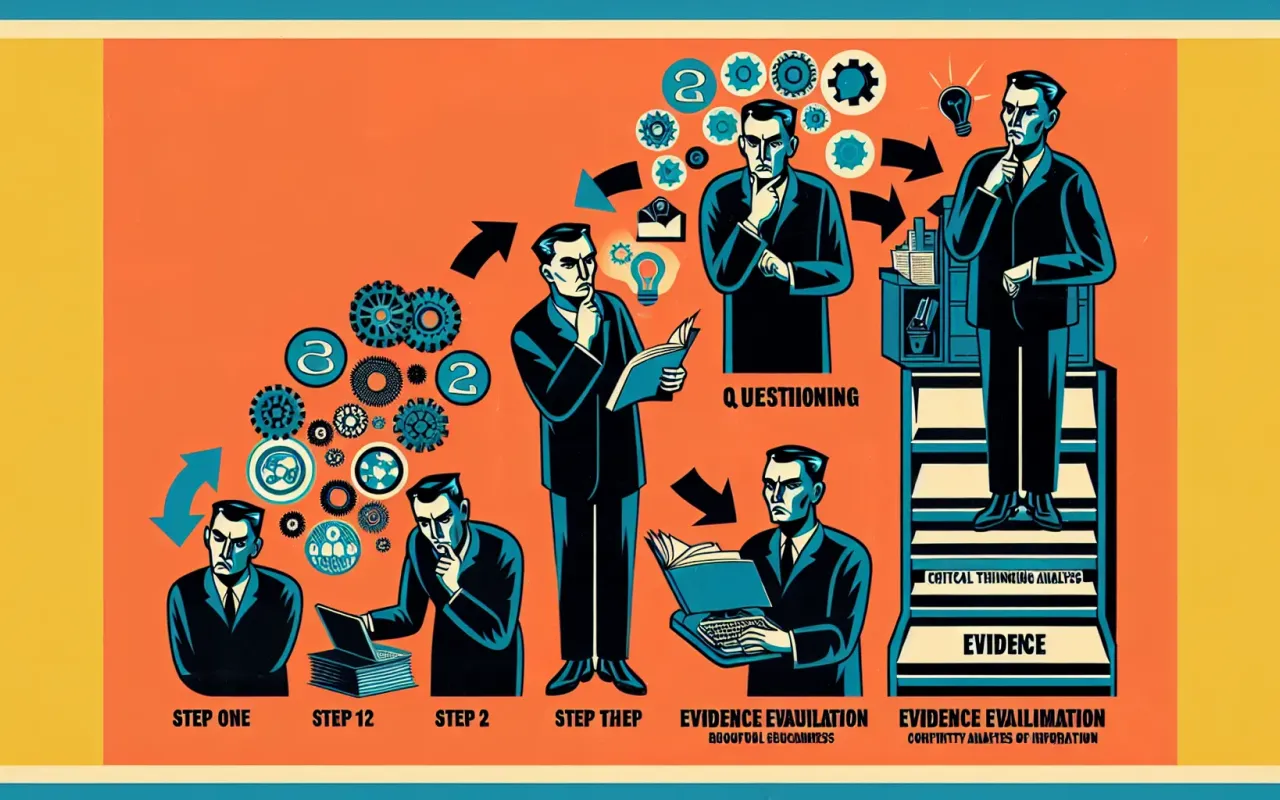
Learn how to develop critical thinking analysis with our comprehensive step-by-step guide. Improve your decision-making skills and problem-solving abilities.
- October 23, 2024
Introduction
In today’s information-rich world, the ability to think critically is essential. Critical thinking involves evaluating information and arguments, identifying biases, and reaching well-reasoned conclusions. This guide will help you understand how to develop critical thinking analysis, a skill that is invaluable in both personal and professional settings.
What is Critical Thinking Analysis?
Critical thinking analysis is the process of systematically evaluating information to formulate a reasoned judgment. It involves questioning assumptions, discerning hidden values, and assessing the evidence. This intellectual exercise is crucial for problem-solving and decision-making.
Why is Critical Thinking Important?
The ability to think critically can enhance various aspects of your life. In the workplace, it improves problem-solving skills and promotes innovation. In personal life, it aids in making informed decisions and understanding complex issues. By learning how to develop critical thinking analysis, you become better equipped to navigate challenges with clarity and confidence.
Step 1: Understand the Components of Critical Thinking
Critical thinking comprises several core components:
- Analysis: Breaking down complex information into smaller, manageable parts.
- Evaluation: Assessing the credibility and relevance of information sources.
- Inference: Drawing logical conclusions from the available evidence.
- Explanation: Clearly and concisely communicating reasons for your conclusions.
- Self-Regulation: Reflecting on your own thought processes and adjusting them as necessary.
Step 2: Develop Curiosity and Open-mindedness
Curiosity fuels the desire to seek out information, while open-mindedness allows you to consider multiple perspectives. Together, they create a solid foundation for critical thinking.
- Ask questions frequently.
- Be willing to revise your beliefs based on new evidence.
- Engage with diverse viewpoints to broaden your understanding.
Step 3: Improve Your Information-Gathering Techniques
Effective critical thinking requires reliable and relevant information. Here's how you can enhance your information-gathering skills:
- Use reputable sources such as academic journals, books, and expert opinions.
- Verify the credibility of online sources by checking their authoritativeness.
- Take comprehensive notes to organize your thoughts and findings.
Step 4: Practice Active Listening and Effective Communication
Listening and communicating effectively are crucial for understanding and evaluating different viewpoints. To do this, you should:
- Listen attentively without interrupting.
- Ask clarifying questions to ensure understanding.
- Summarize the key points to confirm your grasp of the topic.
Step 5: Cultivate Analytical and Logical Thinking
Analytical thinking involves deconstructing complex issues, while logical thinking ensures your conclusions follow from the evidence. To develop these skills:
- Analyze Patterns: Identify patterns in data or arguments to gain insights.
- Use Thought Experiments: Apply hypothetical scenarios to test the validity of your conclusions.
- Practice Problem-Solving: Approach problems systematically by evaluating potential solutions and outcomes.
Step 6: Reflect on Your Thought Processes
Self-reflection is vital for improving your critical thinking skills. It involves questioning your own assumptions and evaluating the effectiveness of your thought processes. To engage in reflective thinking:
- Journaling your thoughts and decisions to track your progress.
- Seeking feedback from peers or mentors.
- Assessing the outcomes of your decisions to identify areas for improvement.
Common Barriers to Critical Thinking and How to Overcome Them
Several barriers can impede your ability to think critically. Here are some common obstacles and strategies to overcome them:
Confirmation Bias
Confirmation bias occurs when you favor information that supports your preexisting beliefs. To mitigate this:
- Actively seek out opposing viewpoints.
- Challenge your assumptions regularly.
- Engage in discussions with individuals who hold different opinions.
Emotional Reasoning
Emotional reasoning happens when your emotions influence your conclusions. To counteract this:
- Take a step back and assess situations rationally.
- Identify and acknowledge your emotional responses.
- Separate your feelings from the facts.
Overconfidence
Overconfidence can lead to faulty conclusions by overstating your knowledge or abilities. To avoid this:
- Remain humble and open to learning.
- Fact-check your assumptions and conclusions.
- Regularly seek feedback and advice from others.
Practical Exercises to Improve Critical Thinking
Engaging in practical exercises can enhance your critical thinking abilities. Here are a few activities you can try:
- Debate: Participate in debates on various topics to practice articulating and defending your viewpoints.
- Case Studies: Analyze case studies to develop solutions and gain insights into real-world problems.
- Mind Mapping: Create mind maps to visually organize and connect your thoughts and ideas.
- Reflection: Reflect on your decision-making processes and outcomes to identify areas for improvement.
Conclusion
Developing critical thinking analysis is a progressive journey that enhances your ability to evaluate information and make well-informed decisions. By following the steps outlined in this guide, you can systematically build and refine your critical thinking skills. Remember, the key to mastering critical thinking is continuous practice and a willingness to challenge your own perspectives.