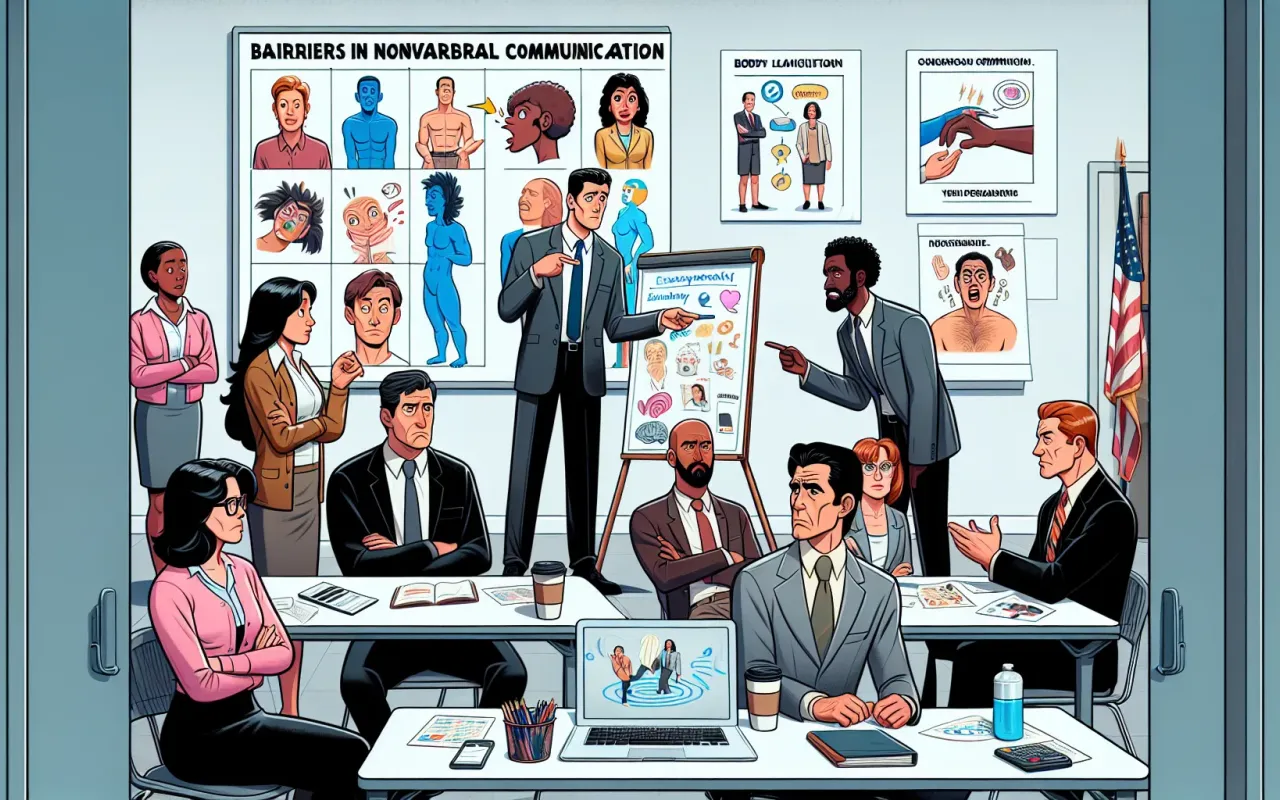
Learn how to identify and overcome nonverbal communication barriers in professional settings to enhance workplace interactions and improve organizational efficiency.
- October 4, 2024
Effective communication is paramount in any professional environment. While verbal communication often takes center stage, nonverbal communication plays a critical role in conveying messages and emotions. However, nonverbal communication barriers in professional settings can obstruct this flow, leading to misunderstandings and decreased efficiency. This article aims to explore the common nonverbal communication barriers and offer strategies to overcome them, ensuring a more cohesive and effective workplace.
What is Nonverbal Communication?
Nonverbal communication encompasses all the ways we convey information without using words. This includes body language, facial expressions, gestures, posture, eye contact, and even clothing and personal space. When used effectively, nonverbal communication can support and enhance verbal messages. However, when misinterpreted or inconsistent, it can create significant communication challenges.
Common Nonverbal Communication Barriers in Professional Settings
Identifying nonverbal communication barriers is the first step in overcoming them. Below are some common barriers encountered in professional environments:
1. Misinterpretation of Body Language
Body language is a powerful tool, but it’s also one of the most prone to misinterpretation. Simple gestures like crossing arms, lack of eye contact, or even the way someone sits can be easily misunderstood. For instance, crossing arms might be interpreted as defensiveness or disinterest, though it could also mean the person is simply comfortable in that position.
2. Cultural Differences
In a diverse workplace, cultural differences can lead to nonverbal communication barriers. Different cultures have varying norms for eye contact, personal space, and gestures. What is acceptable in one culture might be considered rude in another. For example, prolonged eye contact might signify confidence in some cultures but come off as confrontational in others.
3. Personal Space Boundaries
Personal space is another important aspect of nonverbal communication. Invading someone's personal space can be seen as aggressive or uncomfortable, while standing too far away might be perceived as disengaged or aloof. Finding a balance is key to maintaining positive interactions.
4. Inconsistent Messages
When nonverbal cues do not align with verbal communication, it can create confusion and distrust. If someone's words convey positivity but their body language suggests otherwise, it can lead to mixed signals. Consistency between verbal and nonverbal communication is crucial for ensuring clear and trustworthy interactions.
5. Environmental Factors
The physical environment can also influence nonverbal communication. Factors like noise, lighting, and seating arrangements can impact how messages are received and interpreted. A noisy or poorly lit environment can hinder effective communication and lead to misunderstandings.
Strategies to Overcome Nonverbal Communication Barriers
1. Enhance Self-Awareness
Being aware of your nonverbal cues is the first step towards improving nonverbal communication. Reflect on your body language, facial expressions, and gestures to ensure they align with your verbal messages. Practice maintaining appropriate eye contact, open body language, and attentive postures to convey engagement and trust.
2. Foster Cultural Competence
Understanding and respecting cultural differences is crucial in a diverse workplace. Educate yourself about the nonverbal communication norms of different cultures and be mindful of these differences during interactions. This will help in reducing misunderstandings and fostering a more inclusive environment.
3. Maintain Consistency
Ensure your verbal and nonverbal messages are consistent. Before engaging in communication, align your body language with your intended message. Consistency builds trust and clarity, making your communication more effective.
4. Create an Optimal Environment
Pay attention to the physical environment in which communication takes place. Arrange seating to encourage open interactions, minimize noise distractions, and ensure adequate lighting. An optimal environment can significantly enhance the effectiveness of nonverbal communication.
5. Seek Feedback
Ask for feedback from colleagues or mentors regarding your nonverbal communication. Constructive feedback can provide valuable insights into how your nonverbal cues are perceived and where there might be room for improvement.
6. Adapt and Adjust
Be flexible and willing to adjust your nonverbal communication based on the context and the individuals you are interacting with. Each professional setting and relationship may require different nonverbal cues to facilitate effective communication.
The Importance of Overcoming Nonverbal Communication Barriers
Effective communication is the backbone of any successful professional environment. By overcoming nonverbal communication barriers, organizations can ensure smoother interactions, foster better relationships among employees, and enhance overall productivity. Moreover, minimizing misunderstandings and conflicts through improved nonverbal communication can lead to a more positive and cohesive workplace culture.
Conclusion
Nonverbal communication is a powerful tool that, when used effectively, can greatly enhance professional interactions. By understanding and addressing the common nonverbal communication barriers in professional settings, individuals and organizations can improve their communication strategies, build stronger relationships, and achieve greater success. Remember, awareness, consistency, and cultural competence are key to mastering nonverbal communication in the workplace.