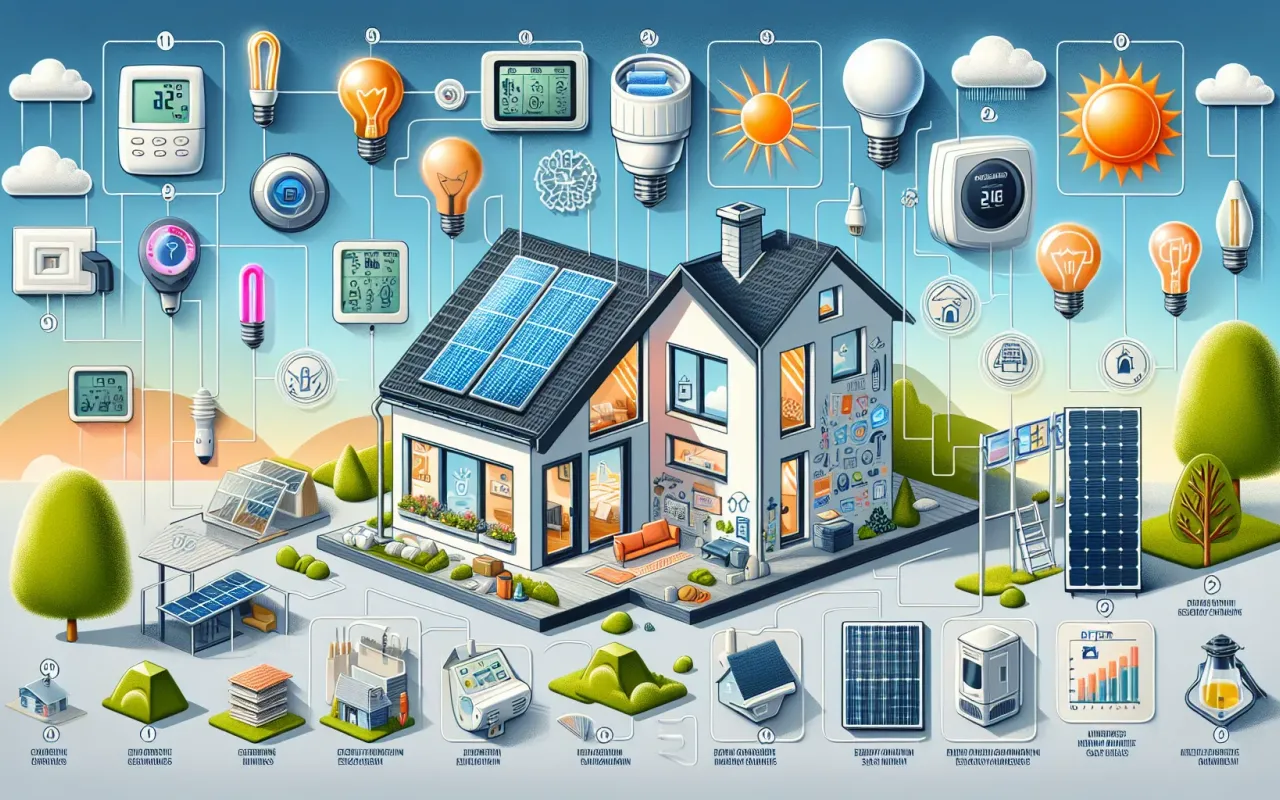
Discover 10 essential home improvement tips for energy efficiency in 2024. Learn how to reduce energy costs, improve sustainability, and enhance the comfort of your home.
- August 27, 2024
As energy costs continue to rise, enhancing home energy efficiency has never been more important. Implementing smart home improvement strategies can significantly reduce your energy consumption, lower utility bills, and make your home more comfortable. In this article, we provide essential tips for making your home more energy-efficient in 2024. By following these suggestions, you'll be able to save money and contribute to a more sustainable environment.
- 1. Upgrade Your Insulation
- 2. Install Energy-Efficient Windows
- 3. Optimize Your HVAC System
- 4. Switch to LED Lighting
- 5. Choose Energy Star Appliances
- 6. Seal Air Leaks
- 7. Upgrade Your Water Heater
- 8. Implement Smart Home Technology
- 9. Utilize Proper Shading
- 10. Consider Renewable Energy Sources
1. Upgrade Your Insulation
Proper insulation is crucial for maintaining a comfortable indoor temperature and reducing energy loss. Insulation helps keep your home warm in the winter and cool in the summer. Areas that typically require effective insulation include attics, walls, floors, and basements. Consider using materials like cellulose, fiberglass, or spray foam for maximum efficiency.
2. Install Energy-Efficient Windows
Windows can be a significant source of heat loss. Upgrading to energy-efficient windows can greatly reduce this loss, increasing your home's energy efficiency. Look for windows with low-E coatings, multiple panes, and argon gas fills. These features help minimize heat transfer and enhance insulation.
3. Optimize Your HVAC System
Your heating, ventilation, and air conditioning (HVAC) system plays a crucial role in your home's energy consumption. Regular maintenance, such as cleaning or replacing filters and scheduling annual check-ups, can ensure it operates efficiently. Additionally, consider upgrading to a programmable thermostat to better control your home's climate and reduce energy use.
4. Switch to LED Lighting
Traditional incandescent bulbs consume more energy and have shorter lifespans compared to LED bulbs. Switching to LED lighting can reduce energy usage by up to 75%. LEDs are available in various color temperatures and designs, making it easy to find the right lighting solution for every room in your home.
5. Choose Energy Star Appliances
Appliances account for a significant portion of household energy consumption. When replacing old appliances, opt for Energy Star-certified models. These appliances meet strict energy efficiency guidelines set by the U.S. Environmental Protection Agency, helping you save money and reduce your environmental footprint.
6. Seal Air Leaks
Air leaks around doors, windows, and other openings can lead to significant energy loss. Sealing these leaks with caulk, weatherstripping, or expandable foam can enhance your home's energy efficiency. Pay special attention to areas where different building materials meet, such as corners, chimneys, and areas around pipes and wires.
7. Upgrade Your Water Heater
Water heating is often the second-largest energy expense in a home. Consider upgrading to a high-efficiency water heater, such as a tankless or heat pump model, to reduce energy consumption. Additionally, insulating your water heater and the first few feet of hot water pipes can help retain heat and improve efficiency.
8. Implement Smart Home Technology
Smart home technology can provide greater control over your home's energy use. Devices such as smart thermostats, lighting systems, and power strips can be programmed to operate more efficiently. For example, a smart thermostat can learn your schedule and adjust the temperature accordingly, reducing energy waste when you're not home.
9. Utilize Proper Shading
Effective shading can help reduce the need for air conditioning during the summer months. Install exterior shading devices, such as awnings, shutters, or pergolas, to block direct sunlight. Interior solutions, including blinds, curtains, and reflective window films, can also help keep your home cool and minimize energy use.
10. Consider Renewable Energy Sources
Incorporating renewable energy sources, such as solar panels or wind turbines, can significantly reduce your reliance on traditional energy sources. While the initial investment can be substantial, the long-term savings and environmental benefits can be well worth it. Additionally, many governments offer incentives and rebates to help offset the cost of renewable energy installations.
Conclusion
Improving your home's energy efficiency is not only beneficial for your wallet but also for the environment. By following these 10 essential home improvement tips, you can make a meaningful impact on your energy consumption and contribute to a more sustainable future. Whether you're upgrading insulation, investing in smart technology, or considering renewable energy sources, each step you take brings you closer to a more energy-efficient home.