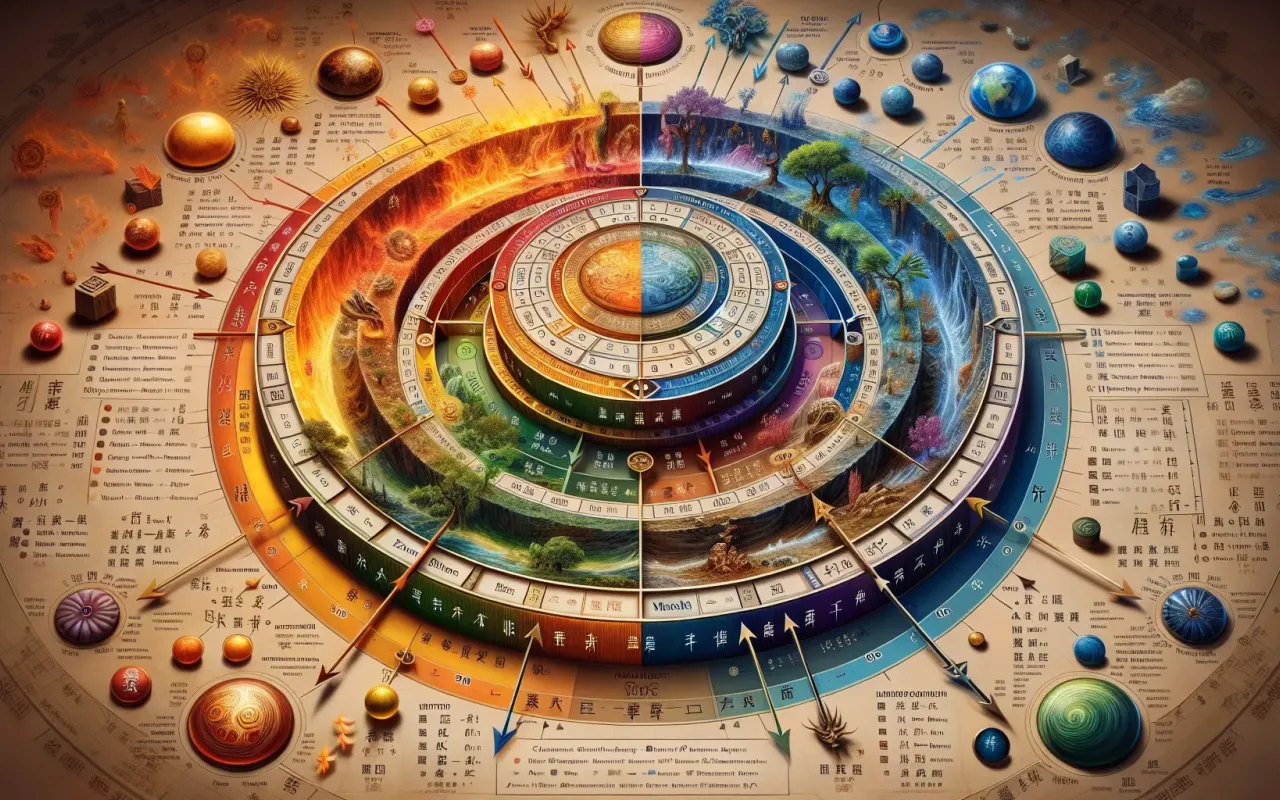
Explore the Five Elements Chart in Traditional Chinese Medicine (TCM) and discover how this ancient wisdom can help balance your health and well-being.
- August 26, 2024
Traditional Chinese Medicine (TCM) is a holistic approach to health that has been practiced for thousands of years. Central to TCM is the concept of balance, which is often represented by the Five Elements Chart. This guide will delve into the intricacies of the Five Elements Chart in TCM, offering insight into how this ancient system of thought can contribute to modern wellness practices.
What Are the Five Elements?
The Five Elements, also known as Wu Xing, are Wood, Fire, Earth, Metal, and Water. These elements are not static; rather, they are dynamic and interdependent. Each element represents various aspects of nature and the human body, influencing multiple facets such as seasons, emotions, organs, and bodily functions.
The Interrelationships Between the Five Elements
Generating (Sheng) Cycle
In the Generating Cycle, each element nourishes the next. For instance, Wood feeds Fire, Fire creates Earth (ash), Earth bears Metal, Metal enriches Water (through minerals), and Water nourishes Wood. This cycle emphasizes growth and mutual support.
- Wood –> Fire
- Fire –> Earth
- Earth –> Metal
- Metal –> Water
- Water –> Wood
Controlling (Ke) Cycle
In the Controlling Cycle, each element regulates another to maintain balance. For example, Wood controls Earth by rooting and stabilizing soil, Earth controls Water by containing it, Water controls Fire by extinguishing flames, Fire controls Metal by melting it, and Metal controls Wood by cutting it. This cycle helps to prevent any one element from becoming too dominant.
- Wood –> Earth
- Earth –> Water
- Water –> Fire
- Fire –> Metal
- Metal –> Wood
The Five Elements and the Human Body
The Five Elements are intimately connected with various organs and bodily functions. Understanding these connections can provide valuable insights into diagnosing and treating health issues within the framework of TCM.
Wood
Associated with the Liver and Gallbladder, Wood influences growth, flexibility, and decision-making. Imbalances may manifest as anger, frustration, or physical symptoms like muscle tension.
Fire
Linked to the Heart and Small Intestine, Fire represents warmth, activity, and charisma. Emotional imbalances can result in overexcitement or anxiety, while physical symptoms might include insomnia or heart palpitations.
Earth
Connected to the Spleen and Stomach, Earth relates to nourishment, stability, and empathy. Signs of imbalance include worry, digestive issues, and fatigue.
Metal
Metal corresponds to the Lungs and Large Intestine. It governs structure, organization, and grief. Imbalances may present as respiratory issues, skin problems, or emotional rigidity.
Water
Associated with the Kidneys and Bladder, Water symbolizes fluidity, introspection, and fear. Physical manifestations of imbalance can include urinary or reproductive issues, while emotional symptoms may involve excessive fear or isolation.
Practical Applications of the Five Elements Chart
In TCM, practitioners use the Five Elements Chart to create personalized treatment plans that may include acupuncture, herbal remedies, dietary adjustments, and lifestyle changes. By assessing which elements are out of balance, treatments can be tailored to restore harmony.
Diagnosis
Practitioners often begin by diagnosing which elements are deficient or excessive in a patient. This can involve observing physical symptoms, conducting pulse and tongue diagnoses, and evaluating emotional states.
Treatment Strategies
Treatment may involve strengthening weak elements or subduing dominant ones. For example, if a patient's Wood element is excessive, causing anger and stress, treatment might focus on nurturing the Earth element to control and balance Wood.
Integrating the Five Elements into Daily Life
You don't need to be a TCM practitioner to apply the principles of the Five Elements in daily life. Simple practices can help you maintain balance and well-being.
Diet and Nutrition
Eating a varied diet that considers the Five Elements can enhance health. For example, incorporating foods that align with each element—like leafy greens for Wood or root vegetables for Earth—can promote balance.
Emotional Awareness
Recognizing which emotions correspond with each element can help you manage your mental health. Mindfulness and stress-reduction techniques can regulate emotions, contributing to overall harmony.
Environmental Balance
Your surroundings can also reflect the Five Elements. Incorporating elements through interior design, such as water features or wooden furniture, can create a harmonious living space.
Conclusion
The Five Elements Chart in TCM offers a comprehensive framework for understanding health and wellness. By appreciating the dynamic relationships between Wood, Fire, Earth, Metal, and Water, you can gain deeper insights into both physical and emotional well-being. Whether through professional treatment or personal practice, the principles of the Five Elements can guide you towards a more balanced and harmonious life.