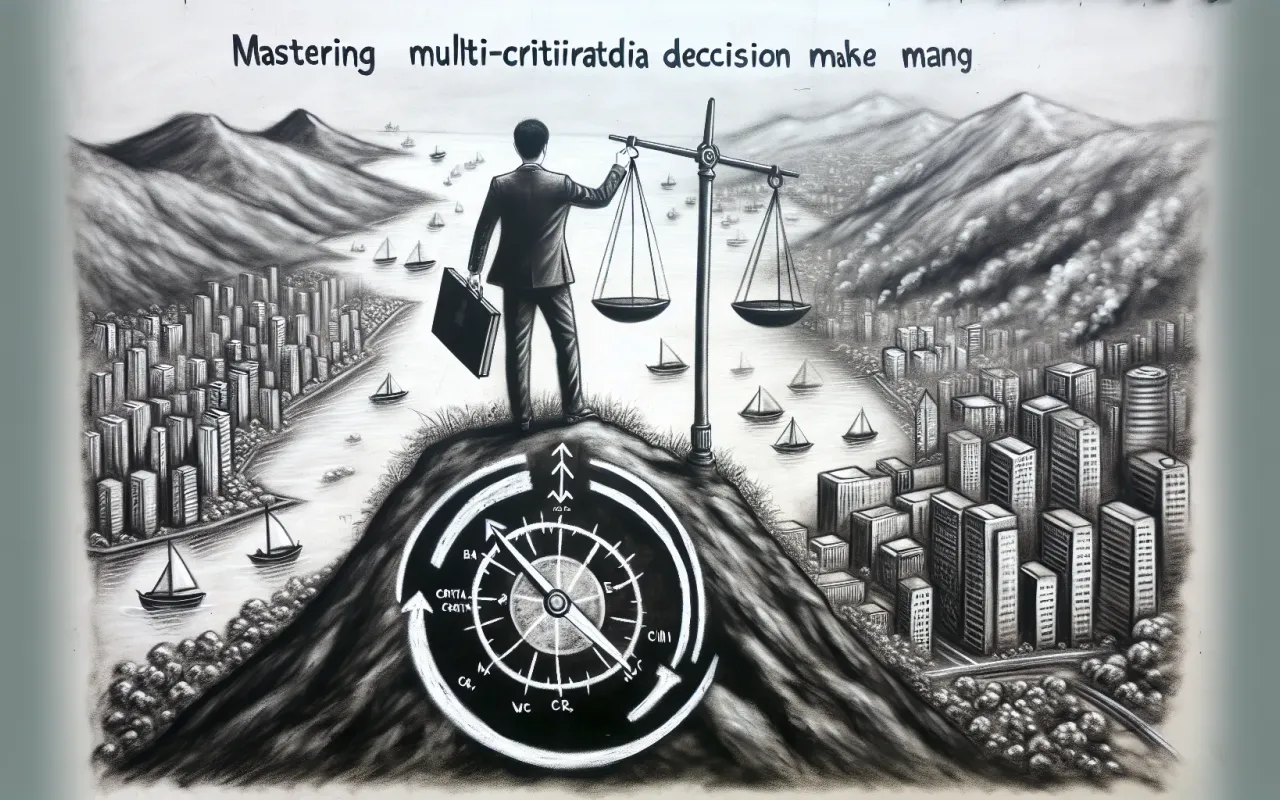
Master the art of multi-criteria decision making in environmental management. Explore effective strategies and solutions to optimize decision outcomes.
- August 25, 2024
Introduction
Environmental management is a complex field that requires careful consideration of various factors to make sustainable and effective decisions. Multi-criteria decision making (MCDM) is an essential framework that aids environmental managers in evaluating and prioritizing different options based on multiple conflicting criteria. This article explores the nuances of MCDM in environmental management, offering strategies, solutions, and insights to enhance decision-making processes.
Understanding Multi-Criteria Decision Making (MCDM)
Multi-criteria decision making is a process that involves evaluating and prioritizing multiple criteria simultaneously to make informed decisions. In environmental management, these criteria can range from ecological impacts, economic costs, and social acceptance to regulatory compliance and long-term sustainability.
Key Components of MCDM
- Criteria Identification: Recognizing and listing all relevant criteria is the first step in MCDM. Each criterion should reflect a significant aspect of the decision-making process.
- Weight Assignment: Different criteria often hold varying levels of importance. Assigning weights helps prioritize criteria based on their relevance to the decision context.
- Alternatives Evaluation: This involves assessing different options against the identified criteria using qualitative and quantitative methods.
- Aggregation Models: Techniques like the Analytic Hierarchy Process (AHP), Multi-Attribute Utility Theory (MAUT), and Technique for Order Preference by Similarity to Ideal Solution (TOPSIS) aggregate multiple criteria to facilitate a comprehensive analysis.
Strategies for Effective MCDM in Environmental Management
Implementing MCDM strategies can improve the quality of decisions by ensuring a balanced consideration of various criteria. Below are some strategies to enhance the MCDM process:
1. Stakeholder Engagement
Engaging stakeholders from the onset is crucial. Diverse perspectives enrich the decision-making process and enhance the acceptability of the outcomes. Actively involving community members, policymakers, scientists, and industry representatives ensures a holistic approach to environmental management.
2. Use of Advanced Analytical Tools
Leveraging advanced analytical tools and software can streamline the MCDM process. Tools like GIS mapping, simulation models, and decision-support systems facilitate robust analysis and visualization of data, aiding better decision-making.
3. Scenario Analysis
Scenario analysis involves examining different "what-if" situations to understand potential outcomes. By projecting various scenarios, environmental managers can assess the implications of different decisions under varying conditions, enabling more resilient and adaptive strategies.
Case Studies and Applications
Practical applications of MCDM in environmental management illustrate its effectiveness in diverse contexts. Here are notable examples:
Urban Planning and Green Space Management
In urban areas, MCDM is used to balance the need for development with green space preservation. Criteria such as environmental impact, recreational value, and economic benefits are assessed to develop sustainable urban plans.
Natural Resource Management
For managing natural resources like water and forests, MCDM helps in assessing conservation methods, usage policies, and economic returns. The approach ensures resource sustainability while addressing ecological and socio-economic dimensions.
Challenges and Solutions in MCDM
Despite its advantages, MCDM in environmental management faces several challenges. Below are common challenges and their corresponding solutions:
Data Limitations
Challenge: Incomplete or inaccurate data can hinder effective decision making.
Solution: Establish robust data collection and validation protocols, and utilize proxy indicators where direct data is unavailable.
Subjectivity in Weight Assignments
Challenge: Assigning weights to criteria can be subjective and contentious.
Solution: Use participatory methods and structured frameworks to achieve consensus on weight assignments, ensuring transparency and inclusivity.
Complexity of Integration
Challenge: Integrating multiple criteria can be complex, especially when using advanced mathematical models.
Solution: Employ user-friendly decision-support tools and provide training to stakeholders to aid comprehension and participation in the MCDM process.
Conclusion
Multi-criteria decision making is a cornerstone of effective and sustainable environmental management. By considering various criteria and engaging stakeholders, environmental managers can make well-rounded, informed decisions. Employing advanced analytical tools, scenario planning, and addressing challenges head-on can further enhance the effectiveness of MCDM. As environmental issues continue to grow in complexity, mastering MCDM strategies will be crucial for developing resilient and adaptable management practices.