Jimmy Carter, the 39th president of the United States, remains one of the most consequential and admired figures in modern American history, not only for his single term in the White House but for a post-presidency that redefined the role of a former leader. Born James Earl Carter Jr. on October 1, 1924, in the small farming community of Plains, Georgia, he was the first president born in a hospital. Growing up in the rural South during the Great Depression, Carter’s early life was steeped in the values of hard work, faith, and community, which would come to define his public service. After graduating from the U.S. Naval Academy in 1946, he served in the submarine service, working under the famed Admiral Hyman Rickover, before returning to Plains to take over the family peanut farm following his father’s death.
Carter’s political ascent was swift once he began. He entered public life as a state senator in 1963 and later won the governorship of Georgia in 1970, becoming one of the first "New South governors" to champion racial desegregation and the removal of barriers to African American voting. His moderate progressive record and outsider status propelled him to the Democratic presidential nomination in 1976, where he narrowly defeated incumbent Republican Gerald Ford in a race that captured a nation still reeling from Watergate. As president, Carter’s achievements were substantial, including the landmark Camp David Accords brokered between Israel and Egypt, the Panama Canal Treaties, the second Strategic Arms Limitation Talks with the Soviet Union, and the formal establishment of diplomatic relations with China. Domestically, he created the Departments of Energy and Education and enacted a comprehensive national energy policy focused on conservation and new technology, while also pardoning all Vietnam War draft evaders.
However, Carter’s presidency was beset by a series of punishing crises that overshadowed his legislative wins. The Soviet invasion of Afghanistan in 1979 ended détente and prompted a U.S. boycott of the 1980 Moscow Olympics, while the Iranian Revolution led to the seizure of American hostages and a severe oil crisis. After losing the 1980 election to Ronald Reagan in a landslide, Carter could have faded into obscurity. Instead, he embarked on the most remarkable second act in presidential history. Establishing the Carter Center in 1982, he dedicated himself to human rights advocacy, election monitoring, and conflict mediation, traveling the globe to negotiate peace and eradicate neglected tropical diseases, most notably leading a near-successful campaign to wipe out Guinea worm disease. His tireless humanitarian work earned him the 2002 Nobel Peace Prize, and he remained a key volunteer for Habitat for Humanity well into his nineties.
A prolific author, Carter wrote numerous books on politics, faith, and diplomacy, including controversial commentary on the Israeli-Palestinian conflict, as well as poetry and memoirs. His post-presidency, the longest in U.S. history, was consistently ranked more favorably by historians than his time in office, and he lived to become the oldest former president ever, reaching the age of 100 before his death on December 29, 2024. Carter’s legacy is a complex one, marked by a presidency of high ideals and difficult circumstances, but redeemed and amplified by a lifetime of service that transformed how the world views a leader after leaving power.
⭐
Similar Celebrities



📷
Recent Photos

Katie Price
Katie Price Launches Only Fans Channel - Photocall
Jan 26, 2022
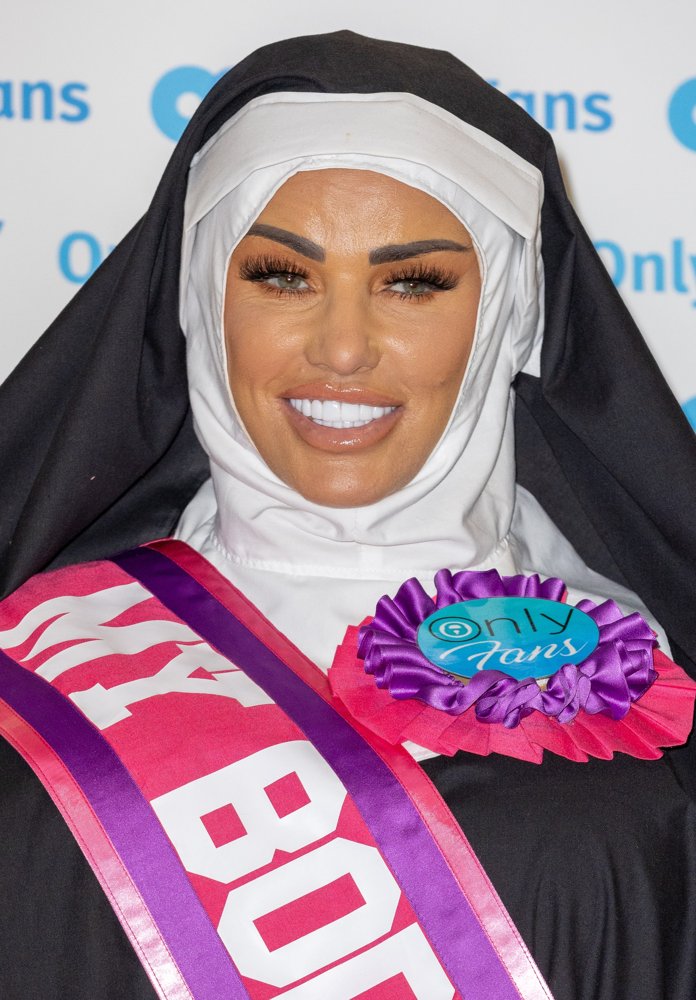
Katie Price
Katie Price Launches Only Fans Channel - Photocall
Jan 26, 2022

Jessie J
The Premiere of Cirque Du Soleil Luzia
Jan 13, 2022

Imogen Thomas
The Premiere of Cirque Du Soleil Luzia
Jan 13, 2022

Hayley Palmer
The Premiere of Cirque Du Soleil Luzia
Jan 13, 2022

Phoenix Chi Gulzar
The Premiere of Cirque Du Soleil Luzia
Jan 13, 2022





⭐Featured Celebrities