Denis Villeneuve
Denis Villeneuve, born on October 3, 1967, in Quebec, Canada, is a celebrated Canadian film director and screenwriter whose masterful storytelling and visual artistry have made him one of the most acclaimed filmmakers of his generation. With a career spanning over two decades, he has earned seven Canadian Screen Awards and nominations for four Academy Awards, five BAFTA Awards, and two Golden Globe Awards. His films have grossed more than $1.8 billion worldwide, cementing his reputation as a director who seamlessly blends intellectual depth with commercial appeal.
Villeneuve began his career in Quebec cinema, directing French-language dramas that showcased his early talent for intense, character-driven narratives. His debut feature, August 32nd on Earth (1998), was followed by Maelström (2000), but it was his 2009 film Polytechnique, a harrowing dramatization of the 1989 École Polytechnique massacre, that drew critical attention. However, his international breakthrough came with Incendies (2010), a powerful drama about war and family secrets that earned him an Academy Award nomination for Best International Feature Film. This success opened the door to English-language filmmaking, and he quickly established himself as a director of taut, intelligent thrillers with Prisoners (2013), Enemy (2013), and Sicario (2015), each of which received widespread critical acclaim for their tense atmospheres and moral complexity.
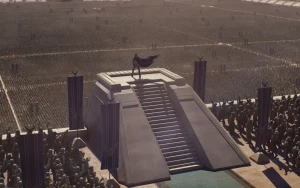
Villeneuve then turned his focus to science fiction, a genre he would come to redefine. His 2016 film Arrival, a thought-provoking exploration of language and time, earned him his first Academy Award nomination for Best Director and solidified his status as a visionary filmmaker. He followed this with Blade Runner 2049 (2017), a visually stunning sequel to the original classic that was similarly lauded by critics. Villeneuve's most ambitious project to date is his two-part adaptation of Frank Herbert's seminal novel Dune. The first installment, Dune (2021), was both a critical and commercial triumph, grossing over $400 million worldwide and winning six Academy Awards. Its sequel, Dune: Part Two (2024), surpassed its predecessor, earning over $700 million globally and bringing the combined box office of the two films to $1.15 billion. Both films earned Villeneuve Academy Award nominations for Best Picture, and he also received a nomination for Best Adapted Screenplay for the first film.
Throughout his career, Villeneuve has been known for his meticulous craftsmanship, often collaborating with cinematographer Roger Deakins and composer Jóhann Jóhannsson to create immersive, haunting worlds. His ability to balance grand spectacle with intimate human stories has drawn comparisons to legendary directors like Stanley Kubrick and Ridley Scott. Currently, Villeneuve continues to be a dominant force in cinema, with plans to further expand the Dune universe and explore other ambitious projects. His journey from Quebec's independent film scene to the pinnacle of Hollywood blockbuster filmmaking is a testament to his unwavering artistic vision and his rare gift for making deeply personal films that resonate on a global scale.