Brian De Palma
Brian Russell De Palma, born on September 11, 1940, stands as one of the most influential and controversial auteurs of the New Hollywood era, a filmmaker whose career has spanned more than five decades and left an indelible mark on the suspense, crime, and psychological thriller genres. Emerging in the late 1960s, De Palma quickly established himself as a director with a bold, allusive style, often paying homage to his cinematic idols while forging a unique visual language characterized by elaborate tracking shots, split-screen techniques, and a fascination with voyeurism and paranoia. His early work, including the counterculture comedies Greetings and Hi, Mom!, showcased his satirical edge and technical ambition, but it was his adaptation of Stephen King’s Carrie in 1976 that catapulted him to prominence, transforming a high school horror story into a landmark of supernatural cinema and earning him his first major critical and commercial success.
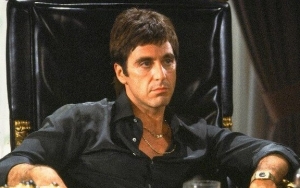
De Palma’s career is defined by a series of audacious, often controversial films that blurred the lines between homage and innovation. He openly channeled Alfred Hitchcock in a trilogy of erotic thrillers—Obsession, Dressed to Kill, and Body Double—while reimagining Michelangelo Antonioni’s Blowup as the political conspiracy thriller Blow Out. His 1983 remake of Scarface, dedicated to original director Howard Hawks and screenwriter Ben Hecht, became a cultural touchstone, celebrated for its operatic violence and Al Pacino’s iconic performance as Tony Montana, despite initial mixed reviews. De Palma enjoyed his greatest box office triumphs with the Prohibition-era epic The Untouchables and the first installment of the blockbuster franchise Mission: Impossible, both of which showcased his ability to deliver crowd-pleasing entertainment without sacrificing his signature stylistic flourishes.
Throughout his career, De Palma’s work has sparked fierce debate, drawing criticism for its graphic violence and sexual content while earning passionate defenders among prominent critics like Roger Ebert and Pauline Kael. His influence extends far beyond his own filmography, with his techniques and themes echoed in the work of later directors such as Brian De Palma (a self-referential note), Quentin Tarantino, and David Fincher. In 2015, Noah Baumbach directed a well-received documentary, De Palma, in which the director reflected candidly on his life and career, offering a definitive look at a filmmaker who never stopped chasing his youthful dream of becoming the "American Jean-Luc Godard." Today, De Palma remains a vital, if sometimes polarizing, figure in American cinema, his legacy secured by a body of work that is as technically dazzling as it is thematically daring.