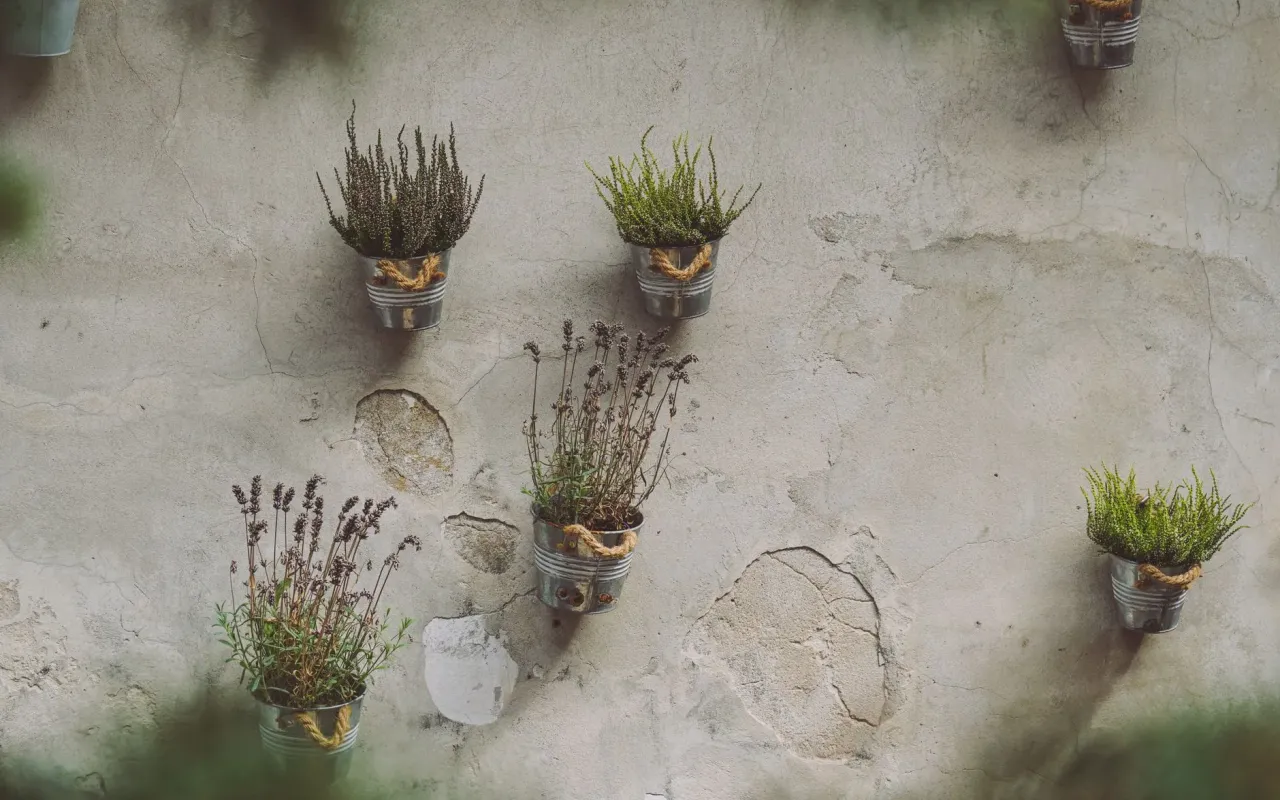
Turn a blank wall into a thriving herb garden. We break down the best systems, lighting, and plant picks for a vertical setup that actually survives.
- August 18, 2026
AceShowbiz - You know that sad, plastic-wrapped bundle of basil in the grocery store that costs four dollars and goes slimy in your fridge by Tuesday? I do too. It's the reason I finally ripped out the ugly wire shelving in my tiny kitchen and built a vertical herb wall instead. The math is simple: a $3 seed packet of Genovese basil yields more leaves over a season than you could buy for fifty bucks, and it does it in a footprint smaller than a pizza box. If you have a bare wall, a bit of sunlight, and a willingness to get your hands dirty, you can grow a salad's worth of herbs that's both a functional pantry and a striking piece of living decor.
The best part? You don't need a green thumb or a carpenter's license. Modern vertical systems range from felt pocket planters that take ten minutes to hang, to modular PVC pipe towers that look like high-end art installations. The key is matching the system to your space, your light, and your cooking habits. Let's walk through the real-world decisions you'll face, from choosing the right wall to keeping your herbs alive when life gets busy.
Why Go Vertical? The Space and Savings Math
Before you buy anything, understand the core benefit: square footage. A standard 2-foot by 4-foot vertical planter gives you roughly 16 to 24 individual planting pockets, which is the equivalent of four large window boxes. For renters or homeowners with limited counter space, this is a game-changer. You're not sacrificing a precious countertop cutting board area for a pot that holds one sad rosemary bush.
Financially, the payoff is rapid. A single packet of cilantro seeds costs about $1.50 and can produce continuous harvests for three months. Compare that to buying three bunches a week at $1.99 each—you're saving roughly $20 a month on one herb alone. If you grow basil, mint, parsley, and chives, your annual savings easily exceed $200. That's a new set of chef's knives or a nice weekend dinner out, just from a wall you weren't using.
There's also the convenience factor that's hard to price. When you're making tacos on a Tuesday night, snipping fresh oregano from the wall next to the stove is infinitely faster than running to the store or digging through the crisper drawer for a wilted bunch. It moves the herb garden from a chore to an integrated part of your cooking flow.
Actionable Takeaway: Measure your wall space before shopping. A 2x4 foot area is the sweet spot for a family of four. Any larger, and you'll struggle to use all the herbs before they bolt (go to seed).
Choosing Your System: Pockets, Pipes, or Pallet?
Now, the fun part—hardware. There's no single "best" system, only the best fit for your DIY skill level and aesthetic. Let's break down the three most popular routes.
Felt Pocket Planters (The Easy Win)
These are large, wall-mounted fabric panels with sewn-in pockets. They're lightweight, require minimal installation (just a few heavy-duty picture hooks), and are incredibly forgiving. The felt wicks moisture, meaning water spreads evenly across the entire panel, reducing the risk of dry spots. I recommend these for absolute beginners or anyone who hates power tools. The downside is that the fabric can look a bit "camping trip" if you don't frame it nicely with a wooden border.
PVC Pipe Towers (The Modern Sculpture)
This is the high-impact, high-effort option. You take 4-inch diameter PVC pipes, cut holes every six inches, cap the bottom, and fill with soil. Mount them vertically or horizontally in a zigzag pattern. They look sleek and industrial, and they hold a ton of soil, which means less frequent watering. However, you'll need a drill with a hole saw attachment, PVC cement, and a willingness to measure twice and cut once. It's a Saturday afternoon project, but the result is a conversation starter.
Repurposed Pallet or Ladder (The Rustic Charm)
Lean an old wooden ladder against the wall, or mount a pallet horizontally. Nestle small terracotta pots or tin cans into the rungs or slats. This is the most affordable option (often free) and allows you to swap pots in and out easily. The catch? You need to water each pot individually, which gets tedious if you have more than eight plants. It's perfect for a curated collection of your most-used herbs, not a full-scale pantry.
Actionable Takeaway: If you're a serial plant killer, start with felt pockets. The self-wicking fabric gives you a buffer against neglect. If you're a weekend warrior, build the PVC tower—it's a better long-term investment for soil volume and watering efficiency.
Lighting: The Non-Negotiable Ingredient
You can buy the fanciest planter in the world, but if your wall is in a dark corner, your herbs will stretch, become leggy, and taste bitter. Herbs are sun worshippers. Most culinary herbs (basil, oregano, thyme, rosemary) need a minimum of 6 to 8 hours of direct sunlight daily. A south-facing window is ideal. East-facing windows work for leafy greens like parsley and mint, but they'll grow slower.
If you don't have a sunny wall, don't despair—you just need to cheat with technology. LED grow lights have become incredibly affordable and energy-efficient. You don't need a purple glowing UFO light that makes your living room look like a rave. Look for a full-spectrum white LED bar light that you can mount above or in front of the planter. A 20-watt LED bar running 12 hours a day costs roughly $2 a year in electricity, yet it provides enough photosynthetically active radiation (PAR) to keep herbs thriving.
Distance matters. If the light is too far away (more than 18 inches), the plants will stretch. If it's too close (less than 6 inches), you risk burning the leaves. A good rule of thumb is to position the light so it's about 10-12 inches from the top of the foliage and adjust as the plants grow.
Actionable Takeaway: Buy a cheap lux meter app for your phone. Place your phone against the wall where the planter will hang. If the reading is below 10,000 lux, you need a grow light. Don't guess—measure.
Watering Wisdom: Drip Trays and Self-Watering Hacks
This is where most vertical gardens fail. Gravity is not your friend. When you water a vertical planter, water runs down the face of the wall, dripping onto your floor and potentially causing water damage. You need a foolproof watering strategy before you hang a single plant.
First, invest in a quality drip tray. For felt pocket systems, you can buy a plastic gutter tray that mounts underneath the bottom row to catch runoff. For PVC towers, you'll need a saucer at the base that you can empty easily. Alternatively, install a small pump and reservoir system—but that's overkill for most home cooks.
Second, switch to a watering can with a narrow, long spout. This allows you to target the soil at the top of each pocket or pipe hole without splashing water all over the foliage. Wet leaves are a breeding ground for powdery mildew, which will decimate your basil faster than any pest. Water deeply but infrequently—aim to saturate the soil until water just begins to trickle out the bottom, then stop.
Consider adding a moisture-retention polymer to your soil mix. These little crystals absorb water and release it slowly, reducing your watering frequency by up to 50%. Mix them into the potting soil before planting, and you'll have a buffer for those days you forget to check the wall.
Actionable Takeaway: Water in the morning. This gives the foliage time to dry out during the day, preventing fungal diseases. If you water at night, you're asking for trouble.
Plant Selection: What Actually Thrives Vertically
Not all herbs are created equal when it comes to vertical living. You want plants that are compact, bushy, and happy to be harvested constantly. Avoid sprawling herbs like dill or fennel, which get tall and floppy quickly. Instead, focus on these workhorses:
- Basil (Genovese or Spicy Globe): The Spicy Globe variety is a compact bush that doesn't bolt as fast as standard basil. It's perfect for pockets.
- Chives: They grow like grass, are virtually indestructible, and regrow quickly after cutting. Great for filling gaps.
- Thyme and Oregano: These creep and trail, which looks beautiful spilling over the edges of pockets or pipe holes. They're also drought-tolerant, forgiving if you miss a watering.
- Mint (Spearmint or Chocolate): Mint is invasive in the ground but behaves perfectly in a contained vertical system. Just keep it in its own pocket, as it will choke out neighbors.
- Parsley (Flat-leaf): It's slow to germinate, so buy a small transplant rather than seeds. Once established, it's a cut-and-come-again crop for months.
Skip the rosemary. While it smells amazing, it grows slowly and prefers to dry out completely between waterings. In a shared vertical system where you're watering basil every other day, rosemary will suffer root rot. Keep rosemary in its own separate pot on a sunny windowsill instead.
Actionable Takeaway: Plant a mix of "cut-and-come-again" herbs (basil, chives, parsley) with "pick-and-use" herbs (thyme, oregano). This ensures you always have something ready to harvest without overloading your cooking schedule.
Maintenance: Feeding, Pruning, and Pest Control
A vertical herb wall is a high-density growing environment, which means nutrients deplete fast. You're cramming a lot of plants into a small soil volume, so you must feed them regularly. Start with a high-quality potting mix that includes compost, then supplement with a liquid organic fertilizer (like fish emulsion or seaweed extract) every two weeks. Dilute it to half strength to avoid burning the roots—vertical systems have less soil to buffer the salt buildup.
Pruning is non-negotiable. You must harvest aggressively. When you see flower buds forming on your basil or cilantro, pinch them off immediately. Once an herb flowers, the leaves turn bitter and the plant's energy goes into seed production, not leaf growth. The rule is: if you're not eating it, cut it back by a third every few weeks. This encourages bushier growth and prevents the plants from becoming leggy.
Pest pressure is usually lower indoors, but you'll occasionally get aphids or spider mites, especially if you move plants outdoors for the summer. The easiest control is a weekly blast of water in the sink (if the planter is small enough) or wiping leaves with a neem oil solution. Avoid chemical pesticides—you're going to eat these leaves.
Actionable Takeaway: Set a phone reminder every Sunday morning for "Herb Wall TLC." Spend 15 minutes: water, pinch off any flowers, check for yellow leaves, and feed if it's been two weeks. Consistency beats intensity.
Building a vertical herb wall isn't just a home improvement project; it's a shift in how you interact with your food. It turns a dead, useless wall into a living, breathing pantry that rewards you daily. Start small if you need to—a single felt panel with three herbs is enough to change your cooking. Once you taste the difference between a homegrown basil leaf and a store-bought one, you'll never look back. The savings, the convenience, and the sheer joy of watching something grow in your kitchen are worth every bit of the effort.