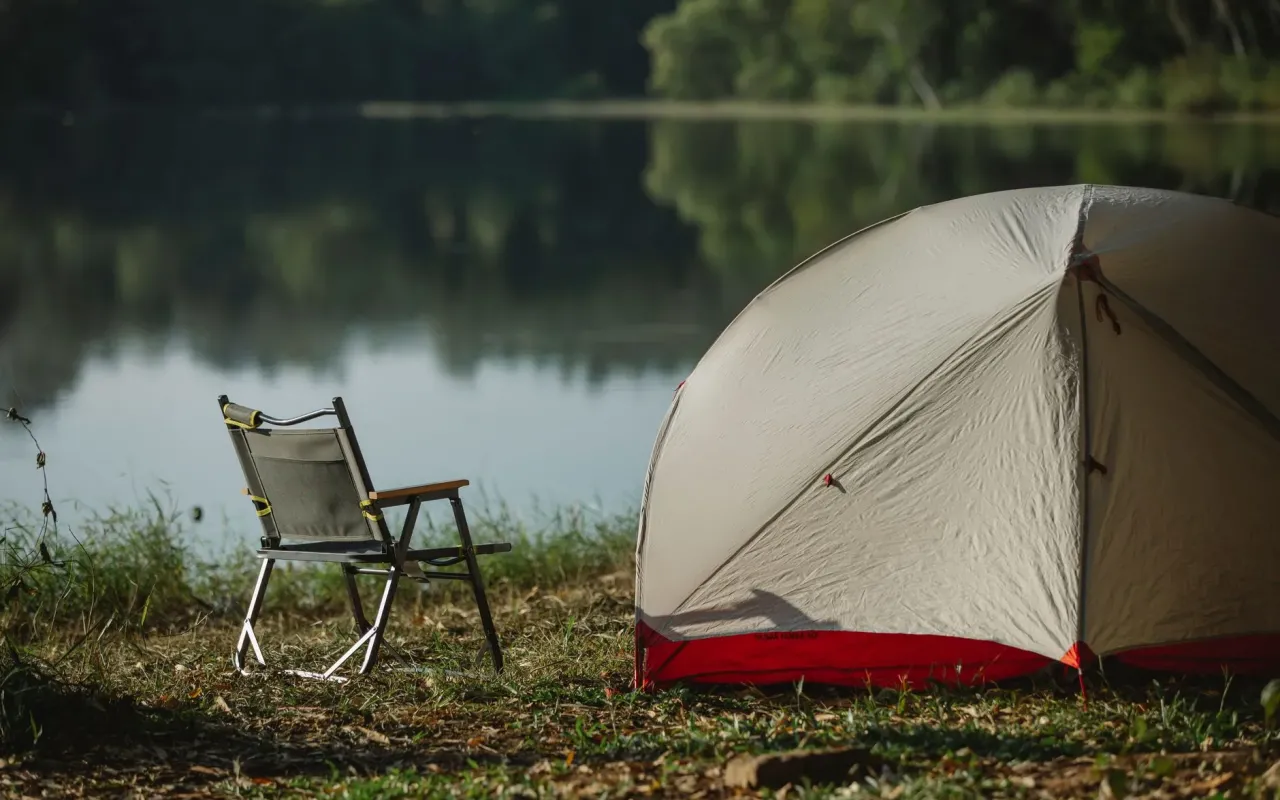
Ditch the noisy generator. Learn how a portable power station keeps your devices charged, runs your gear, and makes camping more comfortable and convenient.
- June 16, 2026
The Moment I Realized I Was Done With Generators
It was 2 AM, and the rain was hammering against my tent. My phone was dead, my portable lantern was flickering its last breath, and my camping buddy's snoring was the only thing louder than the storm. I had a gas generator in the truck, but the thought of dragging it out in the rain, wrestling with a fuel can, and listening to that infernal buzzing for an hour just to charge my phone... it felt like a punishment, not a solution.
That night, I made a mental note: there had to be a better way. There is. It's called a portable power station, and it's the single best gadget I've added to my camping kit in the last five years. If you're still tethered to a campsite with electrical hookups or hauling a heavy, smelly generator, you're missing out on a level of freedom that makes camping actually relaxing.
Portable power stations are essentially large, rechargeable lithium-ion batteries with multiple outlets—AC, USB-A, USB-C, and 12V ports. They're quiet, zero-emission, and can run everything from your phone and laptop to a mini-fridge or a CPAP machine. For anyone who camps, overlands, or even just tailgates, this is the gadget that solves the "where do I charge stuff?" problem without the noise or hassle.
What Exactly Is a Portable Power Station (And Why Not Just a Power Bank)?
Let's get the basics straight because people often confuse these with the small power banks you throw in a backpack. A portable power station is a different beast. While a power bank might hold 10,000 to 20,000 milliamp-hours (mAh) and only output USB power, a power station starts at around 200 watt-hours (Wh) and can go up to 2,000 Wh or more. That's enough to run a 50-watt mini-fridge for 10 hours on a single charge.
The magic is in the built-in inverter. This converts the battery's DC power into standard AC power (110V or 220V, depending on your region), so you can plug in regular wall outlets. I've used mine to power a portable electric skillet for breakfast, run a small fan on hot summer nights, and keep my camera batteries and drone batteries charged all weekend. A power bank can't do that.
Another key difference is the ability to recharge the station itself. Most modern units can be recharged via a standard wall outlet, your car's 12V port (while driving), and even solar panels. That last option is a game-changer for extended trips. You can set up a 100-watt solar panel at your campsite, and as long as the sun is out, you have free, silent, renewable energy flowing into your station. No fuel, no fumes, no noise.
So, when you ask yourself "Do I need a power station or just a bigger power bank?", think about what you want to power. If it's just phones and tablets, a power bank might suffice. But if you want to run a laptop, a small fridge, a portable heater, or medical devices, a power station is the only real option.
How to Choose the Right Size: Watt-Hours (Wh) vs. Watts (W)
This is where most people get confused, and honestly, the marketing doesn't help. You'll see numbers like "500Wh" and "1000W" thrown around. Here's the simple breakdown: Watt-hours (Wh) is the total energy storage capacity—how much juice the battery holds. Watts (W) is the maximum power output—how much it can deliver at once.
Think of Wh as the size of your gas tank, and W as the size of the engine. A big tank (high Wh) means you can run devices for a long time. A big engine (high W) means you can run high-power devices like a microwave or a hair dryer. For camping, most people need a station between 300Wh and 1000Wh. Here's a practical rule of thumb: if you're just charging phones, tablets, and a laptop, 300Wh is plenty. If you're running a mini-fridge (which draws about 50W continuously) and a CPAP machine (about 30-60W), you want at least 500Wh. If you're powering a portable electric cooler, a fan, lights, and multiple devices for a family of four, aim for 1000Wh or more.
One more thing: check the continuous wattage rating. A station rated for 500W can run a 500W device, but it will drain the battery fast. For example, a 1000Wh station running a 500W device will last about 2 hours (1000Wh / 500W = 2 hours). But in reality, most devices don't run at full power continuously. A mini-fridge cycles on and off, so actual runtime is much longer. Always look up the "running watts" of your gear, not just the startup surge.
Actionable takeaway: Write down the wattage of your three most power-hungry items you plan to use simultaneously. Add them up, then multiply by 1.25 for a safety buffer. That number is the minimum wattage your power station's inverter should handle. Then, estimate how many hours you want to run them, and multiply by the total watts to get the minimum Wh you need. This simple math will save you from buying a station that's either too weak or overkill.
Key Features That Separate a Great Station From a Mediocre One
Not all power stations are created equal. I've tested a few, and I've seen the cheap ones fail in frustrating ways. Here's what to look for beyond just the battery size.
Battery Chemistry: LiFePO4 vs. Lithium-Ion
This is the biggest hidden factor. Most budget stations use standard lithium-ion (Li-ion) batteries, which are fine for occasional use. But for camping, where you might leave the station in a hot car or use it season after season, LiFePO4 (Lithium Iron Phosphate) batteries are vastly superior. They last longer—typically 3,000 to 5,000 charge cycles compared to 500 to 1,000 for Li-ion—and they're safer, with a much lower risk of thermal runaway. They're also more stable in extreme temperatures. Yes, they're slightly heavier and more expensive upfront, but over five years of camping trips, the cost per use is actually lower. I'll never buy a Li-ion station again.
Output Ports: Don't Just Count Them—Check the Specs
A station with 10 USB ports is useless if they're all slow 5V/2A ports. Look for at least one USB-C port with Power Delivery (PD) that outputs 60W or higher. This can fast-charge a modern laptop or tablet. Also, check the AC outlets. Some stations only have one or two, and they might share a single circuit, meaning you can't draw full power from both at once. Look for a station with at least two separate AC outlets, each rated for the full inverter wattage. Also, a 12V car port (cigarette lighter style) is super handy for running a car cooler or a tire inflator.
Solar Charging Input: The Real Game-Changer
If you buy a power station, get one that supports solar charging—and check the maximum input wattage. A station that can accept 200W of solar input will charge much faster than one limited to 100W. Some stations even have MPPT (Maximum Power Point Tracking) charge controllers, which are more efficient at extracting power from solar panels in partial shade. Pairing a 100W or 200W solar panel with your station means you can camp indefinitely as long as the sun shines. For weekend trips, you might not need solar, but for a week-long off-grid adventure, it's a lifesaver.
Practical tip: Buy a station with a "pass-through" charging feature. This allows you to charge the station via solar or wall power while simultaneously using it to power your devices. Not all stations do this safely, but the good ones do. This way, you can keep your fridge running while the sun tops up the battery.
Real-World Camping Scenarios: What You Can Actually Power
Let's make this concrete. Here are three common camping scenarios and the power station size that fits each one.
Scenario 1: The Weekend Car Camper
You're driving to a state park with a cooler, a tent, and basic gear. You need to charge two phones, a tablet, and maybe a portable speaker. You also want to run a small fan at night. Power station needed: 300Wh to 500Wh. A station like the Jackery Explorer 300 or Bluetti EB55 is perfect. You'll get 2-3 full phone charges, 10+ hours of fan time, and plenty of juice for a tablet. You can recharge it from your car's 12V port while driving to the campsite. Total weight: about 7-10 pounds.
Scenario 2: The Family Camping Trip With a Mini-Fridge
You have a family of four, a 45-liter electric cooler (like a Dometic or Yeti), and you want to keep milk, meat, and drinks cold for a long weekend. You also have a laptop for movies, a camera, and kids' tablets. Power station needed: 1000Wh to 1500Wh. A station like the EcoFlow Delta 2 or Anker PowerHouse 757 fits perfectly. The fridge will draw about 50W average (cycling on/off), so it will use about 1200Wh per day. With a 1000Wh station, you'll get about 20 hours of fridge runtime, which means you'll need to recharge daily. Pair it with a 100W solar panel, and you're golden. This setup also lets you run a small portable electric kettle for morning coffee.
Scenario 3: The Overlander or Van-Lifer
You're living out of your vehicle for a week or more. You have a 12V fridge, a laptop for work, lights, a fan, and you want to charge power tools or a drone. Maybe you even want to run a small microwave or an induction cooktop occasionally. Power station needed: 2000Wh or more. Look at the Bluetti AC200P or EcoFlow Delta Pro. These are heavy (40-60 pounds) but can power a mini-fridge for 2-3 days without recharge. You'll absolutely want a large solar panel setup (200W to 400W) to keep it topped off. This is serious power, but it also means you can camp anywhere, anytime, without giving up modern comforts.
Actionable takeaway: Don't buy a station based on what you "might" use someday. Buy based on your most common trip type. If 90% of your camping is weekend car camping, a 500Wh station is plenty. If you're a digital nomad on the road, invest in the big one. You can always rent or borrow a larger unit for rare, extended trips.
Charging Strategies: Getting the Most Out of Your Station
Owning a power station is great, but using it efficiently makes the difference between "this is awesome" and "my battery died too fast." Here are three charging strategies that will extend your camping experience.
Strategy 1: Pre-Charge at Home. This sounds obvious, but many people forget. Charge your station to 100% the night before you leave. Then, charge all your devices (phones, tablets, cameras) from the station before you even pack them. This way, your devices start at 100%, and your station is still full. You'll get an extra day of use out of the station because you're not wasting energy on initial charges.
Strategy 2: Use Your Car as a Mobile Charger. While driving to your campsite, plug the station into your car's 12V port (cigarette lighter). Most stations can charge from a car at 100W to 200W. A 2-hour drive can add 200Wh to 400Wh to your station—that's enough to run a mini-fridge for 4-8 hours. This is free energy you're already generating. Just make sure your car's 12V port is rated for continuous use (check your owner's manual).
Strategy 3: Solar Panel Placement Matters. If you have a solar panel, don't just toss it on the ground. Angle it directly at the sun. Use a solar panel stand or lean it against a rock. In the northern hemisphere, face it south. In the southern hemisphere, face it north. Even 15 degrees off angle can reduce output by 20%. Also, keep the panel clean—dust and dirt block sunlight. Pro tip: Set up your solar panel early in the morning to catch the low-angle sun, and move it once or twice during the day to maximize exposure. A 100W panel in full sun can fully recharge a 500Wh station in about 5-6 hours.
Actionable takeaway: Always bring a 12V car charger cable for your station. Even if you plan to use solar, the car charger is your backup. If you're caught in a cloudy stretch, a 30-minute drive to a scenic overlook can save your camping trip.
The Noise Factor: Why Your Camping Neighbors Will Thank You
I cannot overstate how much quieter a power station is compared to a gas generator. A typical portable generator runs at 60 to 70 decibels—that's as loud as a vacuum cleaner or a busy restaurant. You can hear it from 50 feet away. In a quiet campground, that noise travels and annoys everyone. A power station, on the other hand, is dead silent. The only sound is the faint hum of a fan when it's charging or running a heavy load. Most of the time, it makes zero noise.
This matters more than you think. Camping is supposed to be about escaping the noise of daily life—traffic, sirens, lawnmowers. The last thing you want is your own gear ruining that peace. I've had camp neighbors walk over to my site just to ask, "Is that thing really running?" when they see my lights on and my fridge humming. They're always surprised that there's no sound. Plus, if you're in a national park or a wilderness area, generators are often banned or restricted to certain hours. A power station is almost always allowed, as long as you're not leaving it unattended.
There's also the smell factor. Gas generators emit carbon monoxide and fumes. You must place them at least 10-15 feet from your tent or vehicle. A power station has zero emissions, so you can safely use it inside a tent (as long as you're not blocking ventilation, as it can get warm). This is a huge advantage for cold-weather camping, where you might want the station inside to keep your electronics warm and batteries from draining.
Actionable takeaway: Check your campground's rules before you go. Many state parks and national forests have strict generator hours (usually 8 AM to 8 PM). A power station allows you to run a fan or charge devices 24/7 without breaking any rules. It's a simple way to be a good neighbor and enjoy your trip more.
Maintenance and Longevity: Making Your Investment Last
A good portable power station costs $300 to $2,000, so you want it to last. The good news is that with minimal care, these batteries can serve you for a decade or more. Here's how to protect your investment.
Store it at 50% charge. Lithium batteries (including LiFePO4) degrade fastest when stored at 100% or 0% charge. If you're not using the station for a month or more, discharge it to about 50% and store it in a cool, dry place (between 40°F and 80°F is ideal). Never leave it in a hot car in summer—heat is the number one killer of battery life. I keep mine in my basement closet, not my garage.
Do a full discharge cycle every few months. For LiFePO4 batteries, it's not strictly necessary, but for standard Li-ion, running the battery down to 10% and then fully recharging it once every 3-4 months helps recalibrate the battery management system (BMS). This ensures the charge indicator stays accurate. If you notice your station showing 20% and then dying suddenly, it's time for a calibration cycle.
Keep the firmware updated. Many modern stations (like those from EcoFlow, Bluetti, and Anker) have Bluetooth or Wi-Fi apps that allow firmware updates. These updates often improve charging efficiency, fix bugs, and add new features. I once had a station that wouldn't charge from solar correctly until a firmware update fixed a glitch. Check the app every few months.
Actionable takeaway: Buy a station with a removable battery or a modular design if possible. A few brands (like EcoFlow's Delta series) allow you to add extra battery packs. This means you can start with a smaller unit and expand later, or replace just the battery if it wears out, instead of buying a whole new station. It's a more sustainable and cost-effective approach.
Final Thoughts: Your Next Camping Upgrade Is Quiet, Clean, and Capable
I've been camping with a portable power station for three years now, and I can't imagine going back. It's not just about convenience—it's about expanding what's possible. I can work remotely from a forest, keep my insulin cool on a week-long trip, or run a projector for an outdoor movie night. The silence and lack of fumes make the experience more peaceful for everyone around me.
The key is to match the station to your actual needs, not your aspirational ones. Start with a 500Wh unit if you're a weekend warrior, or go big with 2000Wh if you live on the road. Pair it with a solar panel for true independence. And remember: the best gadget is the one that makes your life easier without adding complexity. A portable power station does exactly that—it gives you power, quietly, wherever you are.
So next time you're packing for a camping trip, skip the generator. Grab a power station, a solar panel, and a good attitude. Your ears, your neighbors, and the environment will thank you.