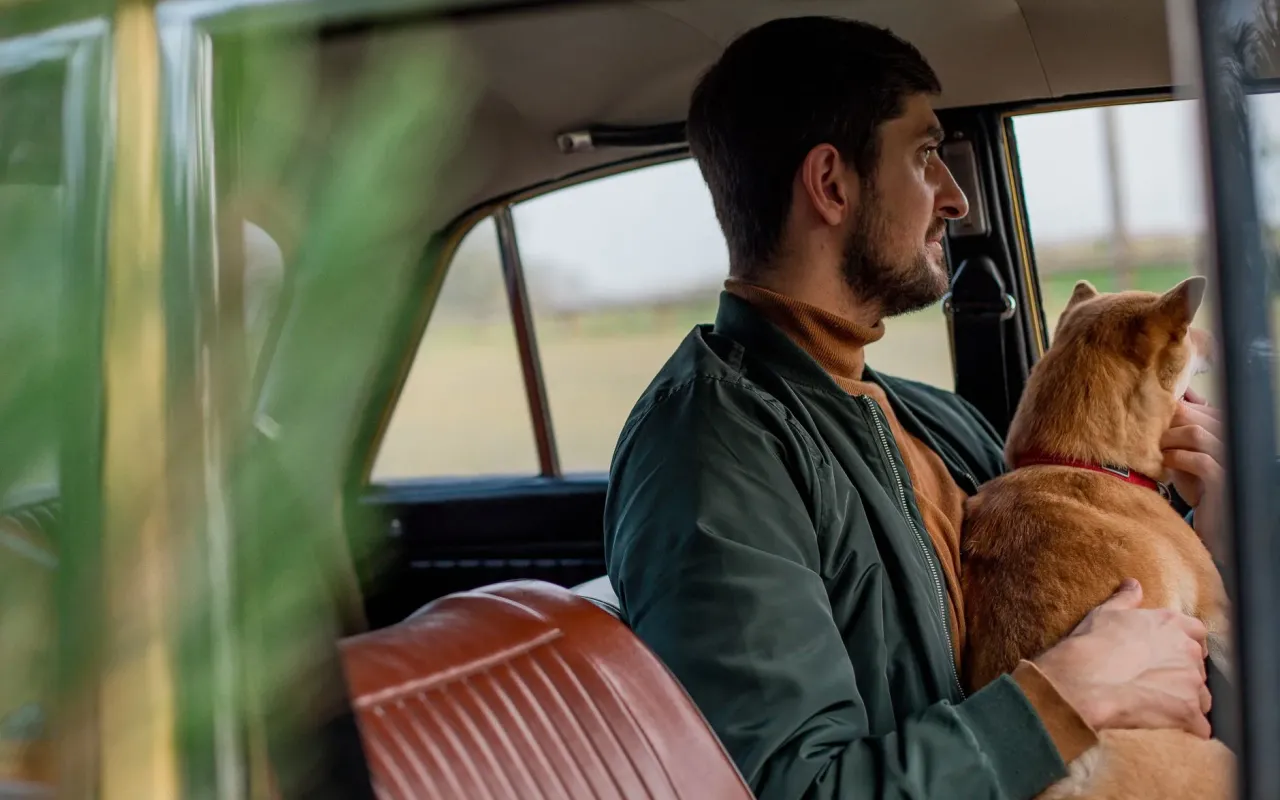
From motion sickness to hotel logistics, here's the real, honest advice for traveling with your dog or cat without losing your sanity.
- June 15, 2026
AceShowbiz - You picture it perfectly: your dog's head hanging out the window, tongue flapping in the wind, tail wagging as you cruise toward a mountain cabin. Or maybe your cat is curled up peacefully in the back seat, purring like a tiny motor. That's the Instagram version. The reality? Your dog just threw up on the leather seat, your cat has wedged herself under the passenger footwell, and you're only thirty minutes from home. I've been there—twice with a Labrador who thought every bump was a personal attack on his stomach.
Traveling with pets isn't impossible, but it's also not the carefree adventure social media sells. The difference between a disaster and a great trip is preparation—specifically, the kind of preparation that accounts for the messy, anxious, and unpredictable realities of your animal. After logging over 10,000 miles on the road with my own dogs and talking to veterinarians who see the aftermath of poorly planned trips, I've gathered the advice that actually works.
Why Your Dog Hates the Car (and How to Fix It)
Here's a statistic that might surprise you: a study from the University of Veterinary Medicine Vienna found that nearly 40% of dogs show signs of motion sickness. That means your dog's drooling, whining, or vomiting isn't just bad luck—it's a physiological response to the car's movement. Dogs don't have fully developed inner ear structures until they're about six months old, but even adult dogs can suffer if they associate the car with discomfort.
The fix isn't just giving them a pill and hoping for the best. Start with short, positive trips that don't end at the vet. Drive to a park, a friend's house, or a pet store for five minutes, then reward with treats and praise. Gradually increase the duration over several weeks. If that doesn't work, talk to your vet about medication like Cerenia (for dogs) or Dramamine (under veterinary guidance). But never, ever give human anti-nausea meds without a vet's okay—dosages are different, and some can be toxic.
One practical tip that saved my sanity: don't feed your pet a full meal within three hours of departure. A half-empty stomach is less prone to rebellion. Also, crack the windows slightly to equalize air pressure—dogs are sensitive to the same ear-popping sensations we get, but they can't yawn on command.
The Crash-Tested Reality of Pet Restraints
I'll be blunt: letting your dog roam freely in the car is dangerous for both of you. According to a 2020 study by the AAA Foundation for Traffic Safety, an unrestrained 10-pound dog in a 50-mph crash exerts roughly 500 pounds of force. That's not just a projectile—it's a living creature that can be killed or seriously injure passengers. Yet, a survey from the American Automobile Association found that only 16% of dog owners use any kind of restraint.
You have options: a crash-tested harness (like Sleepypod or Ruffwear), a secured crate, or a pet seat belt that clips into the seatbelt buckle. But not all products are equal. The Center for Pet Safety (CPS) has tested dozens of harnesses and crates, and many fail. Look for the CPS certification seal, not just a five-star Amazon review. For cats, a small, ventilated carrier secured with a seatbelt or bungee cord is non-negotiable—they panic unpredictably and can claw their way under the brake pedal.
Here's the actionable takeaway: before your trip, test the restraint at home. Let your dog wear the harness for an hour, then practice clipping it in the car without driving. If your cat fights the carrier, leave it out in the living room for a week with treats inside so it becomes a safe space. You want zero surprises on the highway.
Hotel and Airbnb Logistics: The Fine Print That Bites
You've found a hotel that says "pet-friendly." Great. But here's what they don't tell you until you check in: pet fees can range from $25 to $150 per night, there's often a weight limit (usually 50 pounds), and some properties restrict pets to specific rooms—usually the ones near the ice machine or elevator. I once booked a "pet-friendly" cabin only to discover they charged a $200 deposit for a cat, refundable only if there was zero evidence of fur. Spoiler: cats shed.
To avoid this, call the property directly—don't rely on the website. Ask specific questions: Is there a grassy area for bathroom breaks? Are pets allowed to be left alone in the room? (Many hotels require them to be crated if you leave.) What's the actual fee, including taxes? And read recent reviews from other pet owners. A single review that says "the room smelled like wet dog" is a red flag for poor cleaning policies.
For Airbnbs, the rules are even trickier. Hosts can deny pets even if the listing says "pets considered." Message them before booking and explain your pet's size, breed, and behavior. Offer to pay a higher cleaning fee upfront. And always, always bring a portable pet bed or blanket to protect furniture. I use a waterproof, washable cover on every couch—it's saved me from countless damage claims.
Managing Pet Anxiety on the Road
Not all pets are born travelers. My friend's cat, Luna, howled for the first three hours of a six-hour drive. After trying pheromone sprays, calming treats, and even a thunder shirt, nothing worked—until they discovered that covering her carrier with a dark, lightweight blanket reduced her stress by 80%. The principle is simple: animals feel safer when they can't see the world rushing past at 70 mph.
For dogs, anxiety often manifests as pacing, excessive panting, or refusal to settle. The fix isn't a magic pill; it's a combination of preparation and distraction. Bring their favorite chew toy, a frozen Kong filled with peanut butter (the licking action releases calming endorphins), or a puzzle toy that dispenses treats slowly. Avoid giving them free reign to bark at passing trucks—use a gentle leader or head halter if they're reactive.
If your pet has severe anxiety, talk to your vet about short-term medication. Trazodone or gabapentin are commonly prescribed for travel, but they should be tested at home first. I learned this the hard way: my dog, Charlie, took a full dose before a trip and was so sedated he couldn't walk straight. Half a dose was perfect—calm but alert. And always, always pack extra water. Stress dehydrates pets faster than you'd expect, and you don't want to rely on gas station tap water.
The Hidden Danger: Overheating and Car Safety
Here's a fact that makes me cringe: even on a 70°F day, the inside of a parked car can reach 100°F in just 10 minutes, according to the American Veterinary Medical Association. Cracking the windows does almost nothing. And it's not just summer—on a 60°F day, the car can still heat up to 80°F. I've seen people leave dogs in the car "just for a minute" while they grab coffee. That minute can be fatal.
The solution is simple: never leave your pet alone in a parked car, period. If you need to stop, plan for pet-friendly stops. Apps like BringFido list restaurants with outdoor seating that allows dogs, or you can use a service like Rover to find a nearby pet sitter for a quick errand. For cats, the risk is even higher because they can't pant effectively—they overheat faster. If you're driving in hot weather, invest in a portable fan that clips to the crate and a cooling mat that activates with pressure (no refrigeration needed).
One more tip: keep a digital thermometer in your glove compartment. If you ever feel unsure about the temperature, check it. Your pet can't tell you they're too hot until it's too late. And always carry extra water—not just for drinking, but to wet their paws and ears, which helps cool them down rapidly.
Feeding, Water, and Bathroom Breaks: The Logistics Nobody Talks About
You can't just pull over at any rest stop. Most highway rest areas have no designated pet areas, and walking your dog near a busy highway is dangerous. I once had a border collie slip his collar at a rest stop and bolt toward the road—I caught him, but barely. The lesson: always use a harness with a double-clip leash (attached to both the harness and collar) for security, especially in unfamiliar, chaotic environments.
Plan your bathroom breaks every two to three hours. Dogs need to stretch their legs, sniff, and relieve themselves. Cats are trickier—they may refuse to use a litter box in a moving car or strange location. Bring a portable litter box (a shallow plastic bin works) and place it in the car at a stop, but don't expect them to use it immediately. Some cats will hold it for hours; others will have an accident. The best strategy is to limit their food and water intake two hours before departure, then offer small amounts at each stop.
For water, use a spill-proof travel bowl or a water bottle with a built-in dispenser. Avoid giving them ice cubes—they can cause stomach cramps. And never let them drink from puddles or stagnant water at rest stops; leptospirosis, a bacterial infection, is common in standing water and can be fatal. Stick to bottled or filtered water from home.
What to Pack: The Honest Checklist
You'll see a lot of "pet travel packing lists" online that include things like a designer travel bed and organic treats. Here's what you actually need, based on real-world experience. First, a copy of your pet's vaccination records and a recent photo (in case they get lost). Second, a basic first-aid kit with tweezers (for ticks), antiseptic wipes, and a styptic pencil (for broken nails). Third, poop bags—more than you think you need. Fourth, a familiar blanket or toy that smells like home.
For medications, pack double the amount you think you'll need. Delays happen. And if your pet takes prescription food, bring extra in a sealed container—you may not find it at a grocery store in a small town. I also carry a collapsible bowl and a roll of paper towels for spills. And one more thing: a spare leash and collar. I've had a leash break at the worst possible moment, and having a backup saved the trip.
Finally, consider a GPS tracker for your pet's collar. The Tile or AirTag style trackers are affordable (around $25) and can help you locate a nervous pet that escapes at a rest stop. It's not a substitute for microchipping, but it's a cheap safety net that gives you peace of mind.
When to Just Stay Home
Let's be honest: not every pet is cut out for travel. If your dog has severe separation anxiety, is aggressive toward strangers, or has a chronic health condition like epilepsy or heart disease, the stress of a road trip might not be worth it. I've had friends who insisted on bringing their elderly cat on a cross-country move, only to have the cat stop eating for three days—a dangerous condition called hepatic lipidosis.
Consider hiring a trusted pet sitter or boarding your pet at a facility with good reviews. It's not a failure; it's responsible pet ownership. The goal is to enjoy your trip without endangering your animal. If you're unsure, do a test run: a one-hour drive to a local park. If your pet is panting, drooling, or hiding the whole time, they're telling you something. Listen to them.
Traveling with pets can be one of the most rewarding experiences when done right. It's not about the perfect Instagram photo—it's about the memories you build together, the shared sunsets, and the quiet moment when your dog rests their head on your lap at a scenic overlook. But those moments only happen when you've done the boring, unglamorous work of preparation. So pack the spare leash, skip the full meal, and double-check that hotel policy. Your pet will thank you—probably with a slobbery kiss.