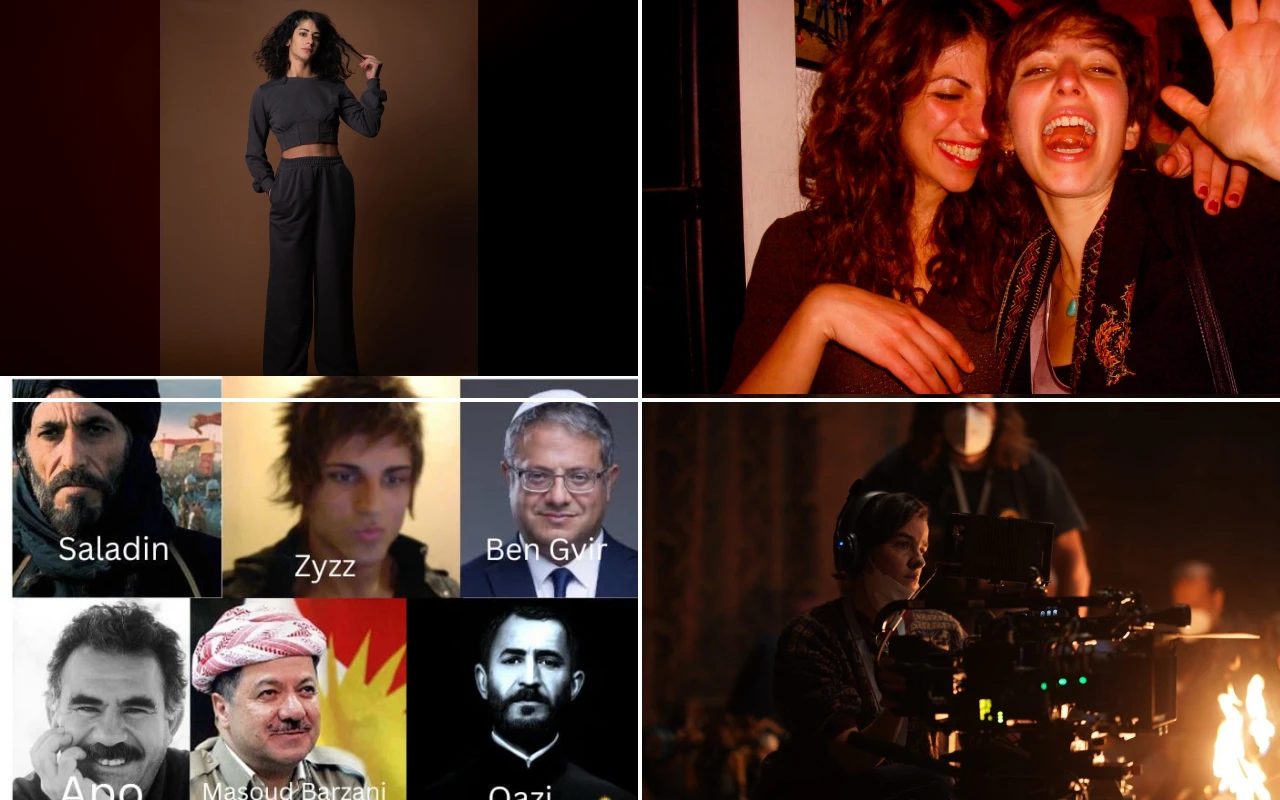
Palestinian filmmakers share powerful documentaries at CPH:Conference 2026, fostering empathy through stories of historic Palestine and its people.
- March 27, 2026
AceShowbiz - At the CPH:Conference 2026 held alongside the 23rd Copenhagen International Documentary Film Festival, Palestinian documentary filmmakers took center stage, sharing compelling projects that delve into the complexities of historic Palestine and its people. The conference aims to foster empathy and understanding among Palestinian and international audiences through diverse storytelling approaches.
The panel, titled Updated Reflections on Contemporary Palestinian Documentary Filmmaking, featured a lineup of notable creatives. Muallem Ashtar, a Jerusalemite multidisciplinary artist whose work spans circus, dance, and theater, presented his short film Land of Denied Rituals 2025. Dalia Al Kury discussed her cross-genre storytelling methods, while Kinda Kurdi, founder of the U.K.-based K² Visual Media specializing in documentary and animation, shared insights on her latest work. Tanya Marar, a Jordanian-Palestinian-Bulgarian filmmaker based in the U.K., focused on political struggles and narratives of oppression. The session was moderated by Gaza-born Palestinian filmmaker and producer Mohamed Jabaly, known for his film Life Is Beautiful.
Tanya Marar introduced her documentary, currently titled Rage & Resist, produced by Ike Rofe. The film examines the actions of Palestine Action, a U.K.-based activist group engaging in direct action against Israeli weapons manufacturers. Marar described the group’s tactics as disruptive, noting that they were designated a terrorist organization in the U.K. in 2025, which limits her legal ability to support them openly. Nevertheless, she has spent over two years documenting the lives of the group’s founders, Huda, an Iraqi Palestinian woman, and Richard, an English member, along with other participants.
Dalia Al Kury shared her experience directing Rehearsing for Justice, produced by Nefise Özkal Lorentzen and Ola Hunnes. The film staged a symbolic confrontation in a Jordanian hotel between the filmmaker and an actor portraying an Israeli war criminal. Al Kury sought to explore the question: "Where is all this rage going to go?" She described the process as an explosive journey through seeking personal justice, grappling with the complexities of victimhood and resistance. She emphasized the challenge of portraying the Palestinian experience without succumbing to victimhood, stating, “We have been trying not to fall into victim modes, but we are victims.” Her film further probes how to combat fascism without adopting fascistic behaviors themselves.
Director Kinda Kurdi presented her first feature documentary, The Last Mayor of Jerusalem, produced by Janay Boulos. The film tells the story of Rawhi Al-Khatib, Jerusalem’s last Palestinian mayor, depicting his survival and love amidst political turmoil. Using a blend of animation and archival footage, the documentary reveals Al-Khatib’s deportation under allegations of national security threats and offers a nuanced portrait of his life and legacy. When asked about the challenges faced by Palestinian filmmakers, Kurdi stressed the importance of solidarity and collective action: “The onus is on us to come together and bring these stories and push for changes.”
Muallem Ashtar also discussed his debut feature documentary, Condemned to Dream, produced by Jiries Copti. The film follows the Ramallah theater, known as Ashtar, managed by the filmmaker’s parents. This theater represents one of the few creative spaces available for Palestinian youth, serving as a refuge that affirms identity and cultural resistance amid ongoing occupation. As described in the film’s summary, Condemned to Dream captures “fragile beauty” in a context where occupation threatens to erase identity and silence narratives. Muallem emphasized to the Copenhagen audience that “resistance has so many forms, and culture is one of them.” Addressing the challenges he encounters, he highlighted the ongoing struggle to avoid censorship both in Palestine and in France, where he currently resides.
The panel concluded with a poignant reflection from Dalia Al Kury, who quipped shortly after the Oscars ceremony: “We should win an Oscar for pretending that everything is normal.” This remark underscored the resilience and determination of Palestinian filmmakers who continue to create impactful work despite the political and social challenges they face.
Overall, the session at CPH:Conference 2026 showcased how contemporary Palestinian documentary filmmakers are using their art to resist oppression and create meaningful dialogues. Their films not only document political struggles but also explore personal stories of survival, identity, and justice, aiming to engage audiences worldwide with perspectives often marginalized in mainstream media.
By spotlighting these voices, the conference highlighted the vital role of documentary filmmaking in fostering empathy and understanding across cultural and political divides, ensuring that Palestinian narratives continue to resonate globally.