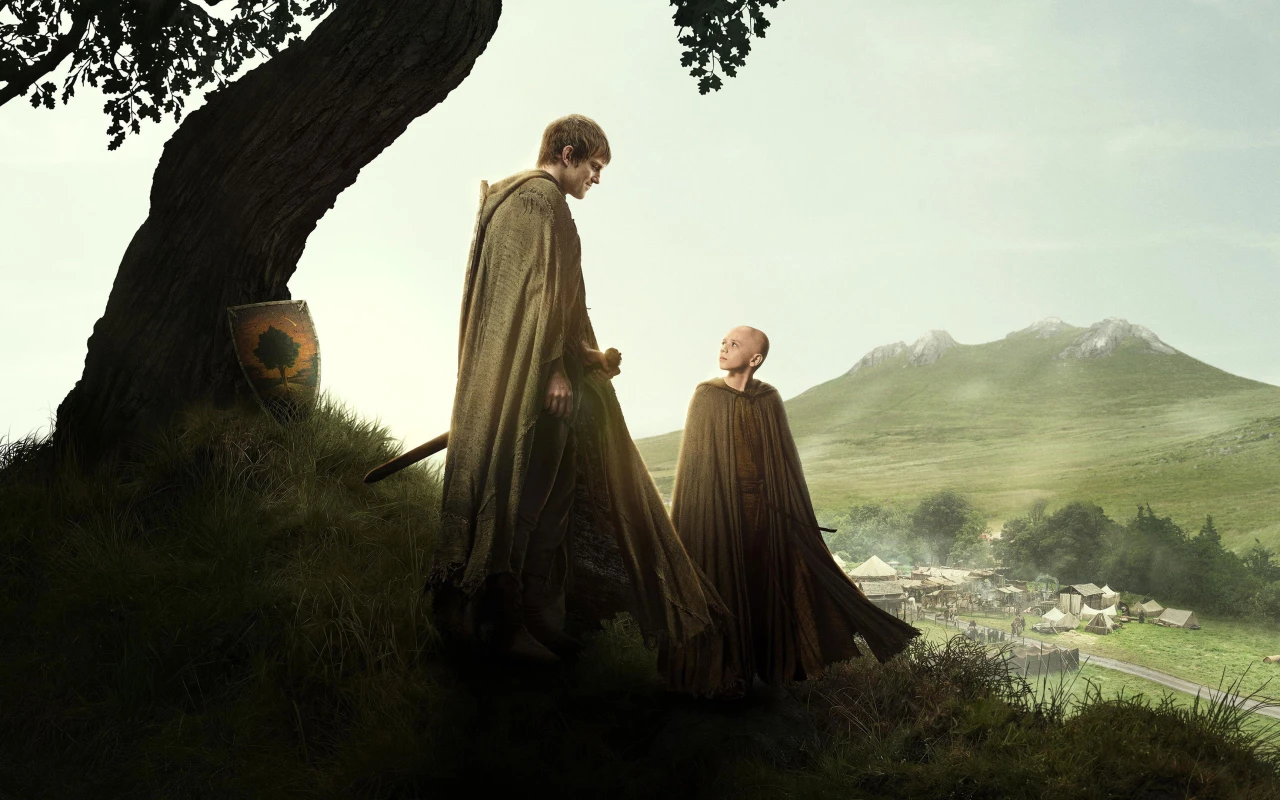
Uncover the Targaryen legacy beyond the coin flip. Explore the madness, magic, and new revelations from A Knight of the Seven Kingdoms. Spoilers for Season 1.
- March 23, 2026
AceShowbiz - Warning: This article contains spoilers for season 1 of A Knight of the Seven Kingdoms. The series introduces a fresh perspective on the infamous Targaryen family, shedding new light on their complex legacy. For centuries, the Targaryens have been central to the Game of Thrones universe, ruling Westeros and captivating audiences with their mystical connection to dragons and their infamous bouts of madness.
The Targaryens have long been portrayed as a family touched by magic, often described as god-like due to their bond with dragons. However, their history is also marked by a recurring pattern of madness and cruelty. A well-known saying from George R.R. Martin’s A Song of Ice and Fire novels, as well as HBO’s adaptation, suggests that whenever a Targaryen child is born, the gods flip a coin to decide if the child will be benevolent or mad. This duality is evident throughout the franchise, with characters like Aegon, Aemond, and Daemon embodying cruelty, while others such as Viserys, Helaena, and Rhaenyra represent kindness and fairness. A Knight of the Seven Kingdoms continues this tradition.
In the latest A Knight of the Seven Kingdoms series on HBO, viewers meet a new generation of Targaryen princes. Among them, Prince Baelor stands out as a figure of kindness, and Prince Maekar, though somewhat arrogant and rough, demonstrates fairness. Young Prince Aegon, affectionately called Little Egg, is portrayed as clever and sweet, while Prince Daeron, despite his inner turmoil, reveals a compassionate side. These princes sharply contrast with Prince Aerion, who embodies the darker side of Targaryen madness. Aerion’s cruelty is shown in disturbing ways, such as sneaking into Aegon’s room with a knife and drowning a cat. These traits remind viewers of the Mad Kings, a symbol of the corruption that has tainted Targaryen bloodlines. Yet, A Knight of the Seven Kingdoms offers a deeper explanation.
In the season finale, Prince Daeron shares a revealing insight with Dunk, the series’ protagonist. He insists that Aerion was not always the monster he became; as a child, Aerion was sweet and enjoyed simple pleasures like fishing. Daeron’s story serves a purpose: he urges Dunk to take Prince Aegon as his squire, hinting that the environment in which a Targaryen is raised plays a pivotal role in shaping their nature. This argument challenges the long-standing belief in the franchise that Targaryens are born mad due to incestuous bloodlines.
A Knight of the Seven Kingdoms presents a compelling nature versus nurture debate about Targaryen madness. Rather than being born cruel, Daeron suggests that Targaryens become corrupted by their upbringing and the intoxicating influence of power. The Targaryen belief in their own god-like status only worsens this, making some of them into tyrants and monsters. This perspective reframes the madness not as a hereditary curse but as the consequence of environment and entitlement.
This interpretation also sheds new light on Daenerys Targaryen’s descent in Game of Thrones. Initially, Daenerys is portrayed as a moral and just leader, showing none of the madness her father, the Mad King, was known for. However, as her story progresses, she grows to see herself as more than human, claiming a divine right to rule. This shift culminates in her catastrophic decision to burn King’s Landing, confirming the fears of those who doubted her. Yet, according to Daeron’s argument, Daenerys’ downfall was not an inherited madness but the corrupting effect of power and isolation.
The theme of power corrupting individuals is central to the entire Game of Thrones saga, and the Targaryens are not unique in this regard. Other ruling families, such as the Baratheons and Lannisters, also demonstrate how the pursuit or possession of power can warp characters. If a ruler is raised to believe they are inherently superior or chosen by destiny, madness becomes a likely outcome. This broader view suggests that the “mad Targaryen” trope is a reflection of the dangers of power rather than a genetic inevitability.
Subscribers to the Screen Rant newsletter will find even more thoughtful analysis on this debate, exploring how upbringing and environment influence rulers in Westeros and beyond. Insights delve into character arcs, power dynamics, and how these elements shape the fate of kingdoms.
Returning to A Knight of the Seven Kingdoms, Dunk’s response to Daeron’s warning is a key plot point. Determined to shield Prince Aegon from a similar fate as Aerion, Dunk’s role as a protector and mentor takes on greater significance. The lore of A Song of Ice and Fire supports this approach: Aegon IV, raised outside the traditional royal court among common folk, develops into a king beloved by his subjects, despite the disdain of his noble peers. His kindness distinguishes him from other Targaryens who succumbed to cruelty.
This raises the question of whether Aegon’s benevolence is due to his upbringing or an innate trait. While opinions vary, the evidence from both the new series and the broader franchise strongly supports the idea that environment plays a critical role in shaping a ruler’s character. A Knight of the Seven Kingdoms underscores this lesson, reinforcing a theme that has always been present in the overarching narrative: power and how it is wielded, rather than bloodline alone, dictates the course of a ruler’s legacy.
In conclusion, A Knight of the Seven Kingdoms offers a fresh and nuanced exploration of the Targaryen mythos, challenging the simplistic notion that madness is an inherited trait. Instead, it highlights the complex interplay between power, upbringing, and personal choice. This perspective not only enriches the lore of Westeros but also provides a richer understanding of characters like Daenerys and the many rulers who struggle under the weight of destiny.