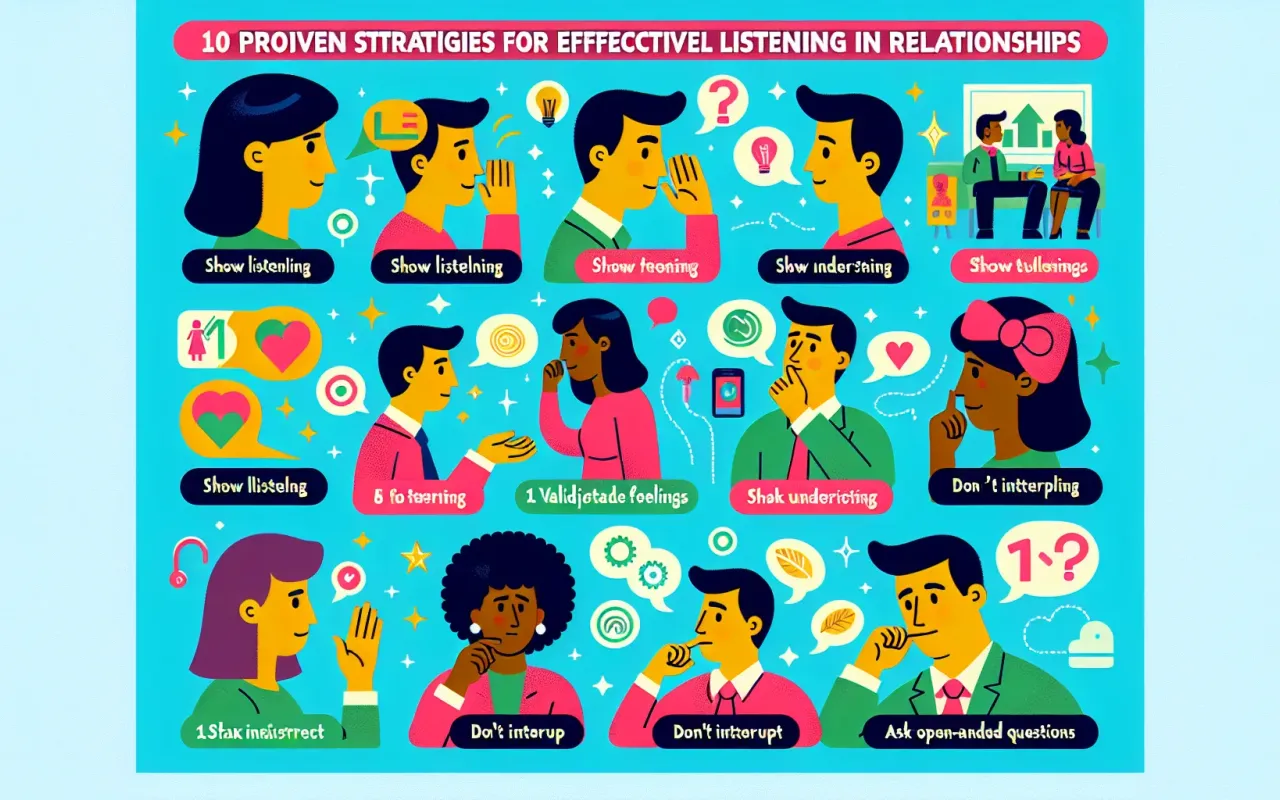
Discover 10 proven strategies for effective listening in relationships. Improve communication and strengthen your bond with these expert tips.
- November 20, 2024
Effective listening in relationships is a cornerstone for building strong and enduring bonds. Good listening skills can help avoid misunderstandings, foster trust, and enhance emotional intimacy. In this article, we explore ten proven strategies to master effective listening in relationships.
1. Be Present and Attentive
One of the most fundamental aspects of effective listening in relationships is being fully present and attentive. Put away distractions like phones or laptops, and focus completely on your partner. This conveys respect and shows that you value their words.
2. Maintain Eye Contact
Maintaining eye contact can significantly improve the way you listen. It shows your partner that you are engaged and interested in what they have to say. However, be mindful of cultural differences, as the amount of eye contact can vary in appropriateness from one culture to another.
3. Avoid Interrupting
Avoid interrupting your partner while they are speaking. Interruptions can make them feel undervalued and disrespected. Allow them to finish their thoughts before you respond. This helps in creating a safe space for open and honest communication.
4. Use Reflective Listening
Reflective listening involves paraphrasing or summarizing what the speaker has said to show that you have understood them. For example, you can say, "So what you're saying is..." This technique not only clarifies your understanding but also shows empathy.
5. Validate Their Feelings
Validation is an important strategy in effective listening. Acknowledge your partner's emotions and experiences without judgment. Statements like "I understand why you feel that way" can go a long way in making them feel heard and valued.
6. Ask Open-Ended Questions
To encourage a more in-depth conversation and demonstrate genuine interest, ask open-ended questions. Questions that start with "How", "What", "Where", and "Why" invite elaboration and give your partner an opportunity to express themselves more fully.
7. Practice Patience
Effective listening requires patience, particularly in emotionally charged conversations. Allow pauses and silences as your partner gathers their thoughts. Do not rush them; let them speak at their own pace.
8. Be Non-Judgmental
Avoiding judgement is crucial. When your partner speaks, listen with an open mind. Refrain from making snap judgments or defensive comments. This will make your partner more likely to share their genuine thoughts and feelings with you.
9. Provide Positive Feedback
Positive feedback reinforces effective communication. Simple affirmations like nodding, smiling, or saying “I see†indicate that you are actively engaged in the conversation. Positive feedback helps to build a supportive and understanding environment.
10. Follow Up
Effective listening doesn’t end when the conversation does. Follow up on previous conversations to show that you have retained what was discussed and that you care. This could be as simple as asking how a particular situation has progressed or sharing your thoughts on a topic previously discussed.
Conclusion
Mastering effective listening in relationships is an ongoing process that requires practice and mindfulness. By incorporating these ten strategies into your interactions, you can significantly improve communication, build trust, and foster a deeper emotional connection with your partner. Remember, listening is an art that, when perfected, can transform your relationships for the better.