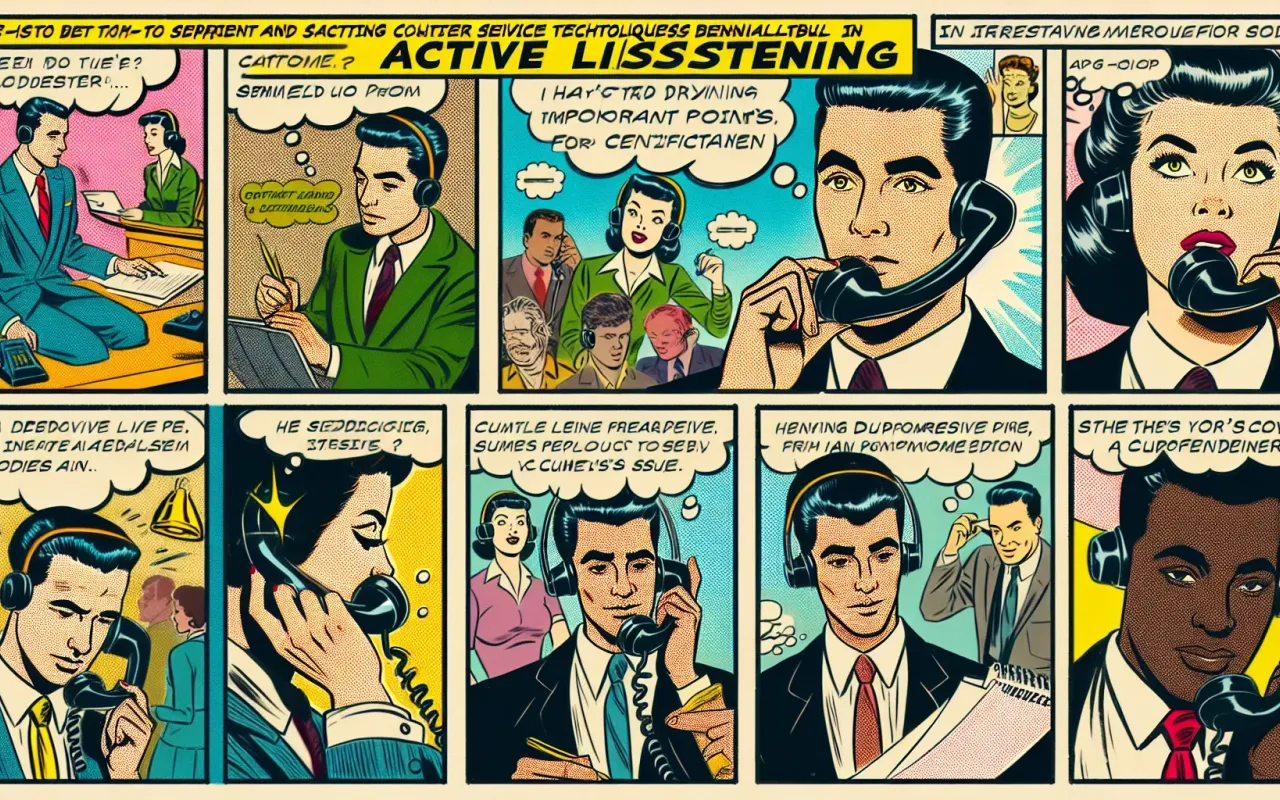
Discover 10 effective active listening strategies for customer service that boost satisfaction. Learn how to improve communication and customer experience.
- November 9, 2024
In the dynamic world of customer service, active listening is a cornerstone of effective communication and customer satisfaction. Implementing the right active listening strategies for customer service can significantly enhance interactions and lead to higher satisfaction levels. This article delves into ten proven strategies that can empower your team and improve customer experiences.
1. Show Genuine Interest in the Customer
The primary step in active listening is to show genuine interest in what the customer is saying. This involves maintaining eye contact, nodding, and using verbal affirmations such as "I understand" or "I see." Doing so conveys that you are fully engaged and value the customer's input, fostering a positive interaction.
2. Avoid Interrupting
Interrupting a customer can disrupt their thought process and make them feel undervalued. Allow the customer to express their concerns or feedback completely before responding. This not only shows respect but also ensures you fully understand their perspective before addressing the issue.
3. Paraphrase and Summarize
Paraphrasing and summarizing what the customer has said can confirm your understanding and show that you are actively listening. Phrases like "So what you're saying is…" or "Let me make sure I understand you correctly…" can be very effective. This strategy also helps in clarifying any misunderstandings early on.
4. Use Positive Body Language
Non-verbal cues play a crucial role in active listening. Positive body language, such as nodding, leaning forward slightly, and maintaining eye contact, can make the customer feel heard and understood. These gestures help build rapport and trust between the customer and the service representative.
5. Ask Open-Ended Questions
Open-ended questions encourage customers to elaborate on their issues, providing more detailed information that can help in resolving their concerns. Questions like "Can you tell me more about…" or "What happened next?" facilitate deeper understanding and demonstrate genuine interest in assisting the customer.
6. Minimize External Distractions
Active listening requires full attention. Minimize distractions by closing unnecessary tabs, silencing notifications, and ensuring a quiet work environment. When on a call, consider using noise-canceling headphones. By giving your undivided attention, you show the customer that their issue is important and that you are dedicated to resolving it.
7. Reflect Emotionally
Understanding the customer's emotional state and reflecting it in your response can enhance the connection. Phrases like "I can see why you're upset" or "That must have been frustrating" validate the customer's feelings and show empathy. This emotional acknowledgment can de-escalate tense situations and create a more positive interaction.
8. Offer Solutions and Follow-Up
After thoroughly understanding the customer's issue, promptly offer a suitable solution. Clearly explain the steps you will take to address their concerns and ensure follow-up if necessary. This proactive approach not only resolves the issue but also demonstrates commitment to customer satisfaction.
9. Keep the Conversation Focused
Steering the conversation towards a resolution while keeping the customer on topic is crucial. Gently guide the discussion back to the main issue if the conversation starts to diverge. This helps in efficiently resolving the customer's concerns without unnecessary diversions.
10. Continuous Training and Improvement
Regular training on active listening techniques is essential for maintaining high standards in customer service. Encourage your team to participate in workshops, role-playing sessions, and seek feedback on their performance. Continuous improvement should be a core value, ensuring that your team remains adept at handling customer interactions effectively.
Conclusion
Effective active listening is a vital skill in customer service that can significantly boost satisfaction and loyalty. By implementing these ten strategies, customer service representatives can improve their communication, foster stronger connections, and enhance the overall customer experience. Remember, active listening is not just about hearing words but understanding the underlying sentiments and responding thoughtfully.
© 2024 Customer Service Insights. All rights reserved.