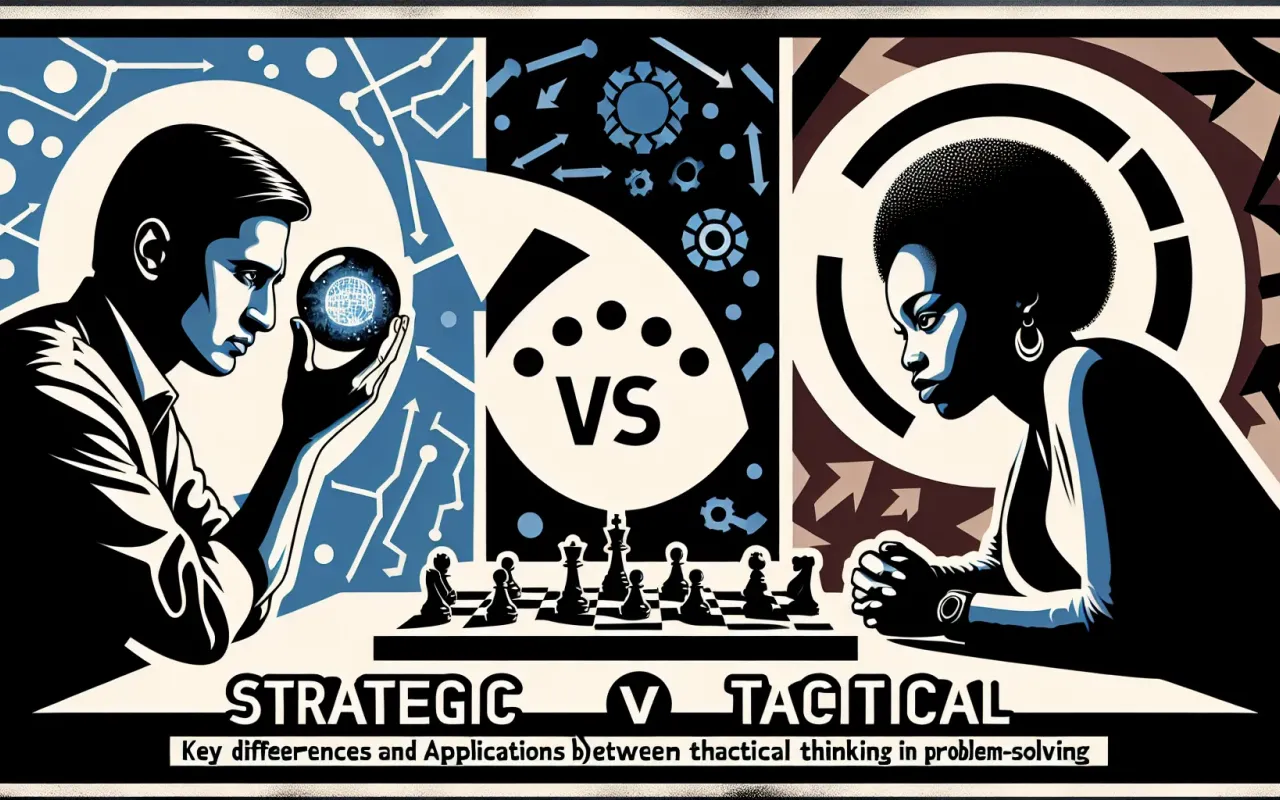
Explore the key differences between strategic thinking and tactical thinking in problem-solving. Learn their applications and how to effectively use both approaches in your decision-making process.
- October 26, 2024
Introduction
Effective problem-solving often requires a balanced blend of strategic thinking and tactical thinking. Understanding the key differences and applications of these two approaches can significantly enhance decision-making processes within various domains, including business, military, and personal development. This article delves into the core concepts of strategic and tactical thinking, examining their roles and practical uses to equip you with the knowledge to tackle complex problems more efficiently.
What is Strategic Thinking?
Strategic thinking is a high-level, long-term approach that focuses on defining goals, setting directions, and planning how to achieve desired outcomes. It is about visualizing the big picture and developing a comprehensive plan that aligns with overarching objectives.
Characteristics of Strategic Thinking
- Visionary: Embraces a forward-looking perspective, identifying future opportunities and challenges.
- Goal-Oriented: Centers on long-term objectives and the steps needed to achieve them.
- Systematic: Involves methodically evaluating various factors that affect overall strategy, such as competition, market trends, and internal capabilities.
- Holistic: Considers the broader context and interconnections between different elements within an organization or system.
What is Tactical Thinking?
Tactical thinking, in contrast, is a more immediate, short-term approach that focuses on specific actions and tasks required to achieve strategic goals. It is about executing plans with precision and efficiently allocating resources to address immediate challenges.
Characteristics of Tactical Thinking
- Action-Oriented: Concentrates on implementing specific steps and activities to achieve objectives.
- Detail-Focused: Involves attention to details, ensuring that each task is performed correctly and on time.
- Adaptive: Requires the ability to respond quickly to changing circumstances and adjust plans as needed.
- Operational: Deals with the practical aspects of executing strategies and managing day-to-day operations.
Key Differences Between Strategic and Tactical Thinking
Though closely related, strategic thinking and tactical thinking differ in several critical aspects:
Time Horizon
Strategic thinking spans a longer time horizon, often looking years into the future, whereas tactical thinking focuses on the short-term, addressing immediate issues and ensuring timely execution.
Scope
Strategic thinking encompasses a broader scope, incorporating various elements and their interconnections within the entire organization or system. Tactical thinking is narrower, concentrating on specific tasks and initiatives.
Focus
Strategic thinking is goal-oriented, prioritizing long-term objectives. Tactical thinking is action-oriented, emphasizing the implementation of tasks to meet short-term goals.
Applications in Business
In the business landscape, both strategic and tactical thinking are crucial for successful operations and growth. Here’s how they apply:
Strategic Thinking in Business
- Business Planning: Formulating long-term goals, market positioning, and competitive strategies.
- Resource Allocation: Determining where to invest resources for maximum future payoff.
- Market Analysis: Understanding market trends, customer needs, and potential disruptions.
Tactical Thinking in Business
- Project Management: Executing plans, managing timelines, and ensuring projects stay on track.
- Sales Strategies: Implementing specific campaigns and sales tactics to meet quarterly targets.
- Operational Efficiency: Streamlining processes, reducing costs, and addressing immediate operational challenges.
Applications in Military and Defense
The distinction between strategic and tactical thinking is particularly evident in military contexts, where both play vital roles in mission success.
Strategic Thinking in Military
- Campaign Planning: Developing long-term strategies to achieve military objectives.
- Resource Management: Allocating personnel, equipment, and logistics to support strategic goals.
- Alliances and Diplomacy: Building and maintaining strategic partnerships and diplomatic relations.
Tactical Thinking in Military
- Battlefield Decisions: Making real-time decisions to respond to immediate threats and opportunities.
- Tactical Maneuvers: Implementing specific military tactics and operations.
- Logistical Support: Ensuring timely supply and support to front-line units.
Balancing Strategic and Tactical Thinking
For effective problem-solving, it’s crucial to balance strategic and tactical thinking. Here are some tips:
Aligning Goals and Actions
Ensure that tactical actions are aligned with strategic goals. Regularly review both to maintain coherence and direction.
Dynamic Planning
Adopt a flexible approach to planning, allowing for adjustments based on real-time feedback and changing circumstances.
Prioritization
Prioritize tasks and projects that contribute significantly to strategic objectives. Avoid getting bogged down in minor details that do not impact long-term goals.
Conclusion
In conclusion, understanding the distinctions and applications of strategic and tactical thinking is essential for effective problem-solving. By leveraging both approaches, you can navigate complex challenges, seize opportunities, and drive long-term success. Whether in business, military, or personal development, mastering the balance between strategic and tactical thinking will enhance your decision-making capabilities and enable you to achieve your goals efficiently.