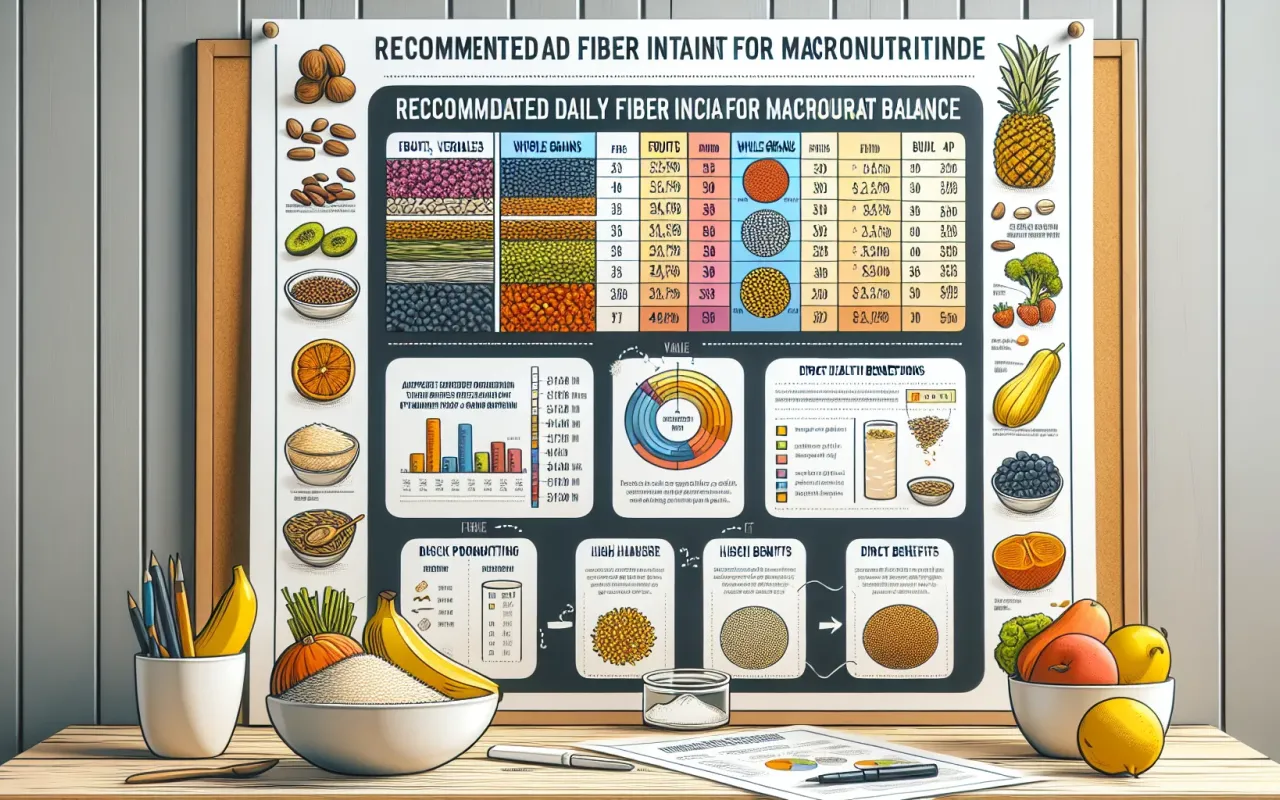
Discover the recommended daily fiber intake for macronutrient balance and how it impacts your overall health. Achieve optimal nutrition with our comprehensive guide.
- October 19, 2024
In our quest for optimal health, understanding the role of dietary fiber and its impact on macronutrient balance is crucial. This guide will elucidate the recommended daily fiber intake for macronutrient balance, helping you achieve your nutritional objectives effectively.
What is Dietary Fiber?
Dietary fiber, commonly referred to as roughage or bulk, is a type of carbohydrate that the body cannot digest. Unlike other carbs, fiber passes through the digestive system relatively intact and is categorized into two main types: soluble and insoluble fiber.
Soluble Fiber
Soluble fiber dissolves in water to form a gel-like substance. It can help lower blood cholesterol and glucose levels. Common sources include oats, peas, beans, apples, and citrus fruits.
Insoluble Fiber
Insoluble fiber promotes the movement of material through the digestive system and increases stool bulk. It's found in foods such as whole-wheat flour, wheat bran, nuts, beans, and vegetables like cauliflower and green beans.
Why is Fiber Important for Macronutrient Balance?
Fiber plays a pivotal role in achieving macronutrient balance by influencing the digestion and absorption of carbohydrates, fats, and proteins. Here are the key benefits:
- Regulates Blood Sugar Levels: Fiber slows the absorption of sugar, helping to control blood sugar levels.
- Supports Healthy Digestion: Promotes regularity and prevents constipation.
- Weight Management: High-fiber foods are more filling and can help you eat less and stay satiated longer.
- Lowers Cholesterol Levels: Soluble fiber has been shown to reduce LDL cholesterol ("bad" cholesterol).
- Maintains Gut Health: Fiber serves as a prebiotic, nourishing the beneficial bacteria in the gut.
Recommended Daily Fiber Intake
The recommended daily fiber intake varies by age, gender, and other factors. Here's a general guideline:
| Age | Gender | Recommended Daily Fiber Intake |
|---|---|---|
| Men (50 or younger) | Men | 38 grams |
| Men (51 or older) | Men | 30 grams |
| Women (50 or younger) | Women | 25 grams |
| Women (51 or older) | Women | 21 grams |
| Children (1-3 years) | Both | 19 grams |
| Children (4-8 years) | Both | 25 grams |
| Boys (9-13 years) | Boys | 31 grams |
| Girls (9-13 years) | Girls | 26 grams |
Consult with a healthcare provider or a registered dietitian to tailor your fiber intake to your specific needs.
How to Increase Your Fiber Intake
Choose High-Fiber Foods
Select a variety of high-fiber foods to meet your daily requirements:
- Fruits such as berries, pears, and oranges
- Vegetables like broccoli, carrots, and sweetcorn
- Whole grains including quinoa, barley, and brown rice
- Legumes such as lentils, chickpeas, and black beans
- Nuts and seeds including almonds, chia seeds, and flaxseeds
Incorporate Fiber Gradually
To avoid digestive discomfort, gradually increase your fiber intake and drink plenty of water to help the fiber move through your digestive system.
Fiber Supplements
If you find it challenging to get enough fiber from food alone, consider fiber supplements. However, it’s best to get most of your fiber from whole foods, which offer additional nutrients and benefits.
Possible Risks of Too Much Fiber
While fiber is essential for health, excessive intake can lead to issues such as:
- Gastrointestinal discomfort including bloating, gas, and cramps
- Mineral deficiencies due to fiber binding with minerals like calcium, magnesium, and zinc and inhibiting their absorption
- Potential for dehydration if water intake is inadequate alongside a high-fiber diet
Balance is key; aim for the recommended daily intake tailored to your individual needs.
Conclusion
In conclusion, understanding and achieving the recommended daily fiber intake for macronutrient balance is foundational for maintaining optimal health. Integrate a variety of fiber-rich foods into your diet, increase your intake gradually, and be mindful of your overall nutritional needs. By doing so, you'll reap the numerous benefits fiber has to offer, from better digestion to improved heart health.