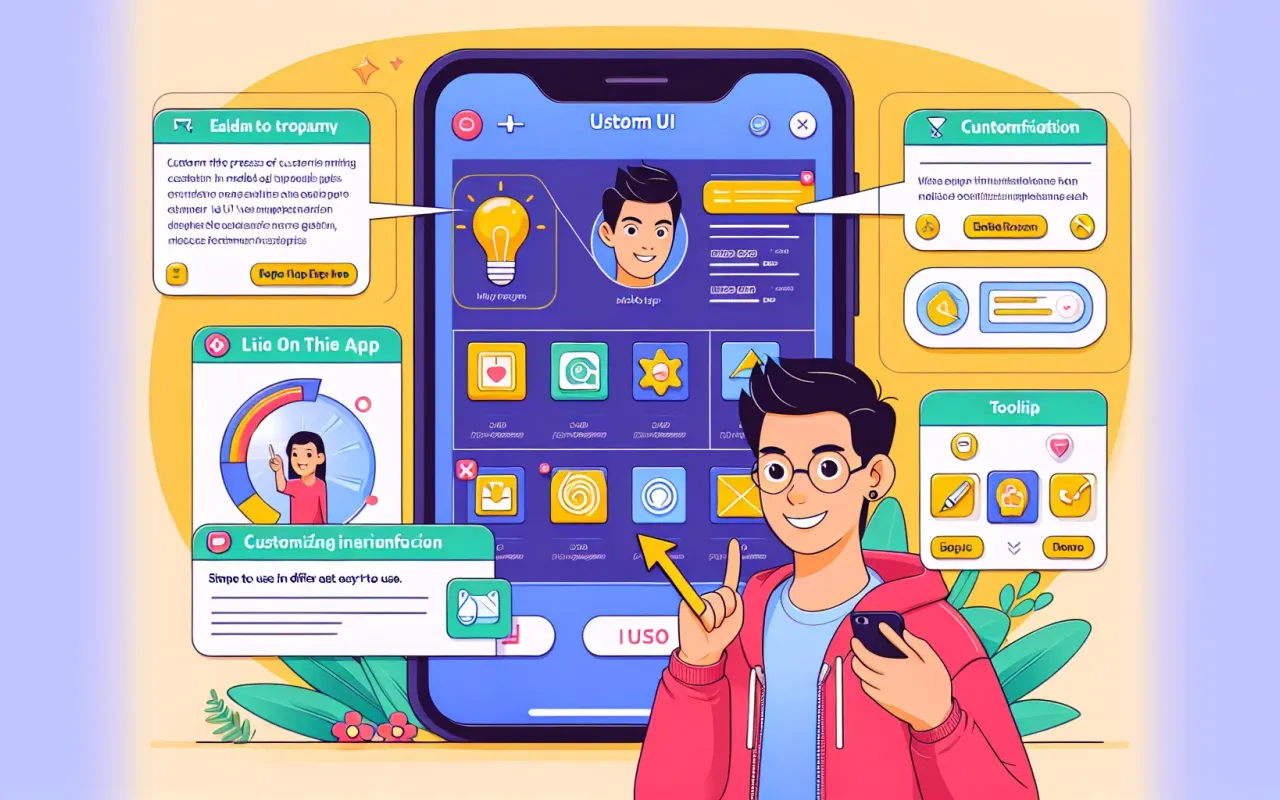
Discover comprehensive strategies and tips for customizing UI in mobile apps to enhance user experience. Learn how to optimize your app's interface for better engagement.
- October 14, 2024
Customizing UI in mobile apps is a critical aspect of designing applications that users love and engage with. A well-thought-out User Interface (UI) can significantly enhance user experience (UX), boost user retention, and positively impact overall app success. This guide explores comprehensive strategies and actionable tips for effectively customizing UI in mobile apps.
Understanding the Importance of UI Customization
Before diving into customization techniques, it's essential to understand why customizing UI is crucial for mobile apps. A tailored UI can:
- Improve Usability: Customized interfaces align with user expectations and make navigation intuitive.
- Enhance Visual Appeal: Attractive UIs draw users in and encourage prolonged engagement.
- Reflect Brand Identity: Consistent branding across the app reinforces brand recognition and loyalty.
- Increase Accessibility: Customization can address diverse user needs, ensuring inclusivity.
- Boost User Retention: A positive UX leads to higher user satisfaction and retention rates.
Key Principles for Effective UI Customization
1. User-Centered Design
User-centered design (UCD) places the end-user at the heart of the design process. By understanding user preferences, behaviors, and pain points, you can create a customized UI that feels intuitive and responsive.
2. Consistency and Predictability
Maintaining consistency in visual elements, such as fonts, colors, and icons, helps users navigate the app effortlessly. Predictable interfaces reduce cognitive load, making the app easier to use.
3. Feedback Mechanisms
Integrate feedback mechanisms within the UI, such as loading indicators, confirmations, and error messages. These elements inform users about the app's status and next steps, improving overall usability.
Customizing UI Elements for Better UX
Navigation
Effective navigation is crucial for a seamless user experience. Customize navigation elements, such as menus, tabs, and buttons, to align with user preferences and ensure effortless access to key features.
Colors and Fonts
Choose colors and fonts that resonate with your brand while ensuring readability and accessibility. Contrast and font size are vital considerations for a visually pleasing and user-friendly interface.
Icons and Graphics
Icons and graphics should be intuitive and easily understandable. Custom icons can enhance the visual appeal and usability of your app by providing clear visual cues.
Interactive Elements
Interactive elements, such as buttons, sliders, and forms, should be designed to be responsive and user-friendly. Ensure these elements provide immediate feedback and are easy to interact with on various screen sizes.
Advanced Techniques for UI Customization
Adaptive Design
Adaptive design involves creating multiple versions of the UI to cater to different devices and screen sizes. This approach ensures a consistent and optimized experience across all platforms.
Personalization
Implement personalization features that adapt to individual user preferences. Utilize user data to tailor the interface, providing a more customized and engaging experience.
Microinteractions
Microinteractions are small, subtle animations or responses that enhance user engagement. These can include button animations, swipe gestures, and loading animations, making the app feel more dynamic and responsive.
Dark Mode
Offering a dark mode option caters to user preferences for reading in low-light environments and can enhance the UI's visual appeal. Ensure dark mode is well-designed and consistent with your branding.
Tools and Technologies for Customizing UI in Mobile Apps
Several tools and technologies can aid in customizing UI effectively:
- Design Software: Tools like Adobe XD, Sketch, and Figma allow for detailed UI design and prototyping.
- Development Frameworks: Frameworks such as React Native and Flutter enable cross-platform development, ensuring consistent UI customization across devices.
- Analytics and Feedback Tools: Utilizing tools like Firebase, Mixpanel, and user feedback platforms can provide insights into user behavior and preferences, guiding UI enhancements.
Challenges and Solutions in UI Customization
Balancing Customization and Performance
Extensive customization can sometimes impact app performance. Optimize assets, minimize code bloat, and conduct regular performance testing to ensure a smooth experience.
Ensuring Accessibility
Accessibility is a critical consideration. Implement features like screen readers, high-contrast modes, and scalable text to accommodate users with disabilities.
Maintaining Consistency Across Platforms
Achieving consistency across different devices and operating systems is complex. Cross-platform development frameworks and rigorous testing can help maintain a uniform UI experience.
Case Studies and Success Stories
Examining successful case studies can provide valuable insights. For example, apps like Airbnb and Uber have excelled in UI customization, delivering exceptional user experiences that cater to a global audience.
Conclusion
Customizing UI in mobile apps is a vital component of delivering a superior user experience. By adhering to user-centered design principles, leveraging advanced customization techniques, and overcoming common challenges, you can create an engaging and intuitive interface. Ultimately, a well-customized UI can significantly enhance user satisfaction, retention, and overall app success.