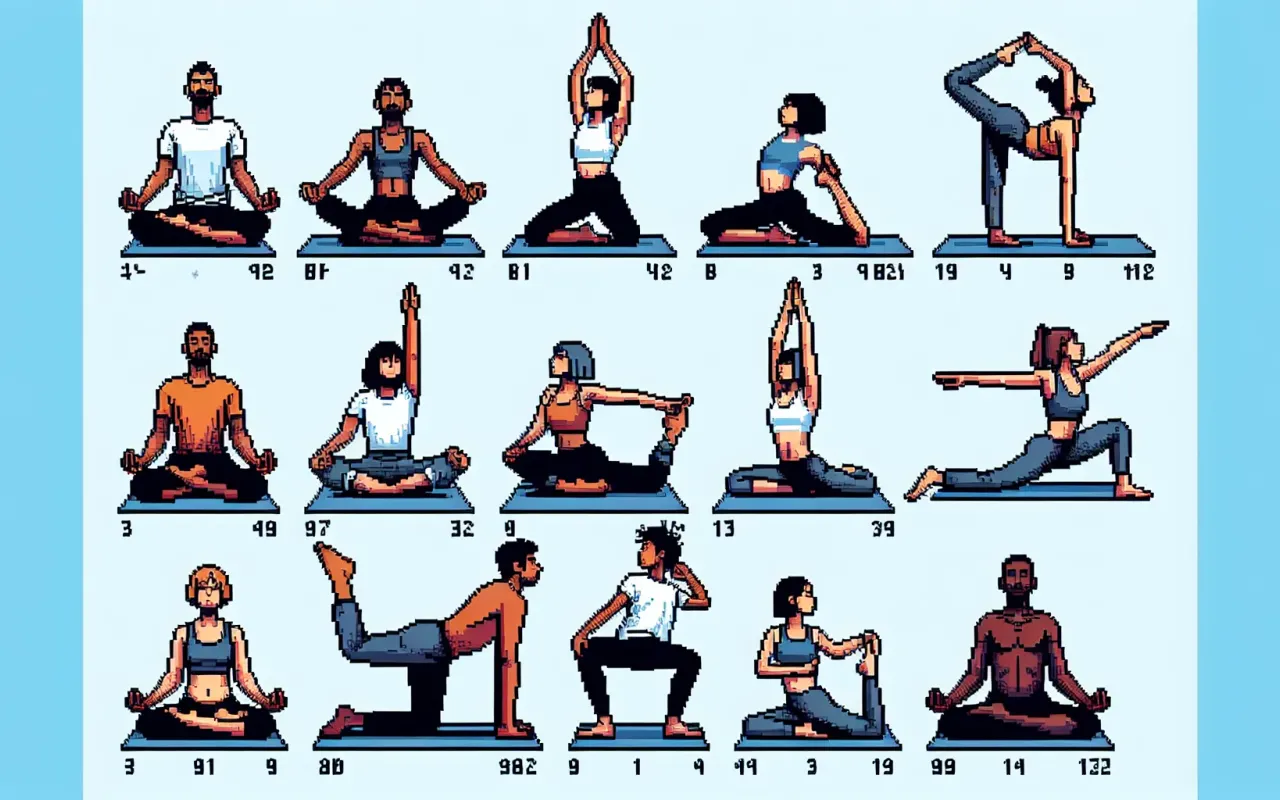
Explore 10 beginner-friendly Hatha yoga poses designed to enhance flexibility. Perfect for those new to yoga, these poses offer numerous physical and mental benefits.
- September 24, 2024
Hatha yoga, one of the most popular forms of yoga, is an excellent choice for beginners aiming to improve flexibility. Known for its gentle and methodical approach, Hatha yoga combines physical postures (asanas), breathing techniques (pranayama), and meditation. By incorporating these practices, practitioners can enhance their physical health, mental clarity, and overall well-being. In this article, we delve into 10 beginner-friendly Hatha yoga poses designed to boost flexibility.
1. Mountain Pose (Tadasana)
Mountain Pose, or Tadasana, is the foundational pose for all standing yoga postures. It may appear simple, but it is crucial for cultivating a sense of balance and grounding. This pose helps improve posture and alignment, setting the stage for more complex poses.
Steps to Perform Mountain Pose:
- Stand with your feet together, big toes touching, and heels slightly apart.
- Distribute your weight evenly across both feet.
- Engage your thigh muscles and lift your kneecaps.
- Lengthen your spine and roll your shoulders back and down.
- Align your head with your spine, and gaze forward.
- Hold the pose for 30 seconds to 1 minute, breathing steadily.
2. Downward-Facing Dog (Adho Mukha Svanasana)
Downward-Facing Dog, or Adho Mukha Svanasana, is a vital pose in Hatha yoga that stretches the hamstrings, calves, and shoulders. It also helps build strength in the arms and legs, while improving circulation.
Steps to Perform Downward-Facing Dog:
- Start on your hands and knees, with your wrists aligned under your shoulders and your knees under your hips.
- Spread your fingers wide and press firmly into the mat.
- Tuck your toes under and lift your hips towards the ceiling.
- Form an inverted "V" shape with your body by straightening your legs and arms.
- Keep your head between your arms, ears aligned with your upper arms.
- Hold the pose for 1 to 3 minutes, focusing on your breath.
3. Cat-Cow Pose (Marjaryasana-Bitilasana)
The Cat-Cow Pose is a gentle flow between two poses that warms up the spine, alleviates tension, and improves flexibility in the back and neck.
Steps to Perform Cat-Cow Pose:
- Begin on your hands and knees in a tabletop position.
- As you inhale, arch your back, letting your belly drop towards the ground while lifting your head and tailbone (Cow Pose).
- As you exhale, round your back towards the ceiling, tucking your chin towards your chest (Cat Pose).
- Continue alternating between Cat and Cow poses for 1 to 2 minutes, following your breath.
4. Child’s Pose (Balasana)
Child’s Pose, or Balasana, is a restful pose that gently stretches the hips, thighs, and ankles while promoting relaxation and stress relief.
Steps to Perform Child’s Pose:
- Start on your hands and knees.
- Bring your big toes together and spread your knees hip-width apart.
- Sit back on your heels and extend your arms forward, lowering your torso between your thighs.
- Rest your forehead on the mat and relax your neck, shoulders, and arms.
- Hold the pose for 1 to 3 minutes, breathing deeply.
5. Standing Forward Fold (Uttanasana)
Standing Forward Fold, or Uttanasana, is a powerful stretch that targets the hamstrings, calves, and spine. It also helps calm the mind and relieve stress.
Steps to Perform Standing Forward Fold:
- Stand with your feet hip-width apart.
- Hinge at the hips and fold forward, bringing your chest towards your thighs.
- Let your head hang heavy and keep your knees slightly bent to avoid strain.
- Hold your elbows or let your fingertips touch the floor.
- Hold the pose for 1 to 2 minutes, breathing deeply.
6. Cobra Pose (Bhujangasana)
Cobra Pose, or Bhujangasana, stretches the chest, shoulders, and abdomen while strengthening the spine and promoting a sense of openness.
Steps to Perform Cobra Pose:
- Lie face down on the mat with your legs extended behind you and the tops of your feet pressing into the mat.
- Place your hands under your shoulders, elbows close to your body.
- Inhale and gently lift your chest off the mat, engaging your back muscles.
- Keep your elbows slightly bent and shoulders relaxed.
- Hold the pose for 15 to 30 seconds, breathing steadily.
7. Seated Forward Fold (Paschimottanasana)
Seated Forward Fold, or Paschimottanasana, is an excellent pose for stretching the hamstrings, lower back, and spine while calming the mind.
Steps to Perform Seated Forward Fold:
- Sit with your legs extended straight in front of you.
- Flex your feet and engage your thigh muscles.
- Inhale and lengthen your spine, reaching your arms overhead.
- Exhale and hinge at the hips, folding forward and reaching for your feet or ankles.
- Hold the pose for 1 to 3 minutes, breathing deeply.
8. Bridge Pose (Setu Bandhasana)
Bridge Pose, or Setu Bandhasana, stretches the chest, neck, and spine while strengthening the back muscles and glutes.
Steps to Perform Bridge Pose:
- Lie on your back with your knees bent and feet hip-width apart.
- Place your arms alongside your body, palms facing down.
- Press your feet into the mat and lift your hips towards the ceiling.
- Keep your thighs parallel and walk your shoulders underneath your back for added support.
- Hold the pose for 30 seconds to 1 minute, breathing steadily.
9. Butterfly Pose (Baddha Konasana)
Butterfly Pose, or Baddha Konasana, targets the inner thighs and hips, promoting flexibility and relaxation in these areas.
Steps to Perform Butterfly Pose:
- Sit with your legs extended in front of you.
- Bend your knees and bring the soles of your feet together, letting your knees drop out to the sides.
- Hold your feet or ankles and sit up tall, lengthening your spine.
- Gently press your knees towards the ground.
- Hold the pose for 1 to 3 minutes, breathing deeply.
10. Corpse Pose (Savasana)
Corpse Pose, or Savasana, is a final relaxation pose that allows your body to absorb the benefits of your practice, promoting deep relaxation and mental clarity.
Steps to Perform Corpse Pose:
- Lie on your back with your legs extended and arms alongside your body, palms facing up.
- Close your eyes and take slow, deep breaths.
- Relax your entire body, releasing any tension.
- Hold the pose for 5 to 10 minutes, focusing on your breath.
Conclusion
Incorporating these beginner-friendly Hatha yoga poses into your routine can significantly improve your flexibility, strength, and overall well-being. Remember, consistency is key. Practice these poses regularly, listen to your body, and you'll soon notice the benefits. As always, consult with a healthcare provider before beginning any new exercise regimen, especially if you have any pre-existing conditions.