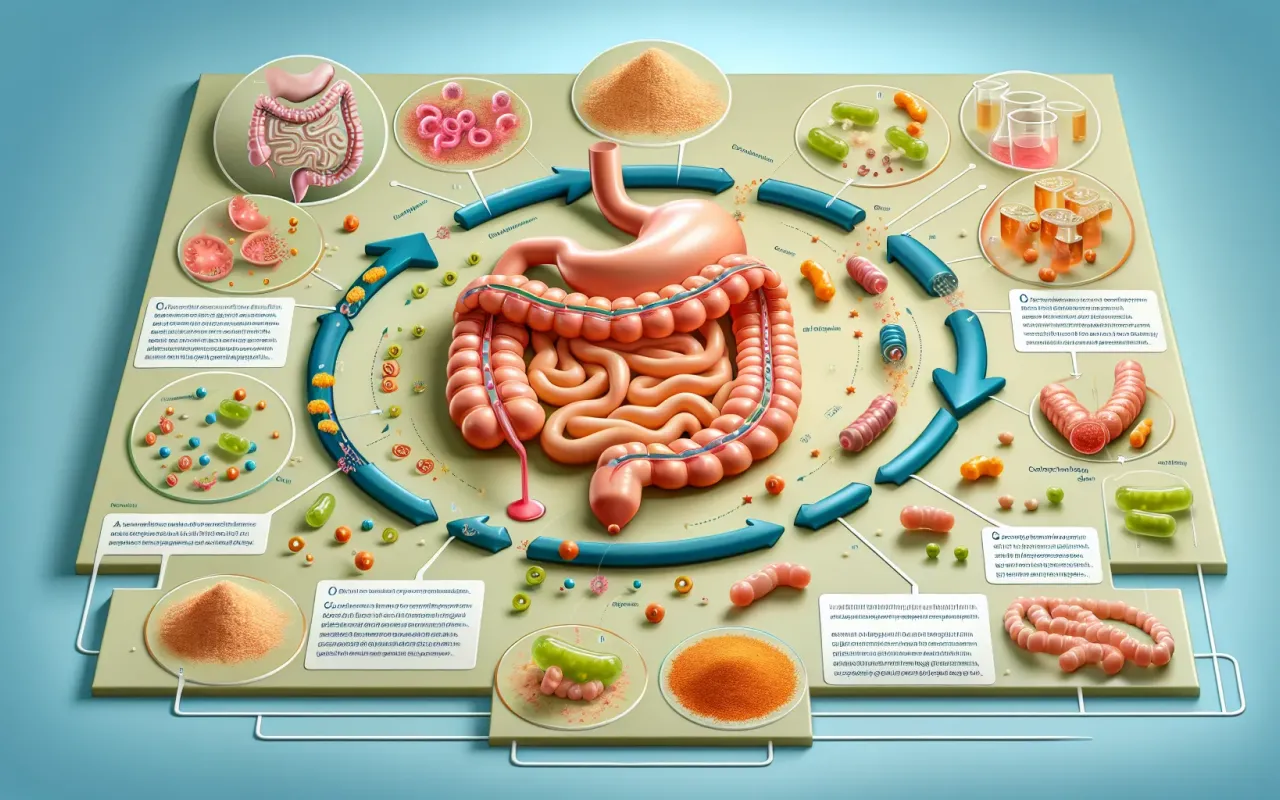
Discover the crucial role of digestive enzymes in gut health, understand how they work, and learn ways to support your digestive system for better overall well-being.
- September 2, 2024
Introduction
The human gastrointestinal tract is an intricate system responsible for breaking down food and absorbing nutrients essential for our survival. A crucial component of this process is digestive enzymes. These enzymes play a pivotal role in maintaining gut health, yet many people are unaware of their significance. In this article, we'll delve into the important role of digestive enzymes in gut health, explore how they function, and provide practical tips on supporting your digestive system.
What Are Digestive Enzymes?
Digestive enzymes are biological molecules, primarily proteins, that speed up the chemical reactions involved in breaking down food into absorbable nutrients. Different classes of digestive enzymes target specific types of nutrients:
- Amylases: Break down carbohydrates into simple sugars.
- Proteases: Break down proteins into amino acids.
- Lipases: Break down fats into fatty acids and glycerol.
- Nucleases: Break down nucleic acids into nucleotides.
How Do Digestive Enzymes Work?
The Digestive Process
Digestive enzymes are secreted at various stages of the digestive process, starting in the mouth and continuing through the stomach and into the small intestine. Here’s a step-by-step overview of how these enzymes function:
- Mouth: Salivary glands produce amylase, which begins the breakdown of carbohydrates as you chew.
- Stomach: Gastric glands produce pepsinogen (which turns into pepsin in the acidic environment), starting the digestion of proteins.
- Small Intestine: The pancreas releases a cocktail of enzymes (amylase, proteases, lipases) into the duodenum, completing the digestion of carbohydrates, proteins, and fats.
- Brush Border Enzymes: The lining of the small intestine produces additional enzymes (e.g., lactase, maltase) to ensure final breakdown of nutrients for absorption.
The Role of Digestive Enzymes in Gut Health
Efficient Nutrient Breakdown and Absorption
Proper enzyme function ensures that food is broken down efficiently, allowing nutrients to be absorbed effectively. This is vital for maintaining energy levels, supporting immune functions, and ensuring overall health. Without adequate enzymes, nutrients may pass through the digestive system unused, leading to deficiencies and compromised health.
Preventing Digestive Disorders
Enzyme deficiencies or inefficiencies can lead to a range of digestive disorders such as lactose intolerance, pancreatitis, or exocrine pancreatic insufficiency (EPI). These conditions can cause symptoms like bloating, gas, diarrhea, and malnutrition. Ensuring adequate enzyme levels can often mitigate these issues.
Supporting Gut Microbiome
The gut microbiome—a community of trillions of bacteria—is essential for maintaining gut health. Digestive enzymes work in tandem with these beneficial bacteria to ensure optimal digestion and nutrient absorption. Enzymes break down food particles, making it easier for gut bacteria to ferment fibers and produce short-chain fatty acids that nourish gut lining cells.
How to Support Your Digestive Enzymes and Gut Health
Dietary Considerations
Consuming a balanced diet rich in raw fruits and vegetables can naturally boost enzyme levels. Foods like pineapples (rich in bromelain) and papayas (rich in papain) are particularly beneficial. Fermented foods like yogurt, kefir, and sauerkraut also support enzyme production and overall digestion.
Supplements
For individuals with enzyme deficiencies or specific digestive disorders, enzyme supplements can be beneficial. It’s essential to consult a healthcare professional before starting any supplement to ensure it’s appropriate for your needs.
Hydration
Adequate hydration is crucial for optimal enzyme activity. Water is involved in the enzymatic reactions that break down food, so drinking enough fluids throughout the day can support this process.
Mindful Eating Habits
Practicing mindful eating by chewing food thoroughly and eating slowly can also support enzymatic activity. This allows enzymes in saliva to start the digestive process effectively, reducing the burden on the stomach and intestines.
Conclusion
Digestive enzymes play a fundamental role in maintaining gut health and overall well-being. By facilitating efficient nutrient breakdown and absorption, preventing digestive disorders, and supporting the gut microbiome, these enzymes are integral to our digestive system. Through a balanced diet, potential supplementation, adequate hydration, and mindful eating habits, we can support our digestive enzymes and promote better health. Understanding and addressing the crucial role of digestive enzymes in gut health empowers us to take proactive steps towards a healthier life.