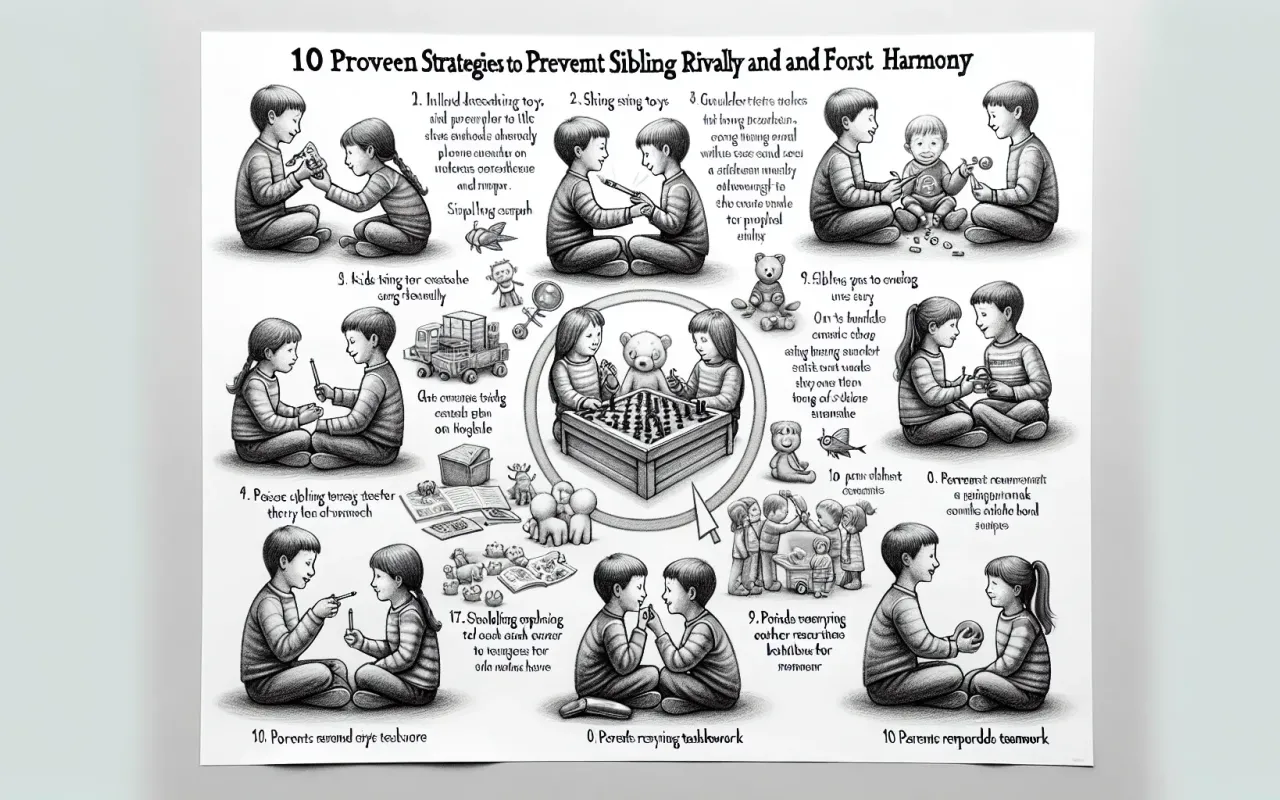
Discover effective strategies to prevent sibling rivalry and create a harmonious household. Learn expert tips and solutions to promote sibling cooperation and love.
- August 29, 2024
It's a familiar scenario for many families: siblings squabbling over toys, space, or parental attention. Sibling rivalry can be stressful for both children and parents. Fortunately, there are actionable strategies to prevent sibling rivalry and nurture harmony among siblings. This article dives into ten proven strategies that foster sibling cooperation, respect, and love.
1. Encourage Individuality
One of the first steps in preventing sibling rivalry is to acknowledge and celebrate each child's unique personality and interests. Encouraging individuality helps children feel valued and reduces the comparison that often fuels rivalry. Allow each child to pursue their own hobbies and recognize their achievements without comparing them to their siblings.
2. Establish Family Rules
Clear and consistent family rules create a sense of security and fairness for all children. Establish rules that promote respectful behavior and outline the consequences for teasing, fighting, or other forms of rivalry. Having a structured environment helps children understand the boundaries and expectations, reducing conflicts.
3. Promote Teamwork
Encouraging teamwork among siblings can significantly reduce rivalry. Provide opportunities for siblings to work together on tasks, such as household chores, school projects, or family activities. Emphasizing joint efforts fosters a sense of cooperation and mutual support.
4. Equal Attention and Support
Ensuring that each child receives equal attention and support from parents is crucial in minimizing sibling rivalry. Spend quality one-on-one time with each child, listening to their concerns, and showing interest in their lives. This helps children feel secure and valued, reducing the need to compete for parental attention.
5. Avoid Favoritism
Favoritism is a significant trigger for sibling rivalry. Even perceived favoritism can lead to feelings of jealousy and resentment among siblings. Strive to treat each child fairly and avoid comparing one child to another. Celebrating each child’s strengths and addressing their individual needs can help maintain a balanced household.
6. Teach Conflict Resolution Skills
Conflicts are inevitable, but teaching children how to resolve them constructively can prevent long-term rivalry. Equip your children with problem-solving skills, encourage open communication, and demonstrate conflict resolution techniques. Providing tools for effective conflict management helps children navigate disagreements without escalating them.
7. Create Positive Interactions
Facilitating positive interactions between siblings can help build a strong foundation of love and respect. Encourage shared activities that they enjoy, praise them when they cooperate, and model respectful behavior. Positive reinforcement during interactions promotes a loving sibling relationship.
8. Address Underlying Issues
Sometimes, sibling rivalry stems from underlying issues such as jealousy, insecurity, or external stress. Regularly check in with each child to understand their feelings and concerns. Addressing underlying issues head-on can alleviate tensions and prevent rivalry from intensifying.
9. Foster Empathy and Compassion
Empathy and compassion are essential in building strong sibling bonds. Teach your children to understand and appreciate each other’s perspectives and feelings. Activities that promote empathy, such as role-playing or reading stories about friendship, can help children develop a deeper sense of connection and mutual respect.
10. Lead by Example
Children often mimic the behavior they observe in their parents. Demonstrating respectful and cooperative behavior in your adult relationships sets a positive example for your children. Show them how to handle disagreements calmly, listen empathetically, and value each other’s opinions. Leading by example is one of the most powerful strategies to prevent sibling rivalry.
Conclusion
Sibling rivalry can be challenging, but with proactive strategies, parents can foster a harmonious and supportive sibling relationship. Encouraging individuality, setting clear family rules, promoting teamwork, and teaching conflict resolution skills are key steps in preventing rivalry. By providing equal attention, avoiding favoritism, and addressing underlying issues, parents can create a nurturing environment where siblings thrive together. Ultimately, leading by example and promoting empathy and compassion will pave the way for lasting sibling bonds built on respect and love.