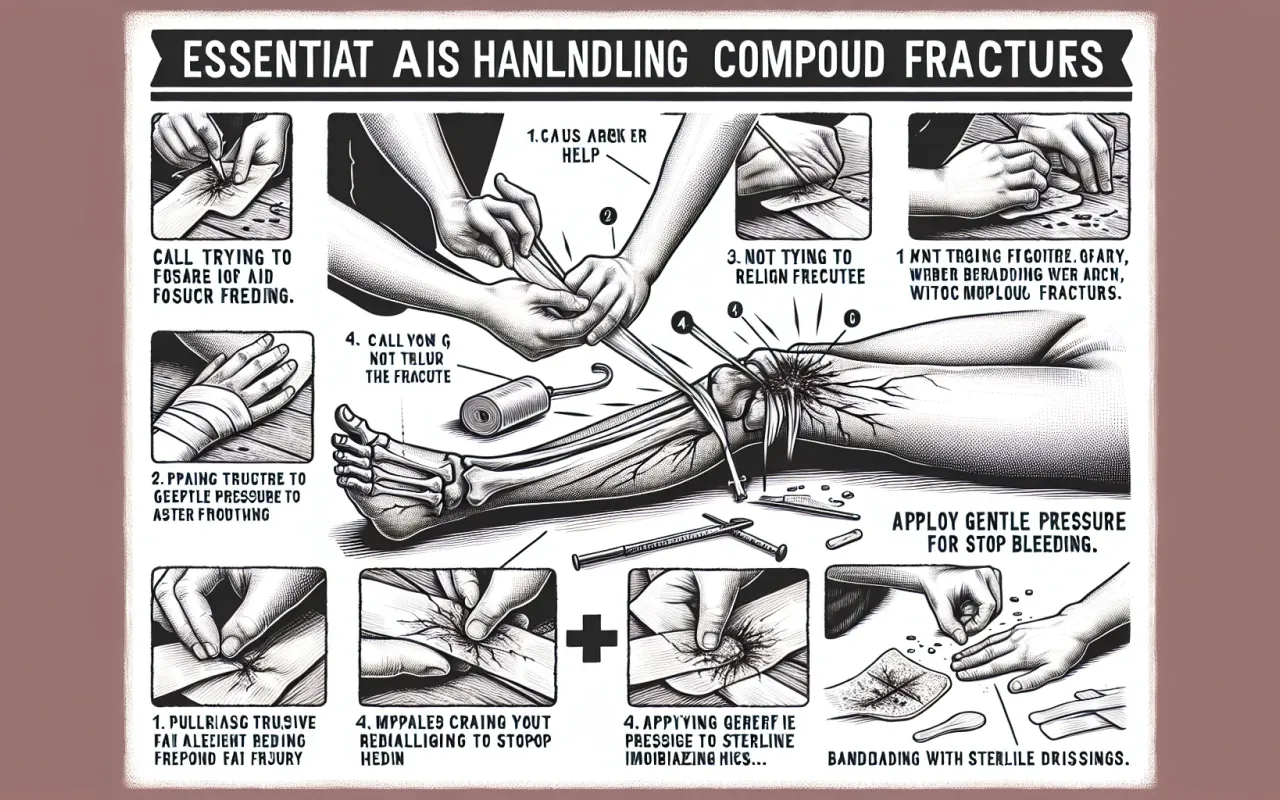
A detailed guide on first aid for compound fractures, outlining the essential steps for immediate care with a focus on safety and effectiveness.
- August 24, 2024
Compound fractures, also known as open fractures, are severe injuries where the broken bone pierces through the skin, presenting a formidable challenge in first aid. Immediate, appropriate care is critical to prevent infection and further complications. In this comprehensive guide, we will explore the vital steps for providing first aid for compound fractures, ensuring you are well-prepared to handle such emergencies.
Understanding Compound Fractures
A compound fracture involves a break where the bone exits and is exposed through the skin. This type of fracture not only damages the bone but also the surrounding tissue, muscles, and skin, making it prone to infection and complications. Recognizing the severity of compound fractures and acting swiftly can make all the difference in the patient's recovery.
Step-by-Step First Aid for Compound Fractures
1. Ensure Safety
Before administering aid, ensure the scene is safe for both the victim and yourself. Avoid moving the patient unless they are in immediate danger (e.g., near a fire or on a busy road).
2. Call for Emergency Help
Immediately call emergency services. Provide them with detailed information about the patient's condition, location, and the nature of the injury. This ensures professional medical help is on the way while you administer first aid.
3. Prevent Further Movement
Stabilize the injured area to prevent further movement. Moving the fractured bone can exacerbate the injury and increase the risk of complications. Utilize available materials like splints or any rigid objects to immobilize the area without applying pressure on the exposed bone.
4. Control Bleeding
Control any bleeding using a clean cloth or sterile gauze pad. Apply gentle pressure around the wound, avoiding direct contact with any protruding bone. Elevate the injured area, if possible, to help reduce bleeding.
5. Cover the Wound
Use sterile dressings or a clean cloth to cover the wound, preventing contamination and infection. Avoid touching the exposed bone and keep the dressing loose to avoid adding pressure.
6. Offer Assurance and Comfort
Keep the patient calm and reassured. Shock is a common response to severe injuries like compound fractures. Speak in a calm, soothing voice and ensure they remain as comfortable as possible while awaiting medical assistance.
Long-Term Care and Prevention
A. Diagnostic Evaluation and Treatment
Once medical professionals arrive, they will conduct a thorough assessment, likely using imaging techniques such as X-rays. Treatment may involve surgical intervention to clean the wound and repair the bone, followed by a lengthy rehabilitation process.
B. Infections and Complications
Due to the nature of compound fractures, the risk of infection is significant. Antibiotics and other medications may be provided to prevent and manage infections. The medical team will also monitor for complications such as non-union, where the bone fails to heal properly.
Conclusion
First aid for compound fractures is a critical skill that can significantly impact outcomes for the injured individual. By understanding the steps outlined in this guide and acting promptly, you can help stabilize the condition, reduce the risk of complications, and improve recovery prospects. Always remember that while first aid is essential, professional medical treatment is crucial for comprehensive care and recovery from compound fractures.