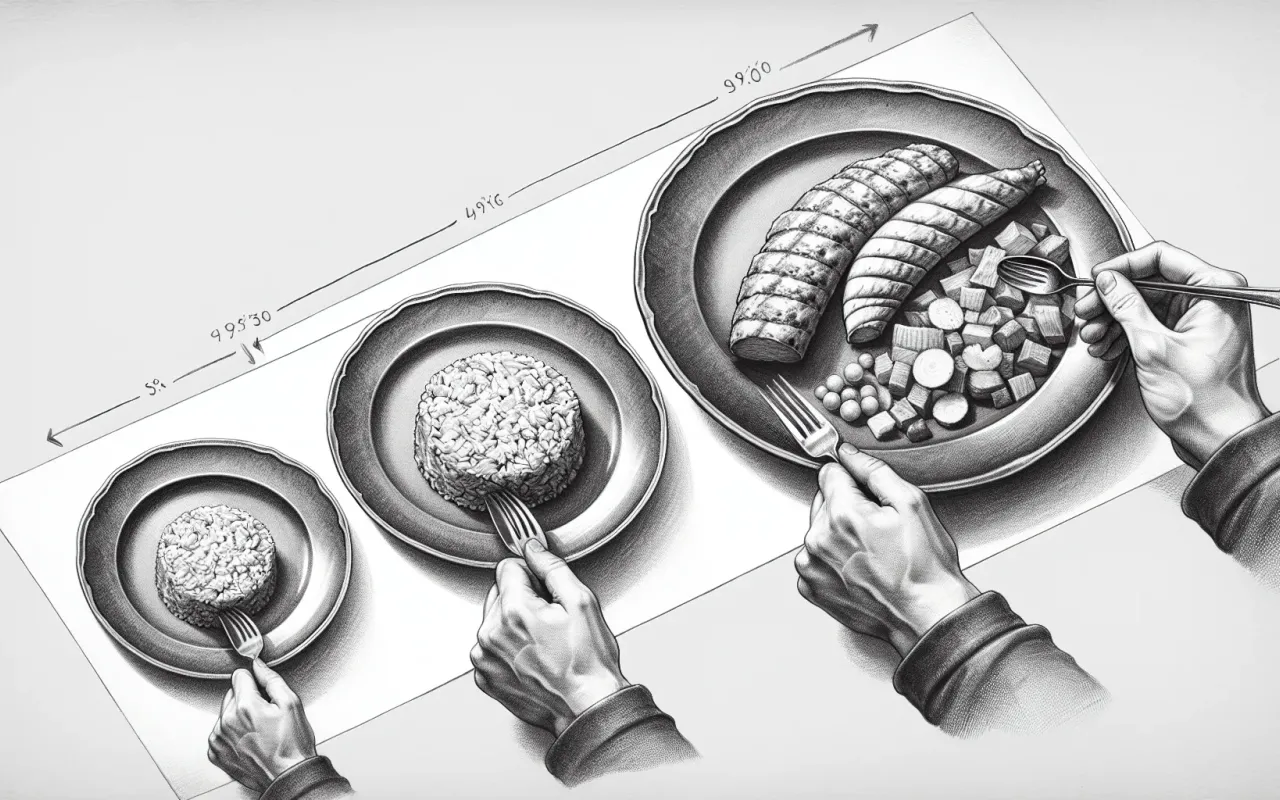
Explore how portion distortion over the years has influenced our perception of serving sizes and its impact on health and nutrition.
- August 24, 2024
In today's fast-paced world, it's easy to overlook how much our eating habits have evolved. One significant change is the increase in portion sizes over the years, known as portion distortion. This trend has major implications for our health and nutrition. In this article, we will delve into how serving sizes have changed, the factors contributing to portion distortion, and its impact on our well-being.
Understanding Portion Distortion
Portion distortion refers to the gradual increase in the size of food portions served both in restaurants and at home. This phenomenon affects our perception of what constitutes a normal portion size, often leading to overconsumption and associated health risks.
Historical Perspective
Over the past few decades, the average portion sizes of many foods have grown significantly. For instance, a typical bagel in the 1980s was about 3 inches in diameter and approximately 140 calories. Today, bagels have ballooned to around 6 inches and contain upwards of 350 calories.
Factors Contributing to Portion Distortion
- Marketing and Advertising: Food companies often use larger portions as a marketing strategy to attract customers by offering more value for money.
- Restaurant Industry: To stay competitive, restaurants have increased portion sizes, assuming that more food equals higher customer satisfaction.
- Social and Cultural Changes: Fast food culture and urbanization have contributed to an environment where larger portions are the norm.
- Packaging Trends: Larger package sizes in supermarkets contribute to the consumption of bigger portions at home.
The Impact of Portion Distortion on Health
Over time, these increased portion sizes can have detrimental effects on health. Here, we explore the primary repercussions of portion distortion.
Weight Gain and Obesity
Consuming larger portions leads to a higher caloric intake, which, if not offset by physical exercise, can result in weight gain. Studies have shown a direct correlation between portion sizes and obesity rates. The Centers for Disease Control and Prevention (CDC) reports that obesity rates in the United States have more than doubled in adults and tripled in children since the 1970s.
Chronic Diseases
Larger portion sizes contribute to the overconsumption of unhealthy foods high in sugars, fats, and sodium. This increases the risk of chronic diseases such as heart disease, diabetes, and hypertension. Regularly eating larger portions can also displace healthier food choices, exacerbating nutrient deficiencies.
Mental Health Implications
Portion distortion also affects mental health. Some individuals may experience guilt and anxiety related to overeating, which can contribute to a negative cycle of emotional eating and further overconsumption.
Strategies to Combat Portion Distortion
Fortunately, recognizing portion distortion is the first step toward addressing it. Here are some practical strategies to help manage portion sizes:
Mindful Eating
Being aware of what and how much we eat can help curb overeating. Practicing mindful eating involves paying attention to hunger and satiety cues and savoring each bite without distraction.
Use Smaller Plates and Utensils
Studies have shown that using smaller plates and utensils can trick the brain into feeling satisfied with smaller portions. This can be an easy yet effective strategy for reducing portion sizes.
Pre-Portion Snacks
Instead of eating directly from large packages, pre-portion snacks into smaller containers. This helps control the amount consumed and prevents automatic overindulgence.
Educate Yourself
Understanding what constitutes a proper portion size can guide healthier eating habits. Reading food labels and adhering to recommended serving sizes can provide a clearer picture of how much food we should consume.
Encourage Policy Changes
Supporting policies aimed at regulating portion sizes in restaurants and promoting nutritional education can also play a significant role in tackling portion distortion on a broader scale.
Conclusion
Portion distortion over the years has significantly altered our perception of what constitutes a normal serving size, contributing to increased caloric intake and associated health risks. By becoming more aware of portion sizes and implementing strategies to control them, we can take positive steps toward better nutrition and overall health. Understanding and addressing portion distortion is crucial in combating obesity and chronic diseases, paving the way for a healthier future.