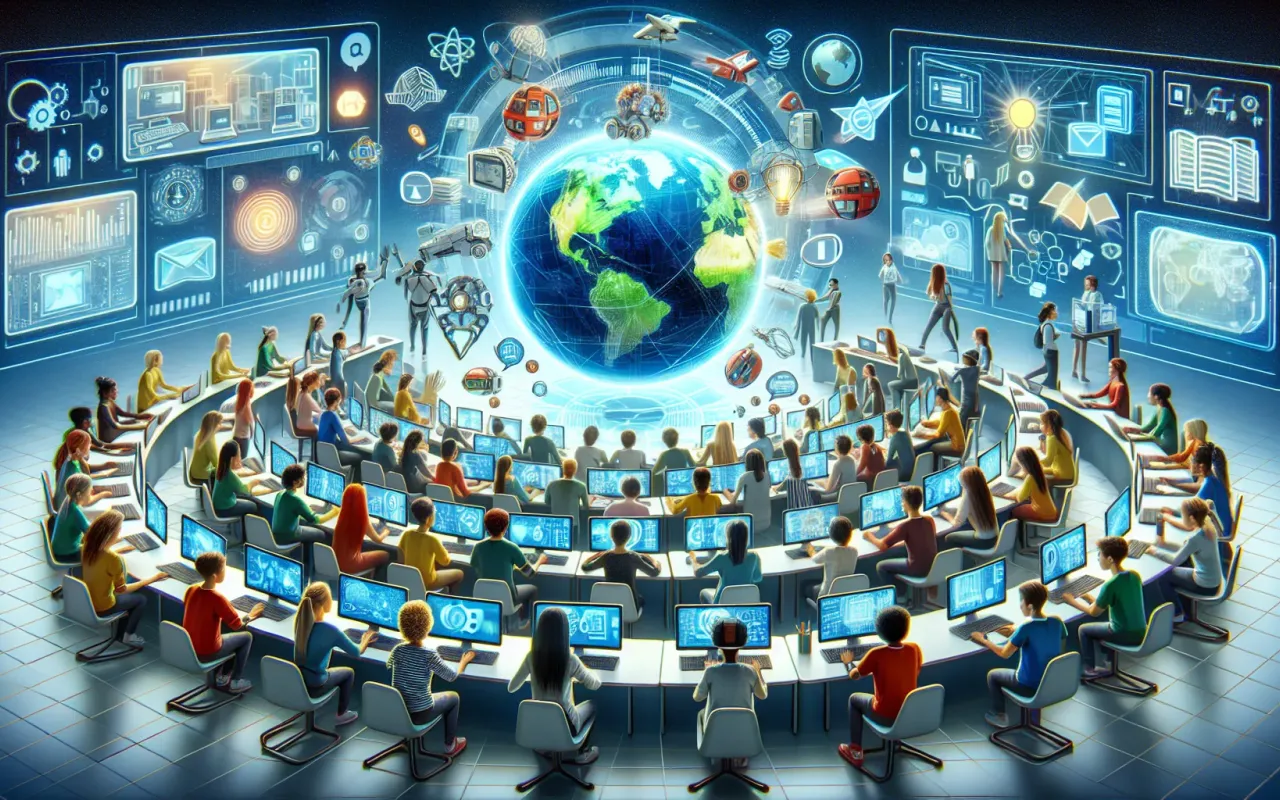
Explore how Information and Communication Technology (ICT) and digital literacy are reshaping education in the 21st century, highlighting challenges and solutions.
- August 23, 2024
AceShowbiz - As we navigate through the 21st century, the landscape of education is rapidly evolving. The advent of Information and Communication Technology (ICT) has brought transformative changes to traditional teaching methods and learning environments. This article delves into the pivotal role of ICT in education and digital literacy, illustrating its impact and addressing contemporary challenges, while offering practical solutions.
The Importance of ICT in Education
ICT encompasses a broad range of digital technologies that facilitate access to information and communication. These tools include computers, the internet, broadcasting technologies, and telephony. Integrating ICT in education revolutionizes the way knowledge is imparted and acquired.
Enhancing Teaching and Learning Experiences
The inclusion of ICT in classrooms provides dynamic and interactive learning experiences. Smartboards, educational software, and online resources foster an engaging environment that enhances comprehension and retention. Teachers can employ multimedia presentations and virtual simulations to illustrate complex concepts effectively.
Access to Information and Resources
ICT bridges the geographical and socio-economic gaps, providing all students with access to a vast repository of information and educational resources. Online libraries, academic journals, and e-books are readily available, empowering students to explore beyond the traditional curriculum.
Personalized Learning
ICT enables personalized learning experiences tailored to individual student needs. Adaptive learning platforms assess students' strengths and weaknesses, customizing content to support their learning journey. This approach ensures that students progress at their own pace, maximizing their potential.
Digital Literacy: A Critical Skill in the Modern World
Digital literacy is the ability to effectively and critically navigate, evaluate, and create information using a range of digital technologies. It is an essential skill for succeeding in the increasingly digital world.
The Components of Digital Literacy
- Technical Skills: Competency in using digital devices and software applications.
- Information Literacy: The ability to locate, evaluate, and use information effectively.
- Media Literacy: Understanding and evaluating media content critically.
- Online Safety: Knowing how to protect oneself and personal information online.
Integrating Digital Literacy into the Curriculum
Educational institutions must embed digital literacy across all levels of education. This can be achieved through dedicated courses, hands-on projects, and integrating digital literacy components into existing subjects. Schools should provide training for educators to ensure they can effectively teach and model digital literacy skills.
Challenges and Solutions in Implementing ICT in Education
While the benefits of ICT in education are numerous, several challenges hinder its widespread adoption. Identifying these obstacles and exploring potential solutions is essential for successful integration.
Infrastructure and Accessibility
A significant barrier to ICT adoption is the lack of infrastructure and accessibility, particularly in rural and underserved areas. Ensuring that all schools have the necessary hardware, internet connectivity, and technical support is crucial.
Teacher Training and Professional Development
Many educators are not adequately prepared to integrate ICT into their teaching practices. Providing comprehensive professional development programs that focus on ICT skills and pedagogical strategies is vital. Continuous support and resources will help teachers stay updated with the latest technological advancements.
Funding and Sustainability
Implementing ICT solutions in education requires substantial funding for initial setup and ongoing maintenance. Governments, educational institutions, and private sectors must collaborate to secure funding and ensure the sustainability of ICT initiatives.
Case Studies: Successful ICT Integration in Education
Several educational institutions worldwide have successfully integrated ICT, leading to improved learning outcomes. Here are a few notable examples:
Estonia: A Leader in Digital Education
Estonia has embraced a digital-first approach in education. The country's e-School system allows students, teachers, and parents to access academic records, learning materials, and communication tools. The success of this system highlights the importance of a robust digital infrastructure and governmental support.
Singapore: Leveraging Technology for Future-Ready Students
Singapore's Smart Nation initiative emphasizes the integration of ICT in education. The Ministry of Education has implemented the Student Learning Space (SLS), an online platform that supports self-directed and collaborative learning. This initiative prepares students for the demands of the digital economy.
Conclusion
The role of ICT in education and digital literacy is undeniably transformative. By enhancing teaching and learning experiences, providing access to vast resources, and enabling personalized learning, ICT paves the way for a future-ready education system. However, addressing challenges such as infrastructure, teacher training, and funding is crucial for successful implementation. As educational institutions, governments, and stakeholders work together, the integration of ICT will continue to evolve, shaping the educational landscape of the 21st century.
Ultimately, fostering digital literacy is paramount. Equipping students with the skills to navigate and utilize digital technologies effectively ensures they are prepared for the demands of an increasingly digital world. Through dedicated efforts and collaborative initiatives, the potential of ICT in education can be fully realized, transforming learning and empowering students globally.