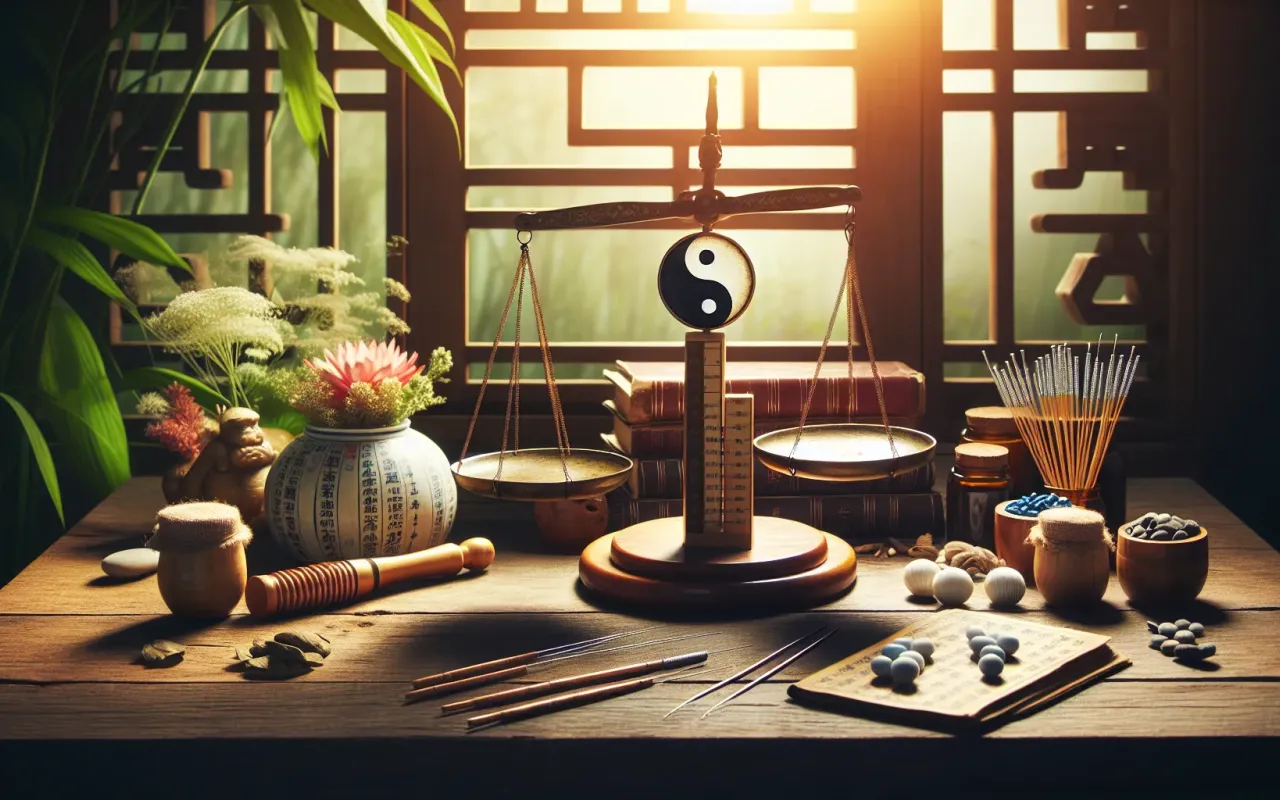
Discover the fundamentals of balance in Traditional Chinese Medicine principles. Learn how to achieve harmony and promote health through TCM's holistic approach.
- August 11, 2024
By [Your Name]
Introduction to Traditional Chinese Medicine (TCM)
Traditional Chinese Medicine (TCM) is an ancient holistic healthcare system that has been practiced for over 2,000 years. Central to TCM is the concept of balance, which is integral to maintaining health and preventing disease. This article will explore the principles of balance in Traditional Chinese Medicine, highlighting how achieving harmony can lead to better health and well-being.
The Foundations of Balance in TCM
Yin and Yang: The Duality of Balance
At the core of TCM is the principle of Yin and Yang, representing the opposite yet complementary forces in the universe. Yin is associated with qualities such as cold, darkness, and passivity, while Yang is linked to heat, light, and activity. Health, according to TCM, is the result of a dynamic balance between these two forces. Imbalance, where one force dominates over the other, can lead to disease and disharmony.
The Five Elements: Interconnected Systems
Another fundamental TCM concept is the Five Elements—Wood, Fire, Earth, Metal, and Water. Each element is thought to interact with the others, creating a complex web of relationships that influence the body and mind. By ensuring that these elements are balanced, one can achieve harmony and optimal health. For example, Wood promotes growth, Fire represents warmth, Earth provides stability, Metal denotes structure, and Water conveys fluidity. An imbalance in any element can disrupt the body's harmony.
How TCM Diagnoses Imbalance
TCM practitioners use a variety of diagnostic tools to identify imbalances in the body. These include:
Pulses and Tongue Diagnosis
Pulse diagnosis involves checking the quality, rhythm, and strength of the pulse at various points on the wrist. Each position corresponds to a different organ and element, providing insights into the patient's internal state. Tongue diagnosis examines the color, shape, coating, and texture of the tongue, offering clues about one's health and any potential imbalances.
Syndrome Differentiation
Syndrome differentiation is a method of classifying the various patterns of imbalance based on symptoms and signs. This enables the TCM practitioner to tailor treatments specifically to the patient's unique condition, whether it's an excess of Yang, a deficiency of Yin, or an elemental imbalance.
Achieving Balance Through TCM Practices
Acupuncture
Acupuncture is one of the most well-known TCM practices, involving the insertion of fine needles into specific points on the body. It is believed to restore balance by stimulating the flow of Qi (vital energy) along the meridians (pathways) in the body. Acupuncture can help alleviate a variety of conditions such as pain, stress, and digestive issues by rebalancing the body's energy.
Herbal Medicine
Herbal medicine uses natural herbs, minerals, and animal products to address imbalances. These remedies are often prescribed in combinations to enhance their effectiveness. By targeting the underlying imbalances, herbal formulas can support the body's healing processes and restore harmony.
Qi Gong and Tai Chi
Qi Gong and Tai Chi are mind-body practices that integrate movement, breath control, and meditation. These exercises aim to cultivate and balance the flow of Qi throughout the body, promoting physical and mental health. Regular practice can enhance flexibility, reduce stress, and improve overall well-being.
Diet and Nutrition
TCM emphasizes the importance of a balanced diet that aligns with one's individual constitution and the seasons. Foods are classified according to their energetic properties—such as warming, cooling, damp, and dry—and their effects on the body's organs and elements. By choosing foods that harmonize with their body's needs, individuals can maintain better health and prevent illness.
Massage Therapy (Tui Na)
Tui Na is a form of therapeutic massage used in TCM to stimulate the flow of Qi and blood through the meridians. By applying various techniques like kneading, rolling, and pressing, Tui Na can help alleviate pain, improve circulation, and correct structural imbalances.
Conclusion: Embracing Balance for Health and Wellness
Balance in Traditional Chinese Medicine principles is a multifaceted concept that encompasses the dynamic interplay of Yin and Yang, the harmony of the Five Elements, and the smooth flow of Qi. By employing various treatments and lifestyle adjustments, TCM offers a holistic approach to achieving and maintaining health. Whether through acupuncture, herbal medicine, mind-body practices, diet, or massage, the goal remains the same: to restore inner harmony and promote lasting well-being.
Understanding and embracing these principles can empower individuals to take an active role in their health, working toward a balanced life that supports both physical and mental wellness.
© 2024 [Your Name]. All rights reserved.