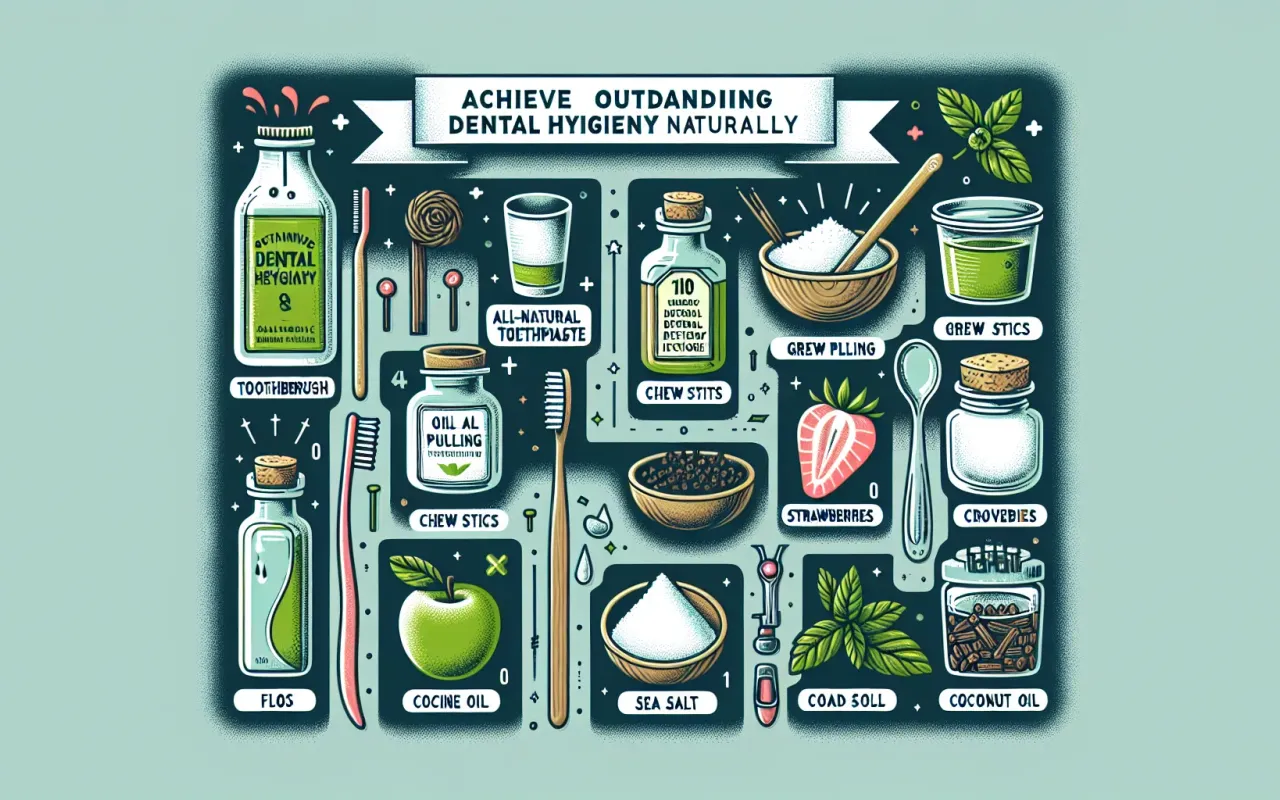
Discover the top 10 natural remedies for dental hygiene and achieve outstanding dental hygiene naturally with these well-researched and effective methods.
- August 5, 2024
Maintaining dental hygiene is crucial for overall health, but many people seek natural alternatives to traditional methods like fluoride toothpaste and chemical-laden mouthwashes. This article explores the top 10 natural remedies for dental hygiene, providing you with effective and accessible ways to keep your mouth healthy.
1. Oil Pulling
Oil pulling is an ancient technique that involves swishing a tablespoon of oil (typically coconut or sesame oil) in your mouth for about 15-20 minutes. This practice helps reduce bacteria and plaque in the mouth, promoting healthier gums and teeth.
Why It Works
The oil's natural antibacterial properties help reduce harmful oral bacteria, effectively cleansing the mouth.
2. Baking Soda
Baking soda is a common natural remedy for dental hygiene. Its mild abrasive nature helps remove surface stains from teeth, resulting in a brighter smile.
How to Use
Mix a small amount of baking soda with water to form a paste. Brush your teeth with this paste a few times a week to combat stains and whiten teeth.
3. Salt Water Rinse
Rinsing your mouth with a salt water solution can provide relief from gum inflammation, heal mouth sores, and eliminate bacteria.
Directions
Mix a teaspoon of salt in a glass of warm water and swish the solution around your mouth for 30 seconds. Spit it out and rinse with freshwater.
4. Herbal Tea
Certain herbal teas like green tea and chamomile tea possess antimicrobial properties that can improve your dental hygiene quietly yet effectively.
Benefits
Green tea contains catechins that fight bacteria and control infections, while chamomile tea has anti-inflammatory properties that soothe oral tissues.
5. Aloe Vera
Aloe vera is known for its healing properties. It's effective in reducing gum inflammation and fighting off harmful oral bacteria.
Application
Use aloe vera gel directly on your gums and teeth or use a natural toothpaste containing aloe vera.
6. Clove
Clove oil has been a traditional remedy for toothaches due to its anesthetic and antibacterial properties. It can also combat bacteria that lead to gum disease.
Usage
Apply a small amount of clove oil to a cotton ball and place it on the affected area, or add a few drops to a glass of water as a mouth rinse.
7. Hydrogen Peroxide
Hydrogen peroxide acts as an effective mouth rinse, capable of killing bacteria and whitening teeth. However, it should be used with caution.
Guidelines
Use a diluted solution of 3% hydrogen peroxide with equal parts water. Swish the mixture in your mouth for about 30 seconds and then spit it out to avoid irritation.
8. Turmeric
Turmeric contains curcumin, which has anti-inflammatory and antibacterial properties. It's beneficial for oral health, especially in reducing gingivitis and periodontitis.
Preparation
Make a paste of turmeric powder and water. Apply it to your gums and teeth, leave it for a few minutes, and then rinse thoroughly.
9. Neem
Neem, commonly known as Indian lilac, has strong antibacterial properties that are effective against plaque and gingivitis.
Usage
Chewing on neem sticks or using neem-based toothpastes can significantly enhance your dental hygiene.
10. Crunchy Fruits and Vegetables
Consuming crunchy fruits and vegetables such as apples, carrots, and celery can naturally clean your teeth, stimulate saliva production, and reduce harmful bacteria.
Why They Work
The fibrous texture of these foods scrubs away plaque, while the increased saliva production helps neutralize acids and wash away food particles.
Conclusion
Achieving outstanding dental hygiene doesn't always require chemical-laden products. These natural remedies can effectively enhance your oral health while providing a holistic approach free from synthetic substances. Incorporate these methods into your daily routine to maintain a healthy and radiant smile naturally.