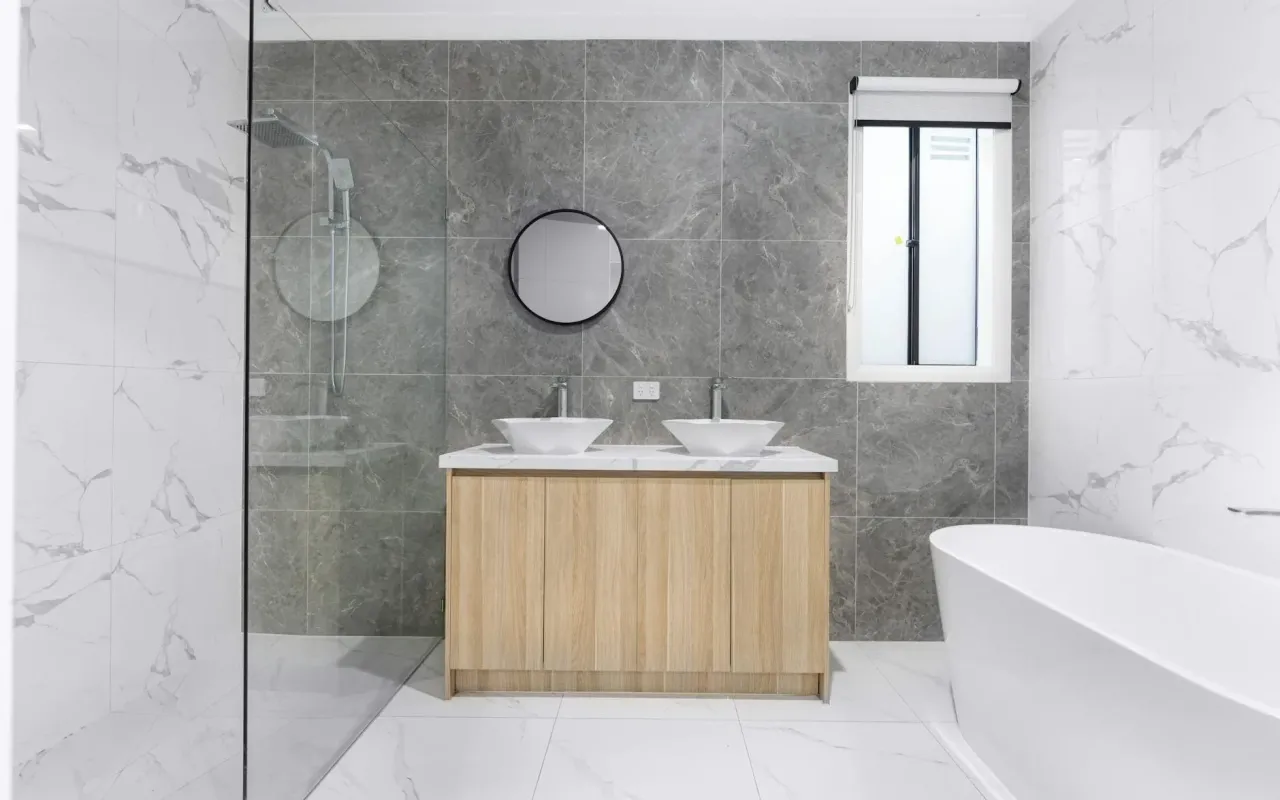
Transform your tiny bathroom with these budget-friendly renovation ideas. Get the look for less with paint, tile, storage, and lighting tricks.
- June 5, 2026
The Truth About Small Bathroom Makeovers
You know that moment when you're standing in your cramped bathroom, trying to avoid touching both walls at once, and you start mentally calculating how much a full renovation would cost? According to HomeAdvisor, the average bathroom remodel runs between $6,000 and $15,000. For a small bathroom, that's still a serious chunk of change—often more than the value it adds to your home.
But here's the thing nobody tells you: you don't need to gut the entire room to make it feel brand new. I've helped three friends transform their tiny bathrooms for under $800 each, and they look like they cost ten times that. The secret isn't about spending more—it's about spending smarter. In this article, I'll walk you through the exact strategies that work, from paint tricks that double your visual space to storage hacks that make a 5x7 room feel like a spa.
Whether you're a renter who can't touch the tile or a homeowner with a shoestring budget, these ideas are designed to be realistic, not aspirational. Let's get into it.
Paint Is Your Cheapest Power Move
Choose Colors That Expand Space
Your first instinct might be to paint a small bathroom white, and while that works, it's not your only option. Light grays, soft blues, and even pale greens can make a room feel larger without looking sterile. The trick is to choose colors with a high Light Reflective Value (LRV)—basically, how much light bounces off the paint. Benjamin Moore's "Gray Owl" and Sherwin-Williams' "Sea Salt" are both excellent choices that add warmth without shrinking the space.
I once helped a friend paint her 4x6 bathroom a soft sage green, and she immediately stopped bumping her elbows on the towel rack. The color tricked her brain into thinking the walls were further away. If you're painting yourself, budget about $30-$50 for a gallon of quality paint and another $15 for painter's tape. That's under $100 for a transformation that changes the entire feel of the room.
Try a Two-Tone Wall for Drama
If you're worried that one color might feel flat, consider painting the bottom half of your walls a darker shade and the top half a lighter one. This technique, often called "chair rail painting" even if you don't have a chair rail, draws the eye upward and makes the ceiling feel higher. I did this in my own bathroom with a navy blue on the bottom third and a warm white above—total cost was $60 for both paint colors.
The key here is to use a clean horizontal line. You can even create a faux chair rail by taping off a straight line and painting a thin stripe of a contrasting color between the two sections. This adds architectural interest without any actual construction. It's a trick interior designers use in high-end homes, and you can pull it off with a steady hand and a level.
Swap Your Vanity Without Replacing It
Paint or Refinish Your Existing Cabinet
Vanities are expensive—a decent new one starts at $300 and goes up from there. But your current vanity probably has good bones. A coat of cabinet paint can make it look like a completely different piece. I recommend using a chalk-based paint like Annie Sloan or a cabinet-specific paint from Rust-Oleum. These require minimal sanding and dry quickly, so you can finish the project in a weekend.
Pro tip: remove the doors and drawers before painting, and lay them flat on a drop cloth. This prevents drips and gives you a smoother finish. While the paint dries, consider swapping out the hardware for something modern. New knobs and pulls cost about $2-$5 each at a hardware store, and they instantly update the look. A friend of mine spent $18 on new brass pulls and her 1990s oak vanity suddenly looked like it belonged in a Restoration Hardware catalog.
Add a Floating Shelf for Counter Space
Small bathrooms notoriously lack counter space. Instead of buying a new vanity with more surface area (which is expensive and might not fit), install a floating shelf above the toilet or next to the sink. A 24-inch solid wood shelf from IKEA costs around $15, and the brackets are another $10. Stain or paint it to match your vanity, and you've got instant storage for toiletries, plants, or decorative jars.
You can also use a floating shelf to hide an ugly medicine cabinet. If your mirror is built into a dated cabinet, remove the door and frame the opening with trim. Then mount a floating shelf below the new mirror to store your daily essentials. This trick costs less than $50 and eliminates the need to replace the entire unit.
Tile on a Shoestring: Peel-and-Stick and Paint
Peel-and-Stick Floor Tiles That Actually Work
Real tile installation requires a wet saw, thinset mortar, and a weekend of back pain. Peel-and-stick vinyl tiles have come a long way in the last five years. Brands like Smart Tiles and TrafficMaster offer patterns that mimic marble, hexagon, and even wood plank. A 10-pack covers about 10 square feet and costs around $25. For a small bathroom floor (usually 20-30 square feet), you're looking at $50-$75.
The key to making peel-and-stick look professional is preparation. Clean the floor thoroughly, remove any old adhesive, and make sure the surface is smooth. Then, lay out the tiles dry first to plan your pattern. Cut them with a utility knife and a straight edge—it's like cutting paper. I've installed these in two bathrooms, and when guests ask where I bought the tile, they're shocked it's vinyl.
Paint Your Existing Tile for a Fresh Look
If your bathroom has outdated tile that's in good condition (no cracks or grout damage), you can paint it. Tile-specific paint kits from Rust-Oleum or Epoxy Shield cost about $40-$60 and include everything you need: primer, paint, and sealer. This works best on ceramic or porcelain tile, and the results can last 2-3 years with proper maintenance.
I painted a friend's beige subway tile backsplash a glossy white, and it brightened the entire room. The process takes about 4 hours total (including drying time), and the cost was $45 compared to the $2,000 it would have cost to retile. Just be careful around the shower area—painted tile is not as waterproof as original glazed tile, so avoid painting inside the shower itself. Stick to backsplashes, wall tile, or floor tile that doesn't get constantly wet.
Lighting and Mirrors: The Cheapest Square Footage
Swap Out Your Builder-Grade Light Fixture
Lighting is the single most impactful change you can make for under $100. A new vanity light fixture from Home Depot or Lowe's costs between $30 and $80, and installation takes about 30 minutes. Look for fixtures that direct light upward and downward—this creates a soft, shadowless glow that makes the room feel larger and more inviting.
Warm white bulbs (2700K-3000K) are better for bathrooms than cool white (4000K+), which can make skin look washed out and the room feel clinical. If you're renting and can't change the fixture, try a plug-in sconce. These clamp onto the mirror or mount to the wall with adhesive, and they cost about $20. A friend of mine used two plug-in sconces on either side of her mirror, and it looked like she had a custom lighting setup.
Install a Larger Mirror Without the Price Tag
A bigger mirror instantly makes a small bathroom feel twice as large because it reflects light and space. But a custom-sized mirror can cost $200 or more. Instead, buy an oversized framed mirror from a big-box store or online. IKEA's "LOTS" mirror is 31x39 inches and costs just $40. It's simple, frameless, and can be mounted horizontally or vertically.
If you want something with more personality, hit up thrift stores or Facebook Marketplace for vintage mirrors. I found a gorgeous gold-framed mirror for $15 at a garage sale. A can of spray paint in matte black or brushed brass ($8 at any craft store) transformed it into something that looks straight out of an Anthropologie catalog. The whole project took an hour and cost $23.
Storage Hacks That Actually Work in Tight Spaces
Use Vertical Space with Over-the-Door Organizers
When floor space is limited, you have to go up. Over-the-door organizers aren't just for shoes—they're perfect for bathroom supplies. A clear plastic organizer with pockets costs about $15 and can hold hair tools, skincare products, cleaning supplies, and even toilet paper rolls. Hang it on the back of the bathroom door or on the inside of a closet door if you have one.
For a more polished look, use a fabric organizer in a neutral color like gray or beige. I have one in my bathroom that holds my hairdryer, straightener, and all my daily products. It keeps everything off the counter and within arm's reach. The best part? It doesn't require any drilling or permanent installation, so it's perfect for renters.
Add a Corner Caddy for the Shower
Shower caddies that hang from the showerhead are fine, but they can look messy and don't hold much. A corner caddy that sits on the floor of your shower or tub costs about $25 and uses vertical space that would otherwise go unused. Look for one with multiple shelves and rust-proof materials like stainless steel or coated wire.
I installed a corner caddy in my own shower last year, and it freed up the entire edge of the tub where I used to balance bottles. Now everything has a home, and the shower looks cleaner because there's no clutter. If you have a glass shower door, this is especially important because you can see every bottle from outside the shower.
Faucets and Hardware: Small Upgrades, Big Impact
Replace Your Faucet for Under $100
A new faucet is one of those upgrades that feels expensive but isn't. A stylish, modern faucet from brands like Moen or Delta starts at around $60-$80 at big-box stores. Installation takes about an hour if you have basic plumbing skills (just turn off the water supply first). The difference between a dated, corroded faucet and a sleek new one is night and day.
Look for a faucet with a high arc or a waterfall spout—these add a touch of luxury without the luxury price tag. I replaced a 20-year-old chrome faucet with a matte black one for $75, and it completely changed the look of the sink area. The project took less than an hour, and I didn't need any special tools beyond a basin wrench.
Update Towel Bars and Toilet Paper Holders
Builder-grade towel bars are usually flimsy chrome pieces that look dated. Swapping them out for something modern costs about $10-$20 per piece. Look for matching sets in brushed nickel, matte black, or oil-rubbed bronze. These finishes are trendy but timeless, and they tie the whole room together.
I replaced a crooked towel bar with a sleek round one from IKEA for $12. It took 15 minutes with a screwdriver, and now the towels hang straight and look intentional. The toilet paper holder was another $8. For under $30, the hardware in my bathroom went from "landlord special" to "designer touch."
Accessories That Pull It All Together
Invest in a Matching Set of Accessories
You don't need to spend a lot, but having a cohesive look makes a huge difference. A matching set of a soap dispenser, toothbrush holder, and wastebasket costs about $20-$30 at Target or Walmart. Stick to one finish (like brushed nickel or matte black) and one color palette (like white or gray). This small investment creates a unified look that feels intentional.
I bought a set of three accessories in a matte white finish for $25, and it immediately made my bathroom look cleaner and more organized. The key is to avoid mixing too many colors or patterns. Keep it simple, and the room will feel more spacious and put-together.
Add Plants for Life and Color
Plants are the cheapest way to add warmth and personality to a bathroom. They also improve air quality and reduce humidity. Choose low-light, high-humidity plants like pothos, snake plants, or ferns. A small pothos plant costs about $10 at a nursery, and a simple ceramic pot is another $5. Place it on the back of the toilet, on a floating shelf, or in a corner.
I have a snake plant in my bathroom that's been thriving for two years with almost no care. It adds a pop of green against the white walls and makes the room feel alive. If you're worried about killing plants, start with a fake one. High-quality faux plants look almost real and cost about $15. No watering required.
Final Thoughts on Your Budget Bathroom Makeover
The most important thing to remember is that a small bathroom renovation doesn't have to mean a full gut job. By focusing on paint, lighting, hardware, and smart storage, you can achieve a dramatic transformation for under $500. I've seen it happen—my own bathroom renovation cost exactly $487 and took two weekends. Friends thought I spent thousands.
Start with the changes that will give you the most visual impact for the least money: paint the walls, swap the light fixture, and update the hardware. From there, add storage solutions and decorative touches. You don't need to do everything at once. Pick one or two projects this weekend, and you'll be surprised how much better the room feels. Your small bathroom can be functional, beautiful, and affordable—all at the same time.