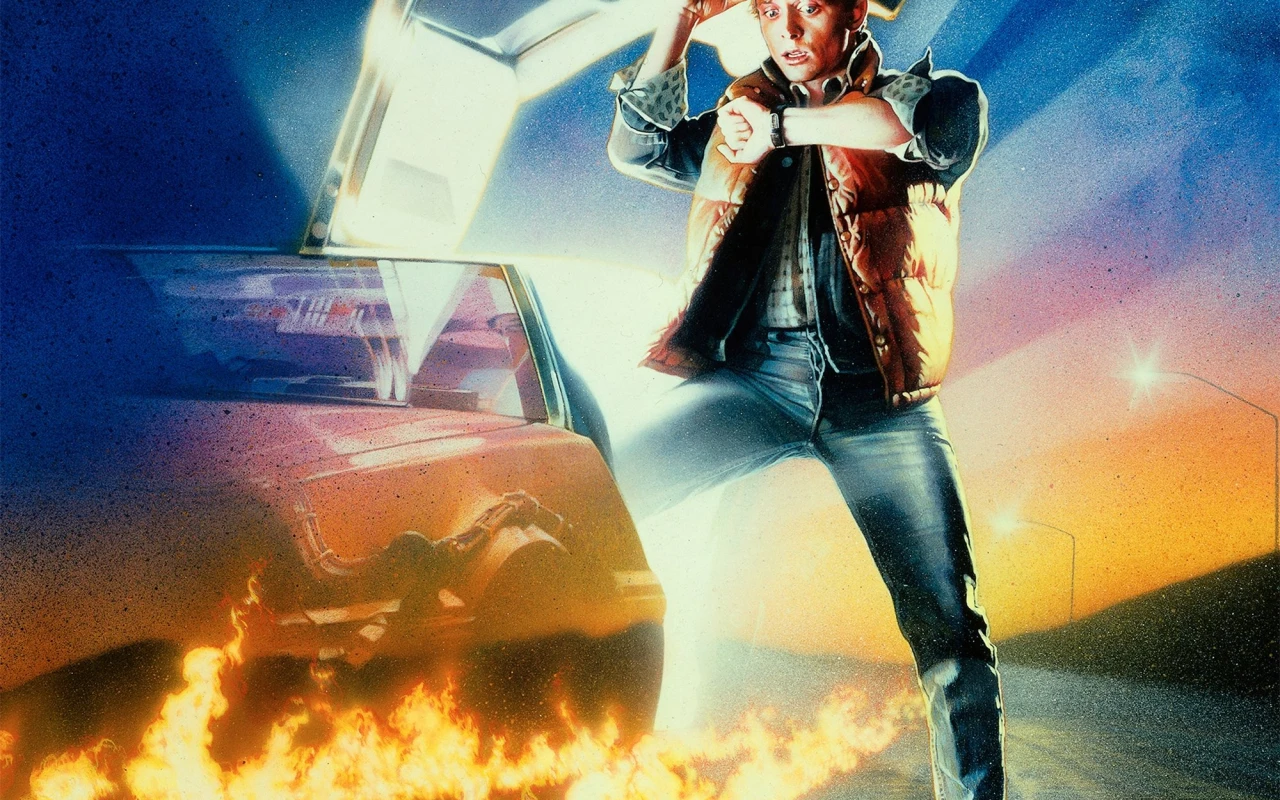
Marty McFly is the BTTF hero, right? A fresh analysis of the original film, free from sequels, argues George McFly's transformation makes him the true protag...
- December 7, 2025
AceShowbiz - Across the iconic trilogy, Marty McFly is widely regarded as the central protagonist of Back to the Future, closely followed by the eccentric Doc Brown. However, a deeper dive into a previously unseen moment from the first film, without the influence of its sequels, reveals a compelling argument for a different character stepping into the spotlight as the true main character.
In the cinematic release of Back to the Future, we witness Marty's father, George McFly, enduring relentless bullying from Biff Tannen, both as an adult in the 1985 timeline and as a teenager in 1955. The narrative's core premise revolves around Marty's mission to ensure his parents fall in love, which inadvertently necessitates instilling courage in George to stand up for himself. This intervention ultimately reshapes their future, transforming George McFly into a successful science fiction author and relegating Biff Tannen to the role of his subservient car cleaner. Yet, a particular deleted scene significantly alters this perspective, suggesting that Biff might not be the sole architect of George's long-standing woes.
This pivotal deleted sequence unfolds at the McFly household in 1985, prior to the infamous DeLorean incident. A neighbor arrives at the door with his child, who is ostensibly selling peanut brittle. The neighbor casually informs George that he has already committed him to purchasing an entire case of the confectionery at five dollars per box. Despite clear reluctance and a desire to avoid confrontation, George passively agrees. Following this acquiescence, the distasteful neighbor turns to his child and says, "See, I told you, we only have to go to one house."
This brief yet impactful exchange completely reframes George's predicament. It elevates him from merely being a victim of Biff's specific torment to becoming a general "punching bag" for the entire community of Hill Valley. It paints a picture of a man with a pervasive reputation for being easily manipulated and walked over. This revelation also provides crucial context for a line delivered elsewhere in the film, where Mr. Strickland tells Marty that his father was a "slacker" who never amounted to anything. Without the peanut brittle scene, Strickland's harsh assessment appears to come out of nowhere; but with the added layer of George's established town-wide vulnerability, the insult gains a much deeper and more tragic significance.
In the finished cut of Back to the Future, George McFly's eventual transformation — his newfound confidence and burgeoning literary career — largely feels like a fortunate byproduct of Marty's desperate efforts to secure his own existence. However, when viewed through the lens of this deleted scene, George's journey of self-empowerment becomes far more profound. It suggests that his struggle extended far beyond a single bully, encompassing a broader societal pressure that he had to overcome. This broader scope arguably positions George McFly as the true emotional core and the most significant character whose arc truly drives the heart of Back to the Future's narrative.