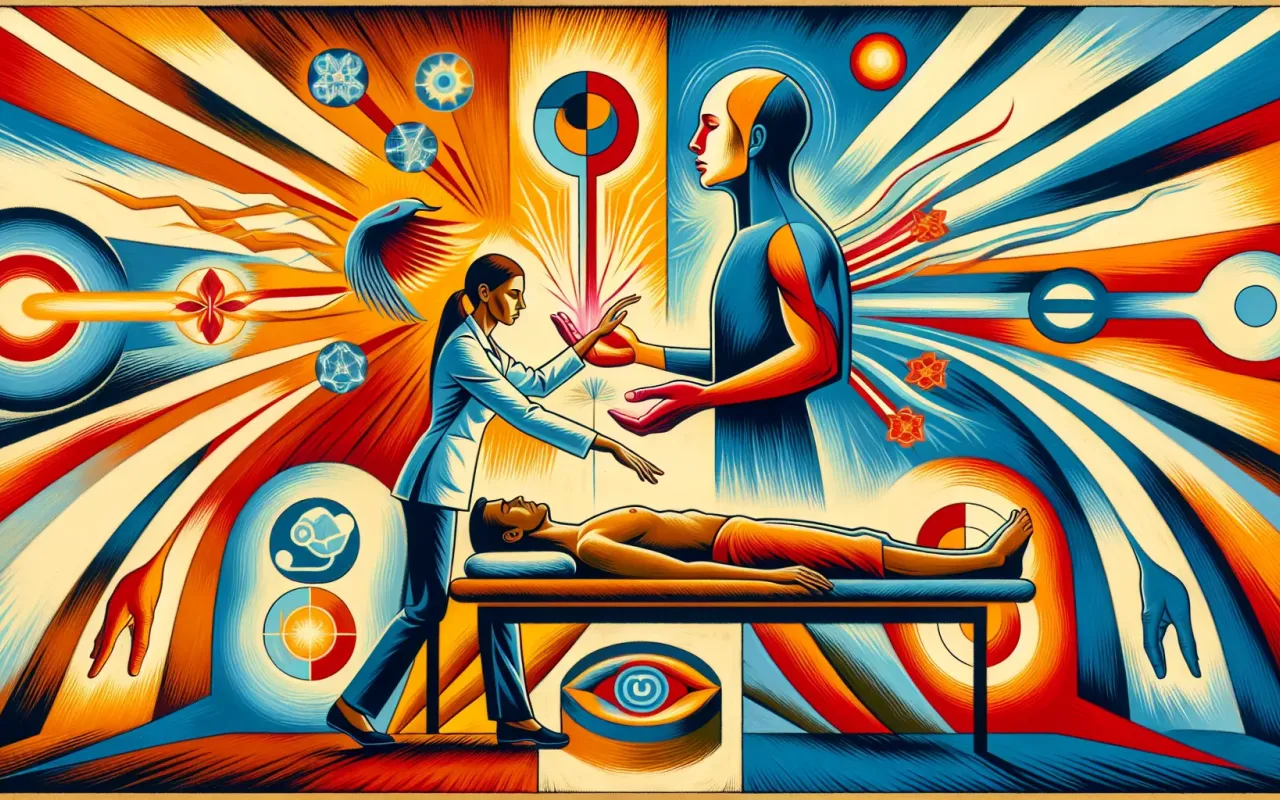
Explore the differences and similarities between Therapeutic Touch and Reiki Energy Healing, and find out which holistic therapy might be best suited for your needs.
- October 24, 2024
AceShowbiz - In the realm of energy healing, two popular modalities often discussed are Therapeutic Touch and Reiki Energy Healing. Both of these practices have garnered attention for their potential to promote holistic wellness. However, the nuances separating them frequently leave individuals puzzled. This comprehensive comparison aims to elucidate the differences and similarities between Therapeutic Touch and Reiki Energy Healing, and offer insights into which might be the best choice for your specific needs.
What is Therapeutic Touch?
Therapeutic Touch (TT) is a healing modality developed in the early 1970s by Dora Kunz and Dolores Krieger, a nurse and professor of nursing. The practice is grounded in the belief that the human body emits an energy field that can be manipulated to foster healing. During a session, practitioners move their hands close to the patient’s body to sense and adjust the energy fields, promoting balance and well-being.
Principles of Therapeutic Touch
- Energy Field: The belief that every human emits an energy field that can be manipulated.
- Intentionality: Practitioners focus their intentions to facilitate healing.
- Practitioner-Patient Connection: An essential empathetic connection between practitioner and patient.
How Therapeutic Touch Works
During a Therapeutic Touch session, the practitioner begins by centering themselves to achieve a state of calm and focused awareness. They then assess the patient's energy field by moving their hands a few inches away from the body. Through a series of hand movements, the practitioner aims to detect and correct any imbalances or blockages in the energy field, facilitating the body's innate healing processes. Sessions typically last 20 to 30 minutes and are conducted with the patient either sitting or lying down.
What is Reiki Energy Healing?
Reiki Energy Healing is a Japanese practice that traces its roots back to the early 20th century, founded by Mikao Usui. The term "Reiki" translates to "universal life energy," and the practice is predicated on the belief that this energy flows through all living beings. Reiki practitioners use a technique of laying hands on or near the patient to channel this universal life energy, aiming to promote physical, emotional, and spiritual healing.
Principles of Reiki
- Universal Energy: The concept that a universal life force energy flows through all living things.
- Attunement: Practitioners undergo a process of attunement to open energy channels.
- Hand Positions: A series of standard hand positions are used to facilitate energy transfer.
How Reiki Works
A Reiki session typically starts with the practitioner and patient establishing a calm environment, often with soothing music and dim lighting. The patient may sit or lie down fully clothed. The practitioner then places their hands lightly on or just above the patient's body in specific positions, holding each position for several minutes. The goal is to channel the universal life energy to support the body's natural healing abilities. Sessions can last between 60 to 90 minutes and are known for their deeply relaxing effects.
Therapeutic Touch vs Reiki Energy Healing: Key Differences
Origins and Development
Therapeutic Touch emerged from the integration of ancient healing practices with modern science, developed within the framework of nursing. Conversely, Reiki has roots in Japanese spiritual traditions and is deeply connected to the concept of universal energy.
Training and Certification
- Therapeutic Touch: Training is often pursued through nursing programs, workshops, and certification courses, with a significant emphasis on the scientific principles underlying the practice.
- Reiki: Training involves a hierarchical system of levels or degrees, beginning with a Reiki Master who attunes the student. There is a structured pathway from Level 1 to Mastery, involving both theoretical and practical learning.
Technique and Approach
- Therapeutic Touch: Focuses on manipulating the human energy field with hand movements performed close to the body without physical contact.
- Reiki: Involves laying hands directly on or just above specific points on the body to channel universal energy. Physical touch is more common in Reiki sessions.
Scientific Acceptance
While both modalities are categorized as complementary therapies, Therapeutic Touch has found more acceptance within the medical community, partly due to its development within nursing practice. Reiki, though widely practiced globally, still faces skepticism in some scientific circles, largely due to its spiritual and esoteric foundations. However, both practices have a substantial body of anecdotal evidence supporting their efficacy in enhancing well-being.
Benefits of Therapeutic Touch and Reiki Energy Healing
Both Therapeutic Touch and Reiki offer numerous potential benefits, often with overlapping outcomes:
- Reduction in stress and anxiety
- Promotion of relaxation and mental clarity
- Support for the body’s natural healing processes
- Improvement in overall well-being and quality of life
However, individual experiences can vary. Some may find one practice more effective than the other, depending on personal predispositions and the specific nature of their ailments.
Choosing Between Therapeutic Touch and Reiki Energy Healing
When deciding between Therapeutic Touch and Reiki Energy Healing, consider the following factors:
- Personal Beliefs and Preferences: If you are drawn to spiritual practices, Reiki may resonate more with you. If you prefer a more clinical approach, Therapeutic Touch may be more suitable.
- Condition Being Treated: Both modalities can be effective for stress reduction and general wellness. Consult with practitioners from both disciplines to discuss your specific needs.
- Availability of Practitioners: Depending on your location, one modality may be more readily available than the other.
- Trial and Experience: Sometimes the best way to determine what works for you is to experience sessions of each and gauge your response.
Ultimately, the choice between Therapeutic Touch and Reiki Energy Healing may come down to personal preferences and individual responses to the practices.
Conclusion
In the debate of Therapeutic Touch vs Reiki Energy Healing, it’s clear that both practices offer valuable and unique approaches to holistic wellness. While they share common goals of promoting relaxation and supporting the body's natural healing abilities, their techniques, origins, and levels of acceptance within the scientific community differ. Understanding these nuances can help you make an informed decision about which healing modality aligns best with your personal beliefs and health goals.