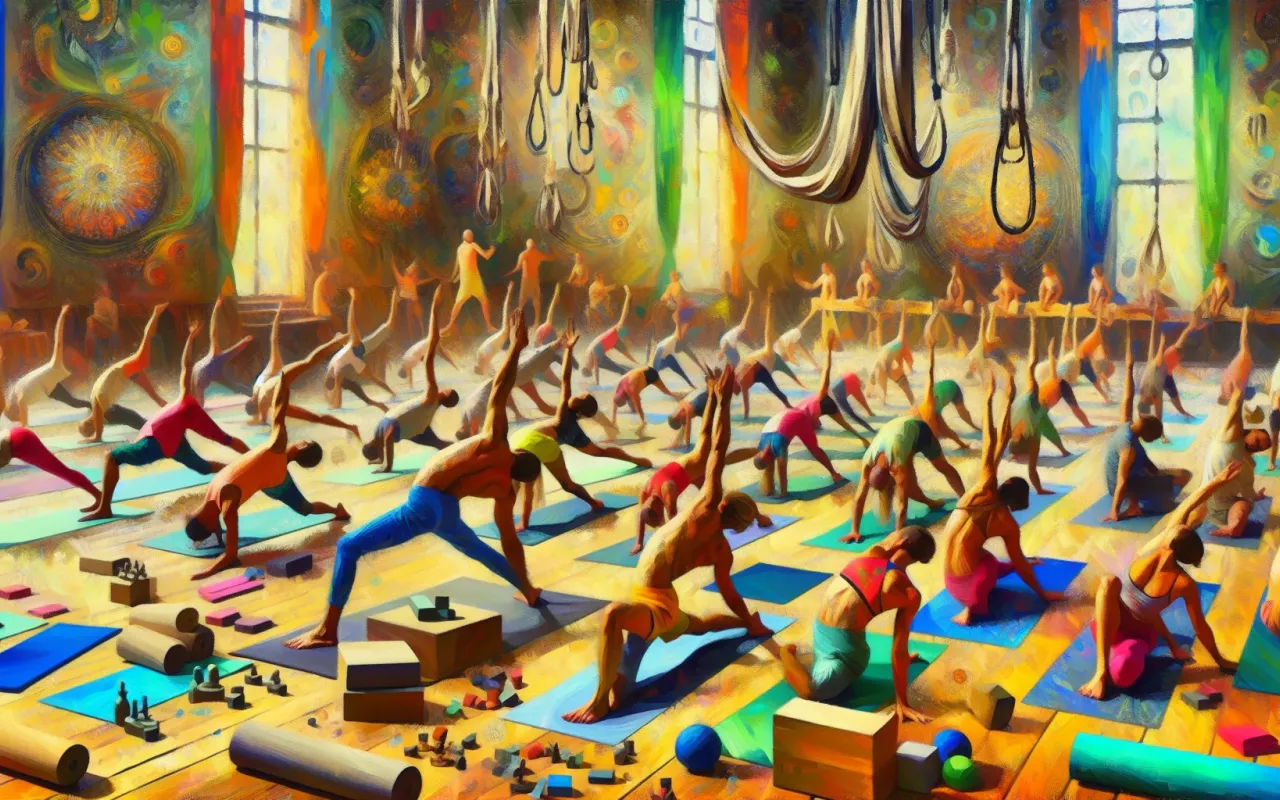
Transform your yoga practice with this expertly designed Iyengar yoga sequence for intermediate students. Explore structured poses and enhance your physical and mental well-being.
- October 12, 2024
As an intermediate student of Iyengar yoga, you may be looking to deepen your practice, improve your alignment, and achieve a greater sense of inner balance. This comprehensive article presents a specialized Iyengar yoga sequence designed for intermediate students, aiming to enhance your physical and mental well-being through meticulously aligned poses and thoughtful practice.
Understanding Iyengar Yoga
Iyengar yoga, developed by B.K.S. Iyengar, emphasizes precision, alignment, and the deliberate sequencing of postures. Known for its use of props like blocks, straps, and blankets, Iyengar yoga helps practitioners achieve correct postures and avoid injury. Intermediate practitioners have usually gained initial experience and are now ready to explore more complex sequences.
Benefits of an Intermediate Iyengar Yoga Sequence
An intermediate Iyengar yoga sequence offers numerous benefits, including:
- Improved posture and alignment
- Increased flexibility and strength
- Enhanced focus and concentration
- Better awareness of breath and body
- Reduction of stress and promotion of relaxation
Intermediate Iyengar Yoga Sequence
Below is a thoughtfully designed Iyengar yoga sequence suitable for intermediate students. Each pose is chosen to build upon the previous one, ensuring a cohesive and effective practice.
1. Tadasana (Mountain Pose)
This foundational pose enhances awareness of posture and alignment.
- Stand with feet together, arms at your sides.
- Engage your thighs, lift your kneecaps, and lengthen your spine.
- Feel the balance and grounding through your feet.
2. Adho Mukha Svanasana (Downward-Facing Dog)
Promotes flexibility in the spine and strengthens the shoulders and legs.
- Start on all fours, tuck your toes, and lift your hips up.
- Form an inverted V shape with your body and keep your spine straight.
- Press your heels toward the floor while extending your arms.
3. Utthita Trikonasana (Extended Triangle Pose)
Enhances stability and alignment while stretching the legs and torso.
- From Tadasana, step your feet about 3-4 feet apart.
- Turn your right foot out 90 degrees and left foot slightly in.
- Extend your torso over your right leg, placing your right hand on your shin or the floor.
- Reach your left arm toward the sky, forming a straight line with your arms.
4. Virabhadrasana I (Warrior I)
Strengthens the legs, opens the hips, and improves focus.
- From Tadasana, step your left foot back about 3-4 feet.
- Bend your right knee, ensuring it is directly over your ankle.
- Lift your arms overhead and gaze forward.
5. Ardha Chandrasana (Half Moon Pose)
Challenges balance while strengthening the legs and core.
- From Utthita Trikonasana, bend your right knee and place your right hand on the floor.
- Shift your weight onto your right leg and lift your left leg parallel to the floor.
- Extend your left arm toward the sky, forming a straight line with your arms.
6. Utkatasana (Chair Pose)
Builds strength in the thighs and improves stability.
- Stand with feet together and bend your knees, lowering your hips as if sitting in a chair.
- Raise your arms overhead and keep your spine straight.
7. Sirsasana (Headstand)
Advanced inversion that enhances focus, improves circulation, and builds strength.
- Begin in a kneeling position and interlace your fingers, placing your forearms on the floor.
- Rest the crown of your head on the floor between your hands and lift your hips up.
- Walk your feet closer to your head and carefully lift them off the ground, straightening your legs upward.
Note: Practice Sirsasana only if you have mastered the technique and under the guidance of a certified instructor.
8. Sarvangasana (Shoulder Stand)
Balances the endocrine system and relaxes the mind.
- Lie on your back and lift your legs overhead, placing your hands on your lower back for support.
- Extend your legs straight up and keep your body in a straight line.
9. Setu Bandha Sarvangasana (Bridge Pose)
Strengthens the back and opens the chest and shoulders.
- Lie on your back and bend your knees, keeping your feet hip-width apart.
- Lift your hips off the floor, rolling your spine off the ground.
- Clasp your hands beneath your back and extend your arms.
10. Savasana (Corpse Pose)
Complete the sequence with deep relaxation to absorb the benefits of the practice.
- Lie flat on your back with your arms resting at your sides.
- Close your eyes and focus on your breath, allowing your body to fully relax.
Tips for Practicing Iyengar Yoga
Here are some additional tips to enhance your Iyengar yoga practice:
- Use props to ensure proper alignment and support.
- Practice regularly to see continuous improvement.
- Listen to your body and avoid pushing beyond your limits.
- Focus on your breath to enhance mindfulness.
- Seek guidance from certified Iyengar yoga instructors.
Conclusion
Incorporating this Iyengar yoga sequence for intermediate students into your regular practice can lead to significant improvements in your strength, flexibility, and overall well-being. Remember to approach each pose with mindfulness and attention to detail, allowing the principles of Iyengar yoga to guide you towards a more refined and fulfilling practice.